7 Signs You’re Aging Well, According to Geriatricians

Medically reviewed by Stephanie Wright, RN, BSN
At 76, I’ve noticed that my friends and I talk about aging almost as often as we once talked about mortgages. Someone knows an 80-year-old marathon runner. Someone else has a neighbor whose health changed at 62. We have plenty of stories, but they don’t tell us much about our own health.
That led me to think about how to know whether we’re on track for healthy aging. I wanted to know what geriatricians actually pay attention to. Turns out the predictors of healthy aging are pretty ordinary:
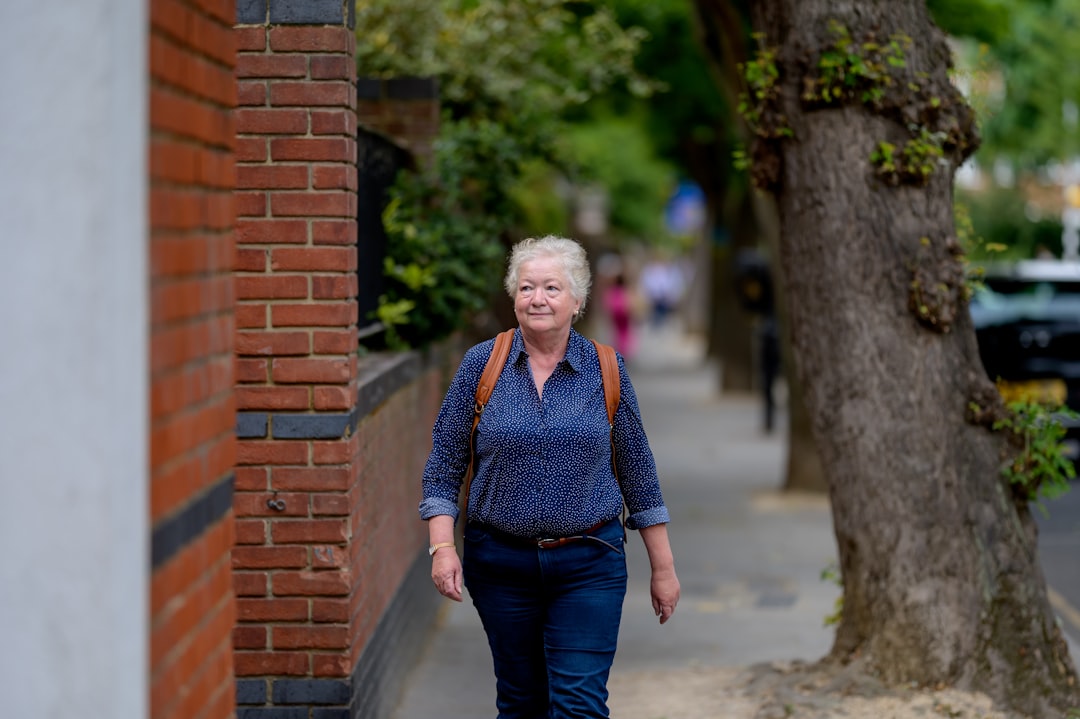
1. You walk at a good clip
Meta-analyses have found that walking speed tracks with survival: across large groups of older adults, faster walkers tend to live longer than slower ones. That is a pattern across populations rather than a forecast for any one person, but it is a strong enough signal that some doctors measure walking speed as routinely as they take blood pressure.
Walking asks your heart, lungs, muscles, joints, balance, and brain to work together. A comfortable, brisk pace suggests those systems are coordinating well. If your friends are always asking you to slow down on the way to a restaurant, it’s an encouraging sign. I’ve written plenty about my after-dinner walk.
Watch: the 10 research findings that decide how the decades after 50 go, counted down in five minutes.
2. You can get up off the floor without a production
Can you get up off the floor? Not necessarily gracefully, but independently? That’s what geriatricians want to know. Getting up from the floor tests all manner of capabilities: balance, strength, flexibility, confidence. It’s important to be able to get up if you’ve fallen. Researchers in Brazil actually devised a sit-and-rise test for longevity: Sit on the floor. Now get up. Minus points for each hand, knee, or elbow you used for support. In that study, people who scored lower were more likely to die during the follow-up period than people who scored higher — which is not the same as the test telling any individual how long they have.
I tried it out in my hallway. My technique involved one knee and wasn’t particularly graceful. I’ve been practicing since. It’s a good test because it combines a number of factors and is highly relevant to everyday function.
3. You’re still the jar opener in your house
Other tests are just as revealing. How’s your grip? Researchers in a 17-country study found that grip strength was a better indicator of likelihood of dying sooner, including dying of cardiovascular disease, than systolic blood pressure. Grip strength is a stand-in for how much of your muscle mass you’ve been able to hang onto. Muscle mass helps you stay on top of a slew of challenges, from controlling your blood sugar to supporting your bones to managing illness.
Doctors measure grip with a device you squeeze. At home, you may notice changes when opening a stubborn jar or lifting a heavy pan. If jars have gotten harder, it is worth noticing — but one stubborn lid is a rough impression, not a measurement, and grip can be affected by arthritis or hand pain that has nothing to do with whole-body muscle. The fix, if there is one, is not training your hands to squeeze harder; it is the strength work that builds muscle everywhere.
4. Your sleep still works
What about your sleep? Can you fall asleep in a reasonable amount of time, stay asleep for most of the night, and wake up in the morning ready to tackle the day? Those are the basics of good sleep. Good sleep doesn’t have to mean sleeping exactly as you did at 25.
Extreme sleep difficulties, such as waking up gasping for breath, snoring, being up for hours at night and then nearly dozing off at a red light during the day, have been linked to everything from memory problems to heart disease. Being able to sleep well suggests that many body functions are humming along in sync, including your breathing, your circadian rhythm, and your hormones. I’ve written about the evening routine that helped my own sleep, and those 3 a.m. wake-ups are much less frequent now.
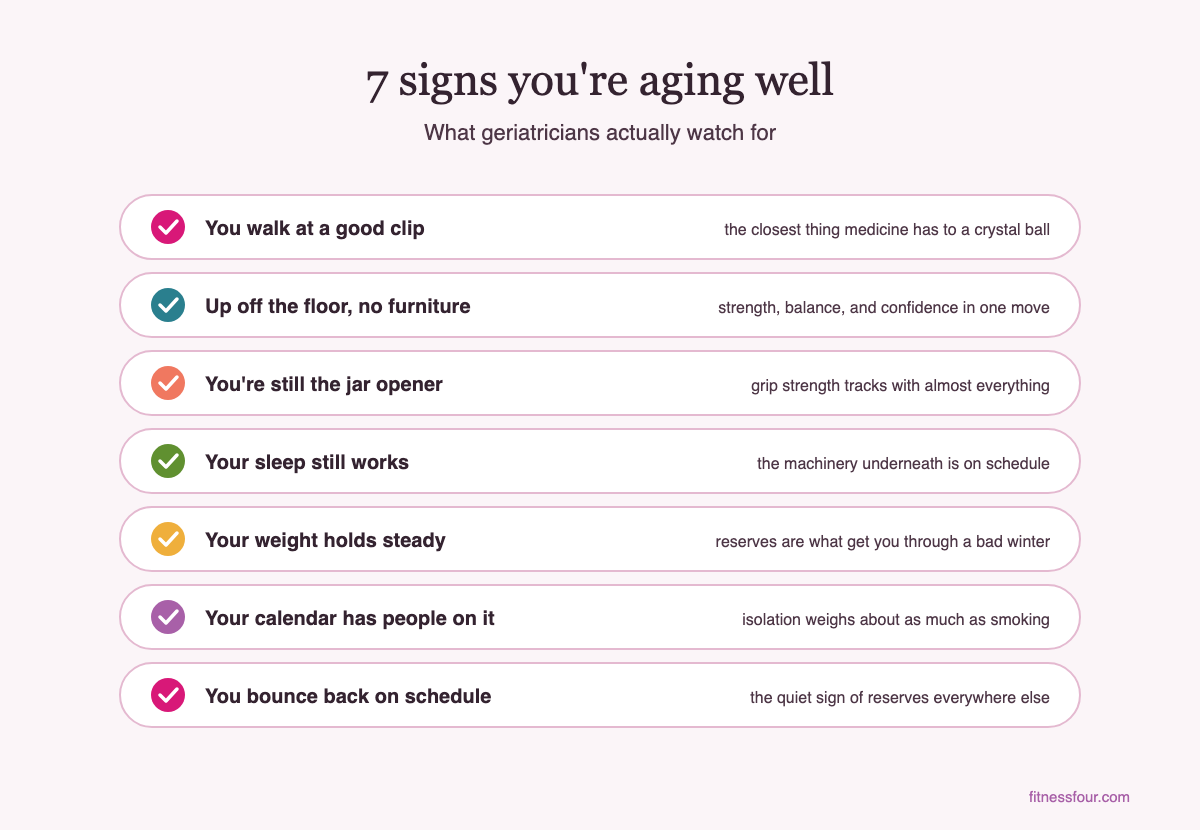
5. Your weight isn’t sliding away on its own
Unintentional weight loss is a red flag in geriatric medicine. Weight loss could indicate diminished appetite or an underlying medical condition. What’s more, weight loss in older adults often means loss of muscle, which is key for regulating blood sugar and supporting bones.
Losing weight could be a good thing in many circumstances, but in older adults, weight that falls on its own often takes muscle with it, and that muscle is part of what carries you through an illness or a hospital stay. Stable weight is not proof you have held onto muscle — it is possible to lose muscle and gain fat while the scale barely moves — but weight drifting down without your trying is worth raising with your doctor.
6. Your calendar has people on it
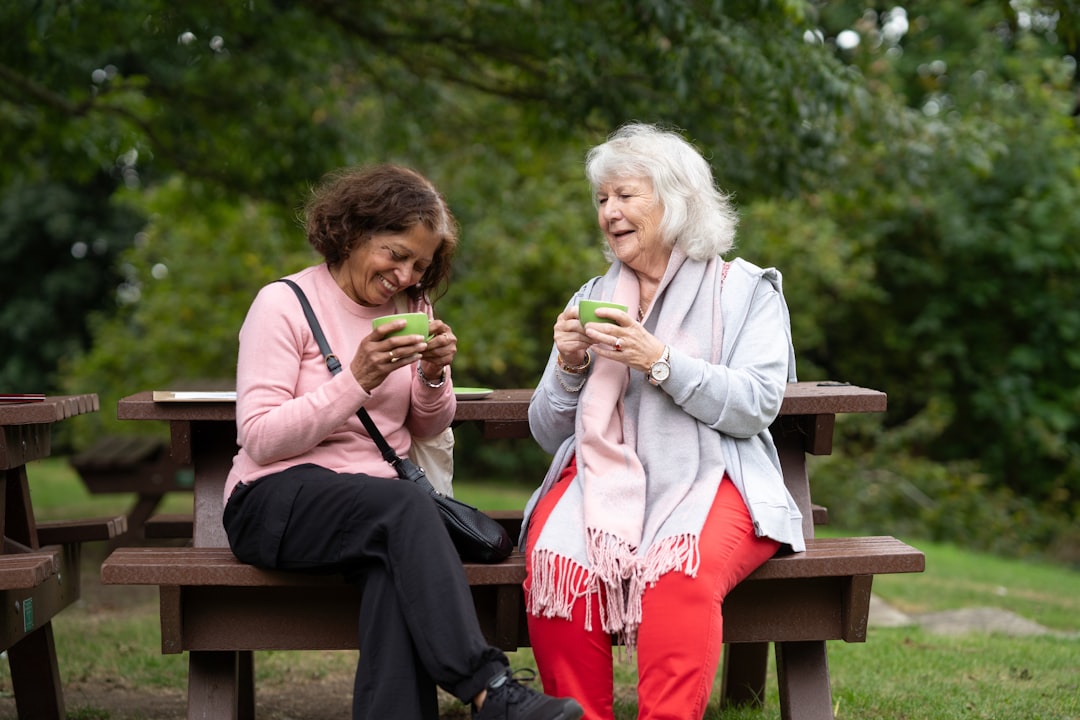
Aggregating dozens of studies involving hundreds of thousands of people, researchers have found that social isolation and loneliness are associated with a higher risk of dying earlier, on a scale that some of that work puts alongside well-established risks like smoking. It is a rough comparison drawn from pooled observational studies rather than a head-to-head test, but the direction is consistent. Geriatricians often assess patients’ social supports. Do they have a get-together they attend every week? Someone to call in an emergency? A neighbor they speak with regularly?
A Tuesday walking friend. A book club where you spend as much time talking about yourselves as the book. A neighbor you swap tomatoes and news with. Standing plans make it easier to stay connected. If you see people regularly and have someone to turn to when things are difficult, that’s a part of your health worth looking after.
7. You bounce back
How quickly do you bounce back from challenges? This is a function of how much reserve, both physically and emotionally, you have to draw upon. It might mean how quickly you recover from illness or a fall. How quickly you’re back on your feet after losing a loved one or dealing with a highly stressful situation. Getting over the flu in a week rather than a month, or finding your feet after a difficult period, can feel like evidence of reserve — though recovery time turns on plenty you do not control, including which virus you caught, whether you were vaccinated, and what else your body is managing at the time.
Reserves are a function of your genes and luck, but also of maintaining your strength, your muscles, your ability to get up off the floor, to walk, to sleep well, to remain connected to others. What you’re accomplishing when you’re 60 will help your body when you need help at 80.
My completely unofficial scoring guide
This is my informal way of looking at the list, and informal is the operative word: no geriatrician scores patients this way, none of it is validated, and a low number is not a diagnosis. Six or seven signs is encouraging. Four or five gives you plenty to feel good about, along with a few areas to pay attention to. Fewer than that gives you somewhere to begin; many of these habits and abilities can improve with practice and support.
I gave myself a score out of seven. Six is the answer, which is encouraging. It also gives me goals: Those capabilities that waned are where I can start. It gives me something to aspire to. Practice getting up off the floor. Sleep well.
My grandmother didn’t have a rubric she measured her success by. She simply walked everywhere. Slept well. Invited people over for cards every Thursday for 40 years. But it’s good to see what I’m doing well and what I’m not. It means there are things I can aspire to. It means I can improve.