
The Only 4 Supplements Worth Taking After 50, According to Research


For every change or challenge of aging there’s a supplement for it: collagen for beautiful skin, gummies for shiny hair, greens for “wellness.” It’s easy to walk away from the supplement aisle with a bouquet of bottles, unsure whether you actually need them.
Here’s how I like to think of supplements: Start with food, identify any gaps, and supplement as necessary. That way, I’m taking supplements for a reason, not because they’re on sale or seem like they’d be helpful. Keep that strategy in mind as we explore four supplements worth discussing, which are not necessarily four you need to take, as women over 50.
Before starting any new supplements, it’s also a good idea to check with your doctor, especially regarding any medications you’re on, since some supplements can interact with medications. Those interactions can sometimes be dangerous — fish oil, for instance, shouldn’t be taken if you’re on a blood thinner without clearing it with your doctor first. Testing may also reveal whether or not you’re deficient.

1. Vitamin D
As we get older, our ability to make vitamin D in the skin decreases. This, combined with spending less time outside, means vitamin D levels tend to fall with age. Vitamin D insufficiency is associated with muscle weakness and has been linked to low mood, though trials haven’t shown that taking vitamin D lifts it. Adequate vitamin D is also important for optimal calcium absorption, a factor in maintaining bone density in women after menopause.
Many women over 50 don’t get enough vitamin D from the sun and have inadequate intake from food.
Dosage depends on your level, which should be assessed by your doctor. For those with low vitamin D, 1,000-2,000 IU is commonly recommended.
Extra vitamin D may not provide any benefits above what’s needed to achieve normal levels, so have your vitamin D level checked to determine your needs.
2. Omega-3s, or fish oil
Omega-3s are a type of fat that supports heart and brain health, may help with joint comfort, and helps regulate inflammation. Fish like salmon and sardines are good sources of omega-3s. If you eat these types of fish twice a week you’re likely getting enough and don’t need to take a supplement.
Women who don’t regularly eat omega-3-rich fish might consider a supplement.
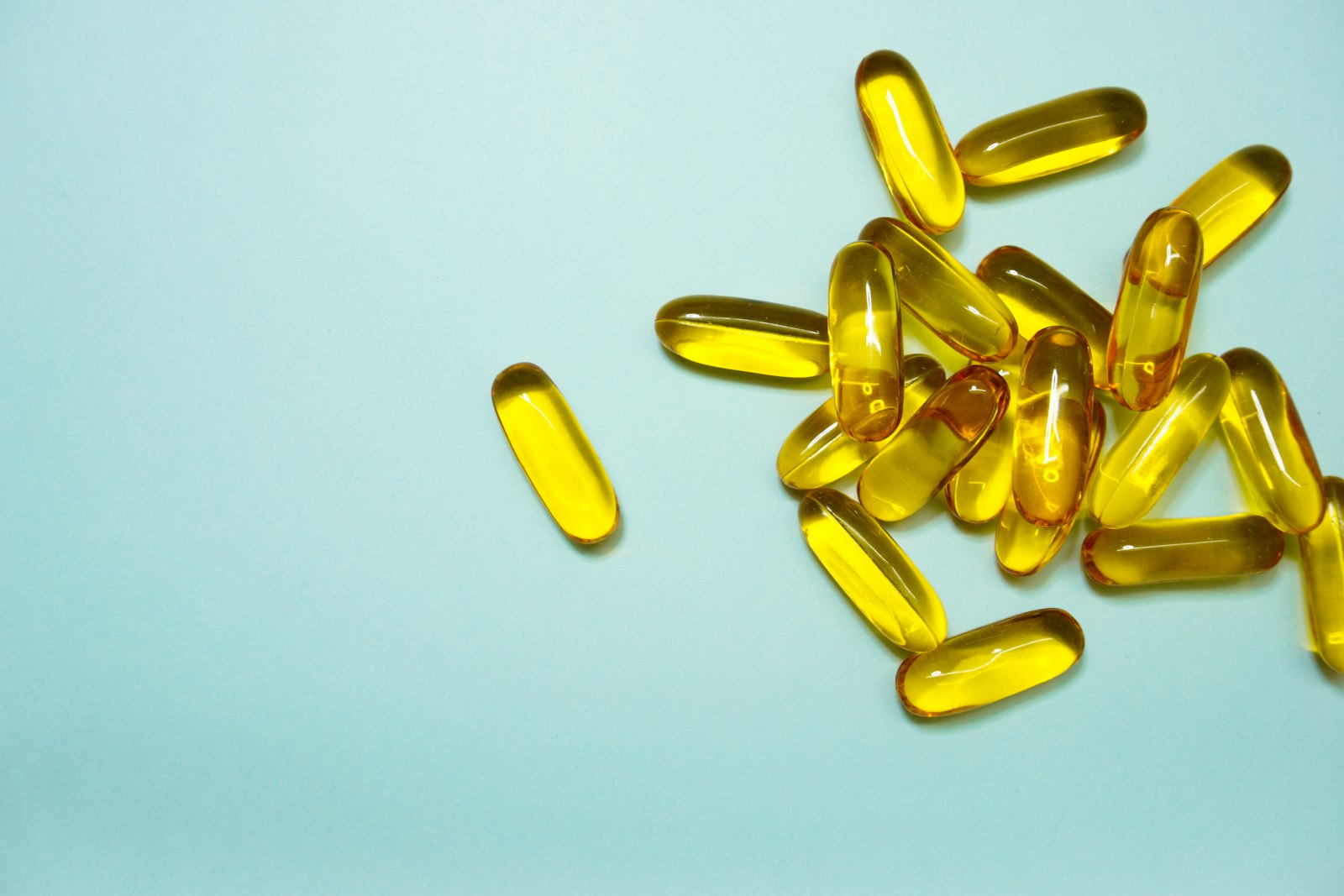
Choose a brand that is tested by an independent party to make sure of its contents, especially the amount of the two helpful omega-3s, DHA and EPA. Look for a product that lists DHA and EPA; about 1,000 mg a day combined is the dose used in heart studies, while general guidance for healthy adults is lower, around 250 to 500 mg. Check the label, as some brands need to be kept in the refrigerator.
Women who take blood thinners should not take a fish oil supplement without first clearing it with their doctor, as fish oil can have a mild blood-thinning effect, especially at higher doses.
3. Creatine
Older adults have been found to get greater increases in muscle size and strength with a combination of resistance training plus creatine compared to resistance training alone. Research indicates that postmenopausal women taking creatine and doing weight training build more strength and muscle compared to training alone.
Women who are strength-training regularly are the ones who might consider it.
Buy plain, unflavored creatine monohydrate and take 3-5 grams daily.
While still being studied for possible positive effects on brain function, creatine is not going to improve strength and muscle without regular weight-lifting. Also note that when you start using creatine you may see a jump of a pound or two on the scale, or nothing at all at this dose, due to water being stored in the muscles. Don’t panic. It’s not fat.
4. Protein powder
It’s recommended that middle-aged and older adults consume more protein than younger adults: Aim for 25-30 grams per meal. Protein powder can be a helpful addition to the diet for those looking to increase their protein intake. It can be added to smoothies, yogurt, oatmeal and other recipes. Protein powder isn’t a supplement but an easy-to-use food that saves time and effort. One serving typically contains about 20-25 grams of protein.
It makes sense for women who have trouble meeting their protein needs from food and want an easy way of boosting protein in a recipe.
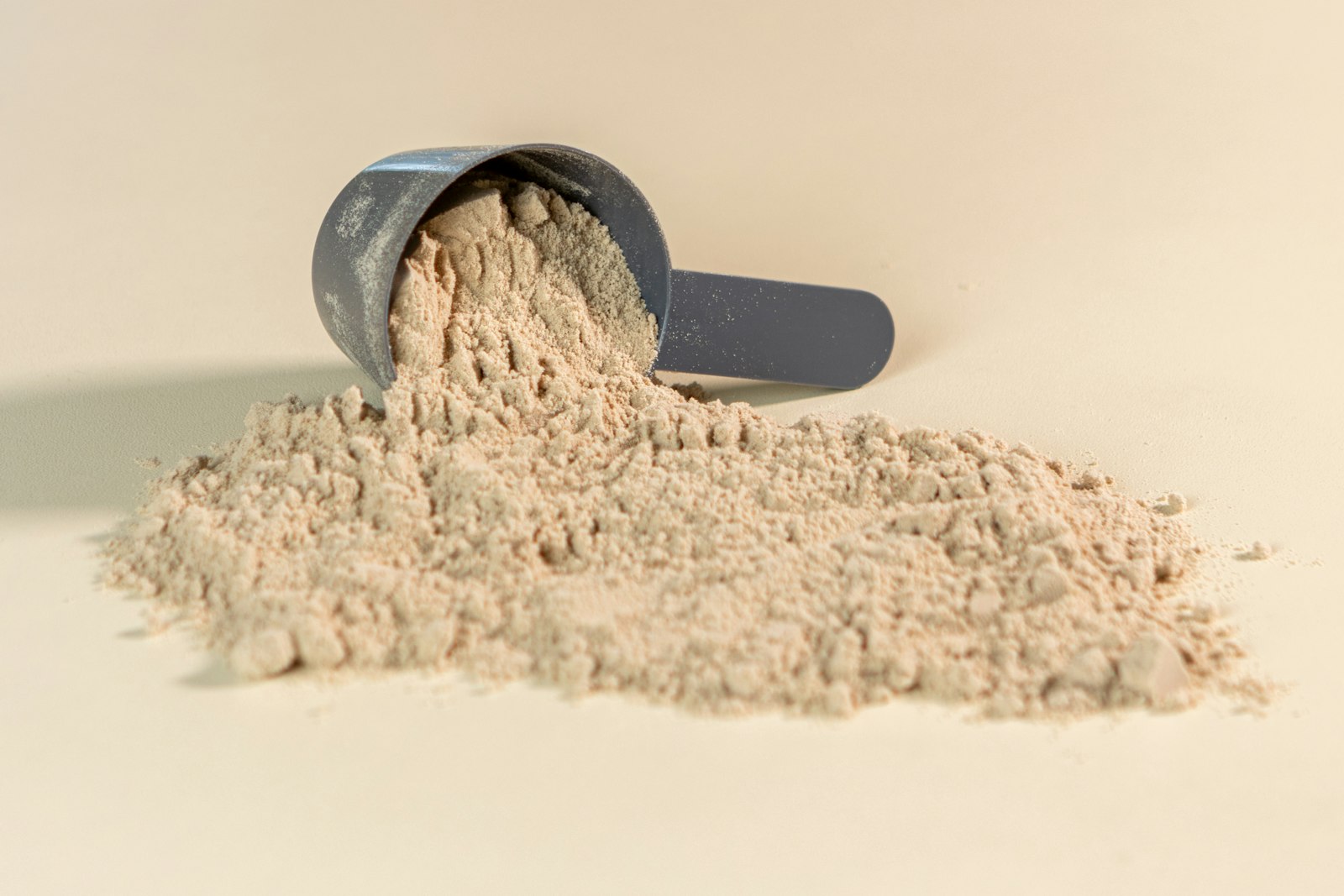
There are numerous brands of protein powder on the market. Decide first if you want a whey-based or plant-based protein. Whey digests faster than plant-based protein, which is an option for women who can’t tolerate dairy. Read the label and make sure there’s little else in the product.
Protein powders can be helpful to get in adequate protein, but there’s no need to buy a tub if your meals already provide enough.
As with any new supplement, it’s always best to check with your healthcare provider before starting. The safety of protein supplementation is heavily dependent on kidney function. If you have reduced kidney function, protein supplementation has the potential to be dangerous.
What didn’t make the list
Leaving these off the list doesn’t mean nobody could benefit from them. It means there isn’t enough evidence to recommend them broadly to every healthy woman over 50.
Collagen: has been hyped much more than its evidence supports.
Greens: powders are expensive and missing the fiber you get from eating actual veggies.
Multivitamins: haven’t shown much promise in improving health outcomes for well-nourished groups of people, though they may still fill gaps when eating is inconsistent.
Calcium: is better obtained from foods like yogurt, milk and canned sardines, as there are questions about high-dose calcium supplements and heart health. Women over 50 need 1,200 mg a day, and that fact sheet lists how much calcium common foods provide — enough to add up what your meals already cover before you decide a supplement is filling a gap.
Magnesium: can help correct a deficiency, but that doesn’t make it necessary for everyone. If sleep or cramps are the reason you’re considering it, raise those symptoms with your doctor. Taking too much magnesium can also cause loose stools.
The short list at a glance
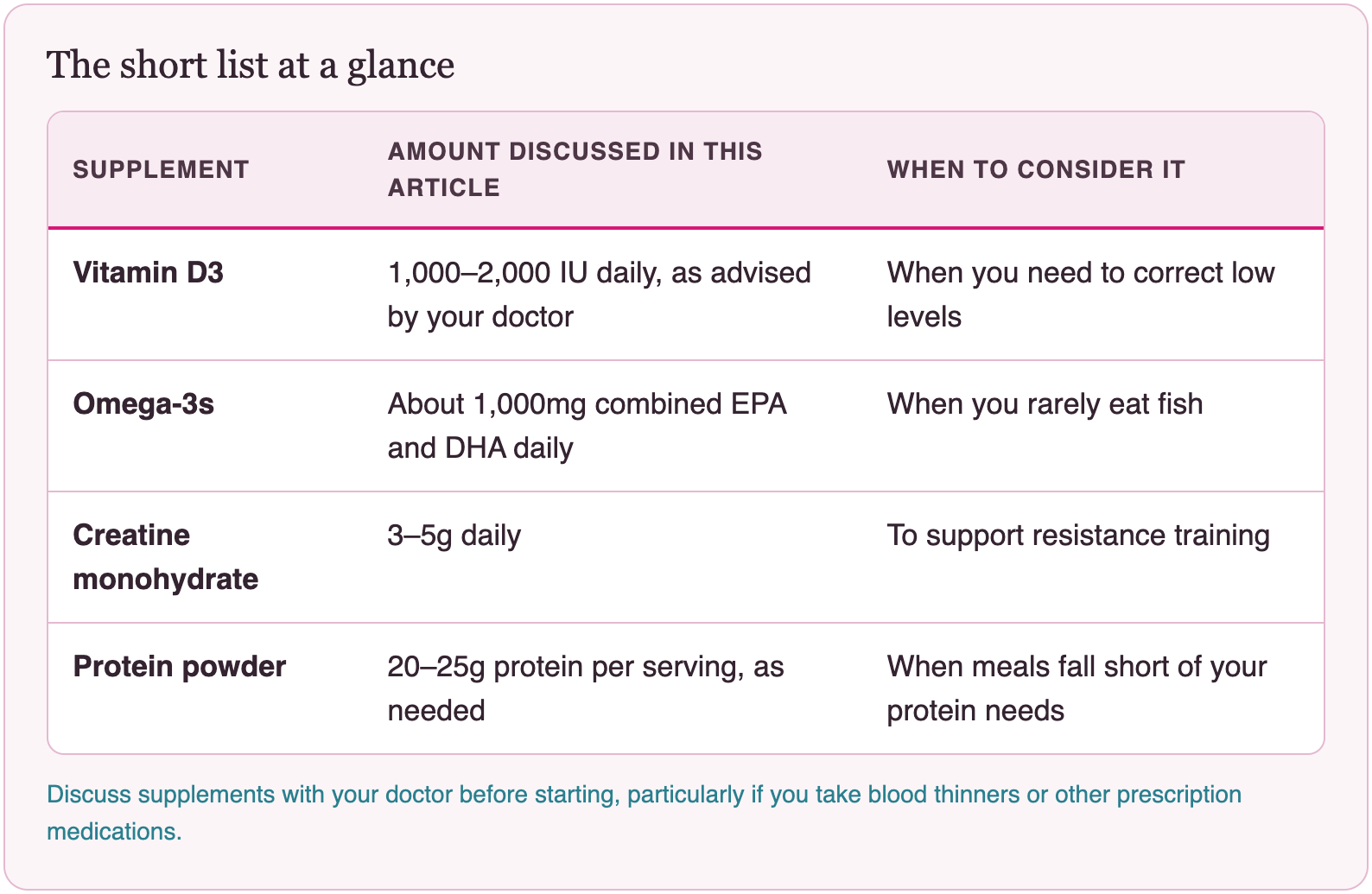
If you’re interested in trying a new supplement, first figure out why you’re considering it. Supplements are best when they serve a purpose, whether it’s making up for a deficiency, a common gap in the diet or helping with strength training. Age alone is not reason enough. Talk with your doctor about the dose and possible interactions with your medications, particularly blood thinners.
Using the four wisely
Let’s take a look at four of the supplements that have shown promise for helping people reach their health and fitness goals. These rules of thumb should help you use them to their best effect.
How to read the label before you buy
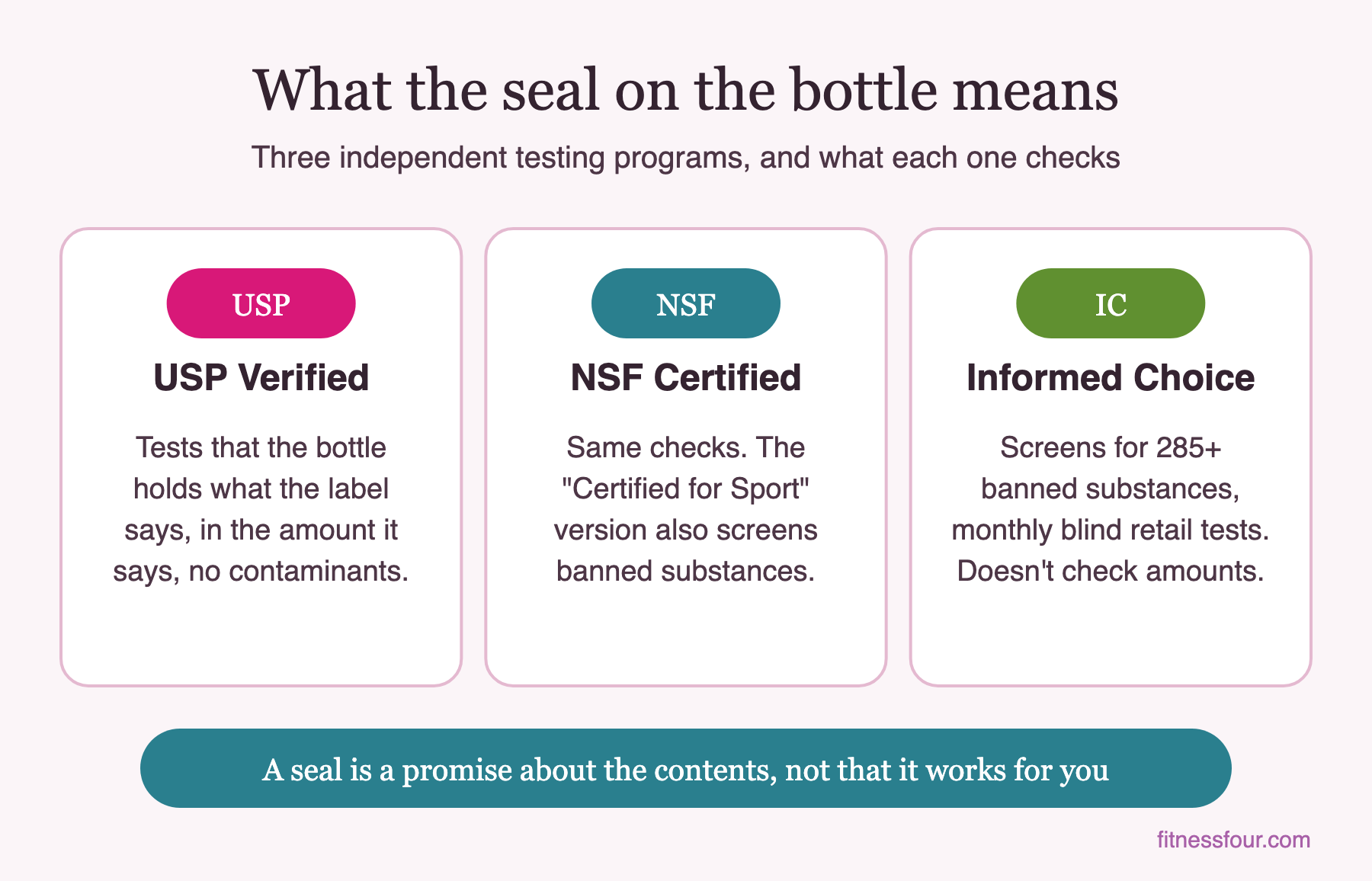
Supplements are not reviewed by the FDA for safety or effectiveness before they’re allowed to go on the market. This makes it especially important to look for seals of approval from an independent testing organization, like USP, NSF, which verify that the product contains what it’s supposed to, at the stated amounts, without contaminants (NSF Certified for Sport and Informed Choice add banned-substance screening on top). Also, it’s important to make sure that you know what you’re getting:
Beware of gimmicky dosages on the front of the package. A supplement that boasts “1,000 mg” on the front of the bottle might be referring to a serving of three capsules.
Beware of fishy math: The ingredient list on fish oil supplements will include “fish oil” but will also list EPA and DHA, which are the beneficial omega-3s. If the ingredient list says “1,200 mg fish oil,” check to see how much EPA and DHA there is. You may find that the numbers are smaller than expected. Add up the amounts of the individual ingredients to get an idea of how much of what you’re paying for you’re actually getting.
Avoid proprietary blends. Some supplements lump a number of ingredients into a mysterious concoction for which only the total amount is listed. Look for supplements with one ingredient so you know how much of the good stuff you’re getting.
Check for an expiration date and a lot number. If there is no way for the manufacturer to trace a particular batch of supplements, don’t waste your money.
When and how to take each one
Some suggestions for using the four supplements wisely:
Vitamin D
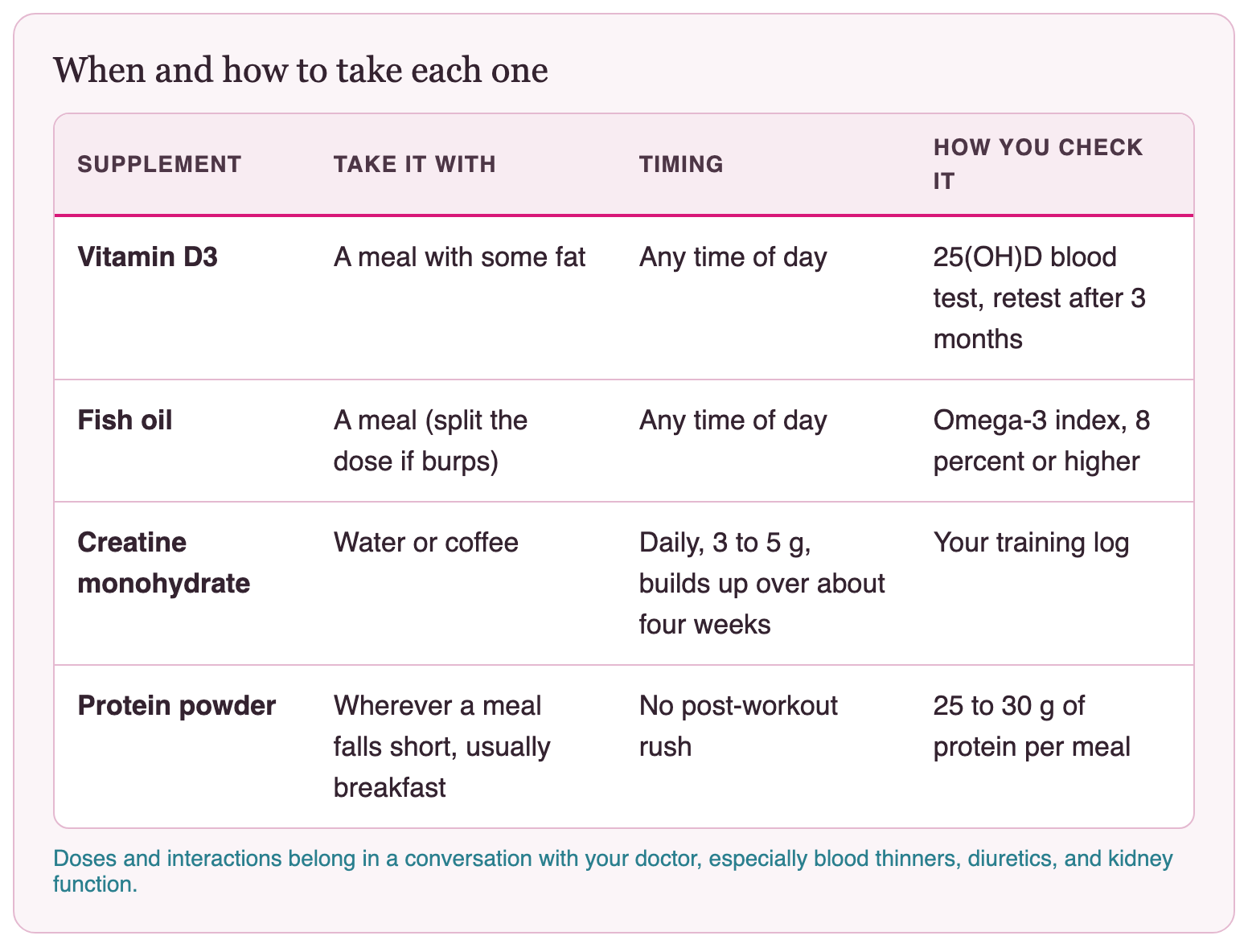
Take vitamin D with food that contains a small amount of fat, like peanut butter on toast, yogurt, or eggs. Vitamin D is a fat-soluble vitamin and absorbs better with a little fat. Timing isn’t important. Ask your doctor whether a vitamin D test (25-hydroxyvitamin D, or 25(OH)D) makes sense for you before you start. Guidelines don’t call for routine testing in healthy adults, but it’s reasonable if you’re at risk, and the result is worth discussing together.
Levels under 20 ng/mL are considered low, but what’s considered optimal is debated. Some doctors recommend a level of at least 30 ng/mL but may be happy to see anything above 20. It’s worth getting your level rechecked about three months after you start taking vitamin D to see how your level responds.
Unless your doctor tells you otherwise, don’t take more than the upper limit for vitamin D, which is 4,000 IU/day for adults. Too much vitamin D for a prolonged period of time can cause your body to make your blood calcium level dangerously high, a condition that is especially concerning for people who take thiazide diuretics or digoxin.
Fish oil
Take fish oil with food. Fishy burps can be minimized by splitting the daily dose throughout the day or storing your fish oil in the freezer. Check to make sure your bottle hasn’t gone bad. Fish oil breaks down with heat, light, and even steam. Try not to keep it in your bathroom.
Signs that your fish oil may be going rancid include a stronger-than-usual fishy smell that may even be reminiscent of old paint, cloudy capsules, or capsules that seem sticky. Ask your doctor if there are any interactions between your medications (especially any blood-thinners) and fish oil. The best way to tell whether increasing your omega-3s is actually raising your levels is through an omega-3 index test.
It measures the amount of EPA and DHA in your red blood cells through a simple finger-prick. The researchers who developed the test use an omega-3 index of 8% or higher as the target.
Creatine
Take a consistent 3-5 grams of creatine every day for about four weeks and you’ll raise your muscles’ stores of creatine without having to do a “loading” phase. Save your money and buy a simple, unflavored creatine monohydrate. It’s cheaper than many “advanced” versions, has been studied more than any other type, and can be stirred into coffee or water.
Track how much weight you’re lifting, like with squats or rows, over a matter of months to see if creatine is helping you build muscle and/or strength. People with reduced kidney function should get their kidneys checked before adding creatine.
Protein powder
Protein powders can help you get enough protein if it’s hard to get enough through meals alone. Aim for about 25-30 grams of protein per meal. Use protein powder to supplement your diet, not replace it, and enjoy it soon after you open the container as powders can go stale within several months.
Contrary to some fitness professionals’ claims, muscles can use protein from any source for hours after a workout. Track how much weight you’re lifting, like with squats or rows, over a matter of months to see if extra protein is helping you build muscle and/or strength. People with reduced kidney function should get their kidneys checked before increasing their protein intake with powders or any source.
Run a 12-week trial, not a lifetime subscription
Finally, it’s important to make sure any supplement you’re taking is doing its job. Start a new supplement, write down why you’re using it, and identify something you can measure in order to know if it’s helping, like lab results, gym performance, or energy. Give it a few months (say, 12 weeks), and decide whether it’s helping. If not, toss it.
This will save you from filling your cupboard with half-empty supplement bottles (hello, auto-ship programs?) and help you focus your money on things that will make an impact on your goals. Also, tell your doctor what supplements you’re taking or bring them to an appointment so it’s easy to go through ingredients and doses.
Supplements can interact with some prescription drugs; for instance, calcium and magnesium supplements should be separated by at least four hours from thyroid medication. Most people are surprised how few supplements are justified once they see whether diet and/or lab results indicate a need. Once you know what’s lacking, it’s easier to justify the cost of supplements instead of foods or gym equipment.







Is there 1 pill I can take at my age I’m 69 and walk a mile 5 days a week,just want to find a good supplement for me