The Japanese Walking Method Women Over 50 Swear By

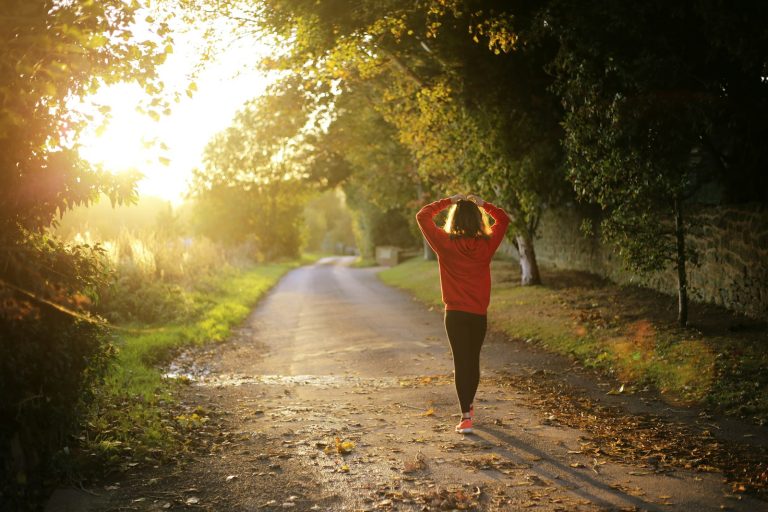
You may be pleased to know that, if you already go for a walk as your form of exercise, you are simply one change away from getting double the benefits for the exact same 30 minutes of walking. And if you find your walks get dull from time to time, this is even better news, because it will solve that problem too.

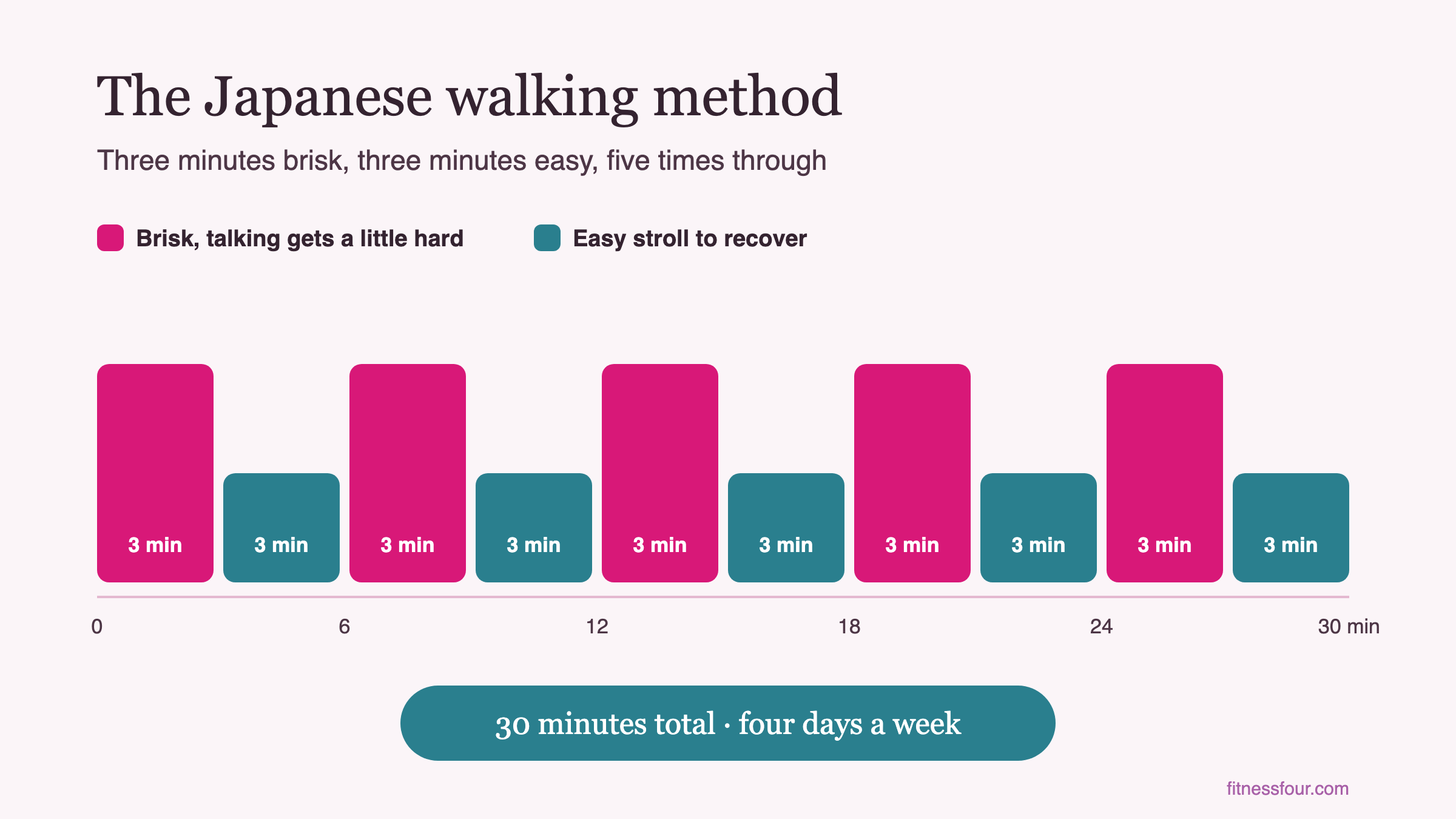
This type of walking is called interval walking, and it is based on research done at Shinshu University in Japan. Researchers there looked for ways middle-aged and older adults could get fitter without going to the gym or using any special equipment that carries an increased risk of injury. Their answer was quite simple: walk fast for three minutes and then easy for three minutes, and repeat this five times. That’s it! Thirty minutes completed, and all you need is a pair of shoes.
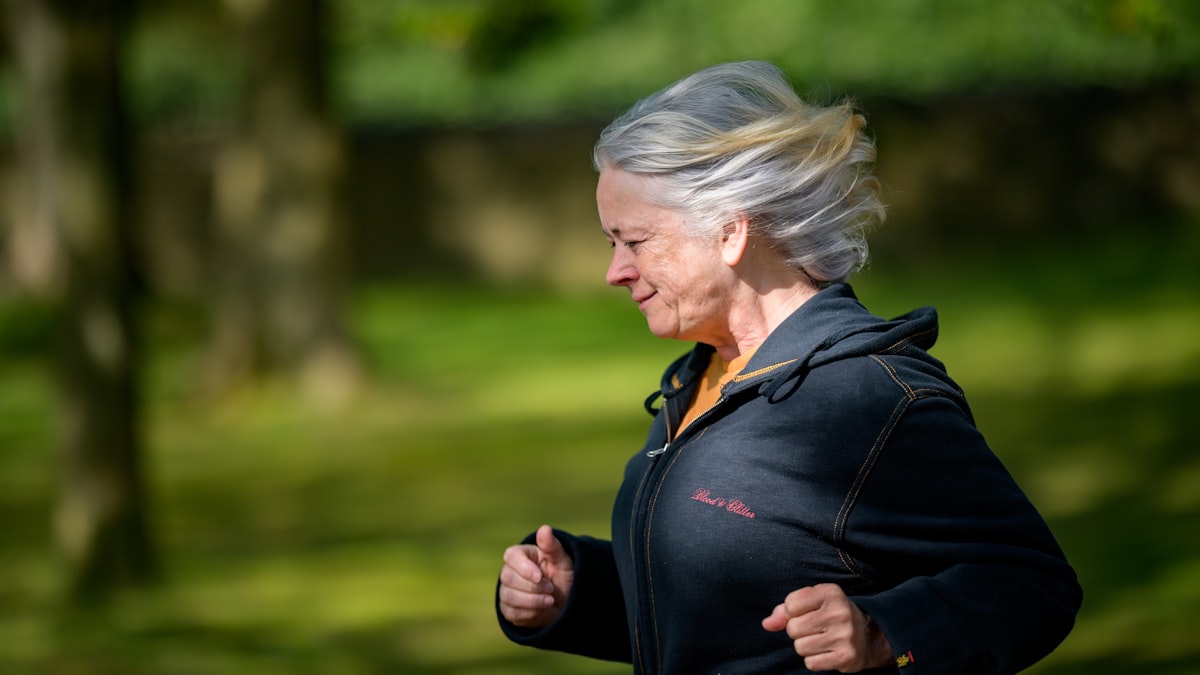
When I say “walk fast,” I mean walk fast enough that holding a conversation during those three minutes takes some effort (I’m thinking about a six or seven out of ten), while still allowing yourself to breathe freely. On the other hand, when I say “easy,” think about the way you walk through museums.
The changing nature of the activity is what creates the benefits, because each push requires slightly more from your heart and leg muscles than they were previously accustomed to, and the recovery allows you to make that demand again. A steady 30-minute walk never asks for anything beyond what it has asked for before, so it never receives anything new in response either.
The Japanese researchers monitored hundreds of adults in their 50s, 60s and 70s who did this type of walking at least four days per week, and after five months these individuals demonstrated better thigh strength and aerobic fitness along with lower blood pressure, compared to individuals who walked at a steady pace and barely changed.
In fact, many participants have been doing interval walking for over a decade without losing their fitness improvements. What makes me particularly happy is that none of these individuals were athletes when they began. Many started with limited physical ability, and the program was created especially with aging knees and hips in mind.
The routine
Before starting, warm up by taking several easy minutes, two to three, before beginning your first fast round. Next, begin walking quickly for three minutes, followed immediately by easy walking, also for three minutes, and continue alternating until you’ve finished five fast rounds total. Cool down with several easy minutes after completing your last fast round.
Aim to perform this a minimum of four days per week, and if finishing thirty minutes seems overwhelming at first, try completing only three rounds versus five and gradually increase as your endurance improves.
Timing versus landmarks
While timing can help keep track of how long each interval lasts, timing isn’t required. The Japanese study participants frequently used landmarks instead: fast around the corner where the blue house sits, then an easy stroll down past the mailbox. You can download an interval timer app if you prefer having something count for you, while others choose music, a quick upbeat song for each fast round and a slower ballad for each easy segment.
Making sure your fast rounds are really fast
Perhaps the most frequently reported error comes from not keeping a sufficiently high pace during the faster segments by week two, when they revert back into your normal pace again. For validation, two tests exist. First, there is the talk test: during a fast segment you should be able to briefly speak with someone, but you wouldn’t be able to tell them much of your life story.
Second, there is arm movement: you cannot possibly generate true speed with lazy arms, so bend those elbows and let them work! If shin pain develops early on, don’t panic. It typically happens for a couple of weeks while your muscles adapt, and once they’ve adapted, it’s gone.
Why this works specifically for us
By our fifties we’re losing muscle mass AND aerobic capability simultaneously, and neither loss is addressed appropriately via standard strolling. Interval walking addresses both simultaneously. The fast parts create real strength within the thigh muscles, the very muscles responsible for helping us stand up, get off the couch, and get up the stairs, and the Shinshu group developed measurably stronger thighs.
They also showed increases in cardiovascular fitness roughly equivalent to folks ten years younger than themselves. Plus it’s low-impact, with no impact spikes like running, just effort. Several women participating in the original studies suffered from knee arthritis and were accommodated by shortening the fast intervals rather than eliminating them altogether, and that’s a great template if you’ve got a cranky joint yourself. Shorter pushes, same structure.
Week one
Don’t drastically change your current walking habits. Take two of your existing walks, turn them into interval walks, and leave everything else alone. Many women have noted real changes, particularly in how stairs feel, approximately three weeks after starting, which means faster feedback than most other options at this price point, which is zero dollars.
And finally, I have to admit, I’m converted myself. When there’s something to anticipate, the next transition, the next push through a fast round, the reward following it, a background activity becomes foreground time. After finishing my interval walks, I feel like I’ve really trained. After regular walks, I used to feel like I’d just commuted.
- Walk briskly for 3 minutes, at a pace where talking gets a little hard.
- Ease off to a gentle stroll for 3 minutes to recover.
- Repeat that pair five times, which comes to 30 minutes.
- Aim for four days a week. That is the whole method.
Begin with your next walk. Walk quickly to the corner, easy to the mailbox, and see what your legs say about it in a month.