How to Make 65 to 85 Your Healthiest Years Yet

Turning 65 does not have to mean accepting a slow and steady decline.
Fitness for me as a teen meant staying in shape to look good. Fitness now is staying healthy and functional. Maintaining that ability to live a normal life takes effort and attention to blood pressure, hearing, social connections, getting enough protein, and getting enough exercise.
I used to think staying fit meant hitting the gym, eating salads, jogging around the track. But as I’ve gotten older and have started doing more reading about aging, it’s clear that staying active can take many forms.
Walk regularly, and reconsider the 10,000-step requirement
A study in JAMA Internal Medicine found that women who took the highest number of steps had a 58% lower risk of dying during the study’s follow-up compared to the women who walked the fewest number of steps. That’s quite a gap. This study measured steps among nearly 17,000 women whose average age was 72.
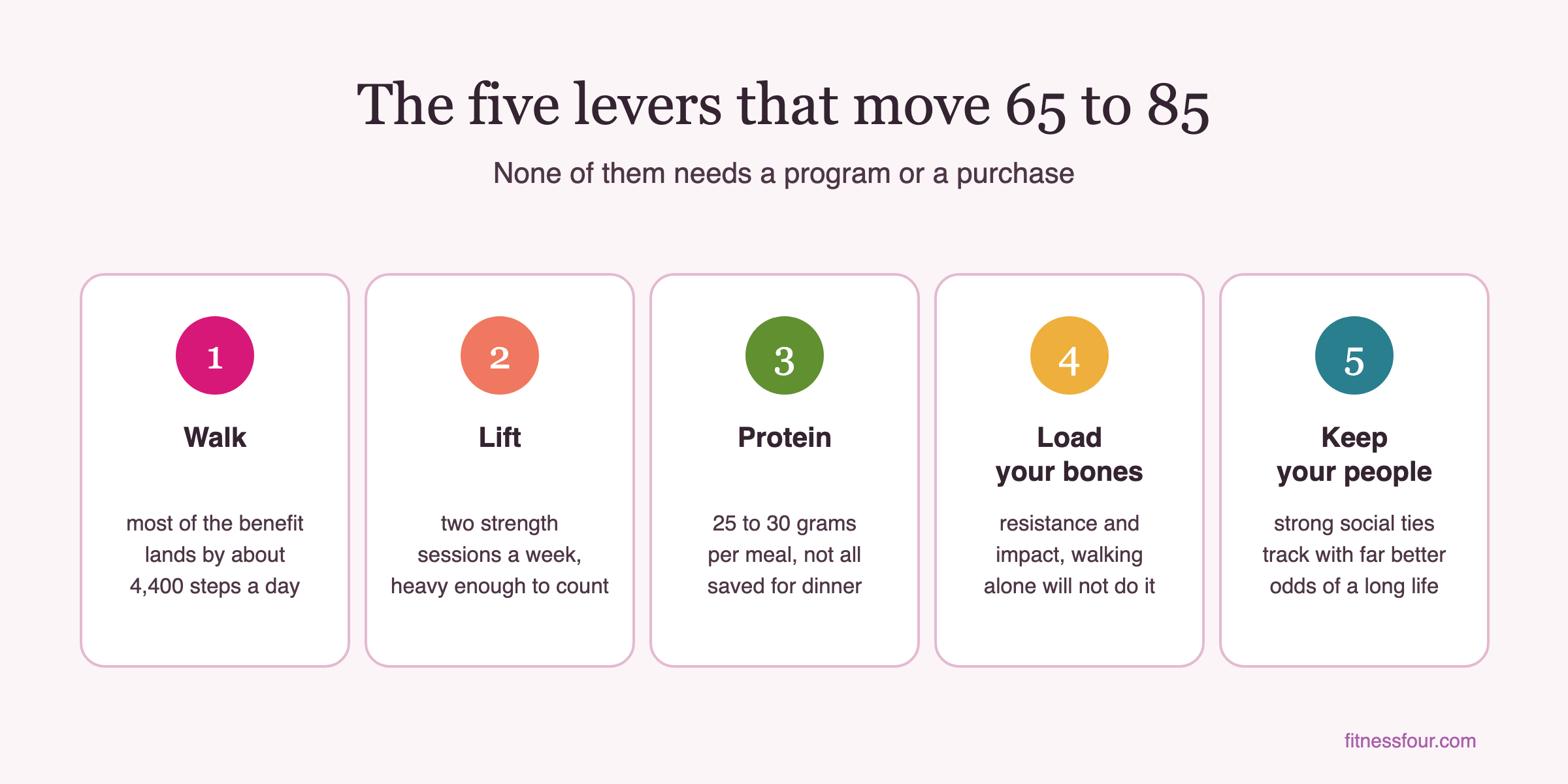
They saw benefits among women who averaged about 4,400 steps a day when compared to women taking about 2,700.
Associations with good health increased with steps per day, plateauing at 7,500. While the study was observational, meaning it didn’t prove walking is the direct cause of good outcomes, and there are plenty of other factors to consider, the takeaway is that some steps helped, and the authors saw the inflection well below 10,000.
There’s always more to be gained from more, but there’s good stuff at 7,500.
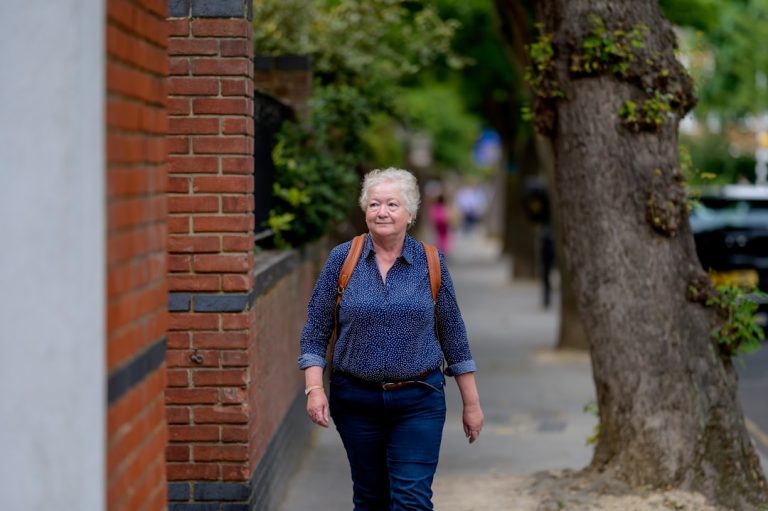
I’ll admit that number, 7,500, still seems pretty lofty. But you don’t have to dedicate an hour to exercise to achieve this number. Going out for a walk counts, going out for groceries counts, working in the yard counts.
Start strength training, even if you’ve never considered yourself someone who lifts
The idea that strength could increase at older ages was new to me.
Of course, staying active means more than just walking. Building muscle also is critical, especially if you want to be able to carry your own groceries and get up off the floor without help.
In a 1990 study of frail nursing-home residents who were about 90, researchers had the volunteers perform a strength-training program for eight weeks. Nine people completed the study, and those nine increased their strength by an average of 174%. Their muscle size increased, and their speed during a heel-to-toe walking test improved by an impressive 48%.
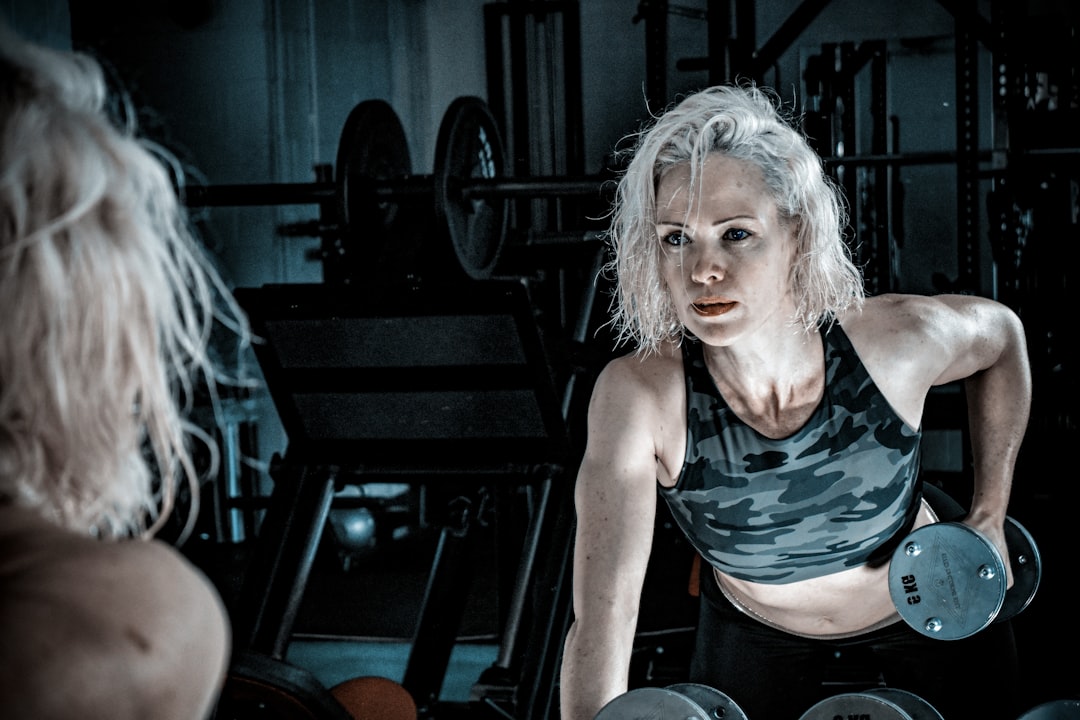
Starting an exercise program sounds intimidating, but strength training is easier than I thought. With just two sessions per week, start out with weights you can control and gradually increase the amount of weight you’re lifting.
There’s something to be said for finding a strength-training exercise that’s repeatable, easy, and motivating.
Give your muscles enough protein
Experts believe that to preserve and build muscle, older adults should consume more protein than younger adults. Rather than the recommended daily allowance for adults, 0.8 grams of protein per kilogram of body weight per day, the recommendation is 1.0 to 1.2 grams per kilogram, and more if you’re more active or battling an illness.
To put that into perspective, a 150-pound woman would need to consume 55 grams of protein per day versus 68 to 82 grams of protein per day as an older adult.
If you have kidney disease, you’ll want to follow your clinician’s recommendation for how much protein to consume per day.
It’s also important to get enough protein at each meal. Older adults’ muscles don’t respond as well to smaller amounts of protein, so aim to get 25 to 30 grams of protein at breakfast, lunch, and dinner.
Give your bones a reason to stay strong
To maintain bone density after menopause, it’s not necessarily enough to take a daily walk. You need to challenge your bones more than that, particularly in your hips and spine. One way to do that is to participate in a well-designed strength-training program.
In one study, the LIFTMOR trial, 101 postmenopausal women with low bone density participated in a twice-per-week, eight-month strength and impact training program. Those who did the high-intensity version of the program increased bone density in their spines by just under 3%, plus they improved in other areas of strength and function.
But it’s important to work with an expert to develop an appropriate and safe strength-training regimen based on your level of osteoporosis risk. You can’t just go it alone and start lifting weights.
Put people on the calendar
Having a robust network of friends and family improves your chances of longevity. One meta-analysis that looked at data from 148 studies involving more than 300,000 participants found that better social relationships were associated with a 50% increased likelihood of survival, a magnitude of association similar to other health factors such as quitting smoking.
Setting up a weekly social date won’t ensure longevity, but social connection is important enough that it belongs in these conversations.
Cultivating and maintaining close relationships takes intentionality, particularly at age 65 and older. During this phase of life, major transitions such as retirement, illness, and moves can strain ties to others.
Make sure you’re investing time to strengthen your existing relationships. Tell your loved ones: let’s get coffee, or I’d like to walk with you in the park. The point is: let’s plan to be together, rather than leaving it at “we should get together.”
Bring up blood pressure, hearing, and bone health
Blood pressure
Keeping your blood pressure in check may help protect your brain. In the SPRINT MIND trial, aggressive management of blood pressure reduced mild cognitive impairment (MCI) by 19% compared with usual care, but did not significantly reduce the risk of dementia. More research is needed to understand whether controlling hypertension reduces dementia.
Having a goal blood pressure and working toward it can help.
Hearing
Hearing loss is associated with cognitive decline, and there’s new evidence that wearing hearing aids may slow it. One 2023 clinical trial found that treating hearing loss with hearing aids slowed cognitive decline by nearly 50% in a subset of participants at higher risk for cognitive decline.
Booking that hearing appointment can help.
Bone density
The U.S. Preventive Services Task Force recommends screening for osteoporosis in women who are age 65 or older or postmenopausal and at high risk. Talk with your clinician to find out whether you’re at high risk.
Think about what you want those years to feel like
In a 21-year study of older adults at Stanford University, runners were able to delay disability by a mean of 16 years compared with the non-runners.
But the goal of longevity is not just living longer, it’s living longer with a high-quality life. In particular, the goal is to remain comfortable and functional in daily life, for example being able to get dressed, carry groceries, and hear well enough to carry on a conversation with a friend.
Begin with what you can do now
Eating more protein can help. Having a more substantial breakfast can help. Finding a way to walk more can help.
The good news about making changes to improve your longevity is that it’s never too late. Starting at 66 still leads to health benefits.
None of these will necessarily ensure your next twenty years go well, but they will help with daily living. And that’s the goal.