The Body Changes Women Go Through As They Age

It’s frustrating to feel changes in your body in midlife and not always have explanations for them. For example, many women find that even though they’re not gaining weight, their bodies are changing shape. Or, they may not understand why getting out of a chair or climbing stairs doesn’t seem as easy.
As we get older, it’s natural for our bodies to change. Understanding what’s happening can help us adapt. Here’s a closer look at what changes, and the habits that help.
Muscle becomes harder to maintain
Starting in our thirties and forties, muscle mass decreases by 3-8% per decade, accelerating from age 60 onwards. Age-related muscle loss, also known as sarcopenia, can be detected through changes in function, for example, can you get up from the floor, carry a bag of groceries, get up and down the stairs easily?
The good news is that at any age we can make improvements to strength, including women in their seventies, eighties and nineties, with plenty of research demonstrating gains within a couple of months. Muscles respond remarkably well to strengthening and can be built at any age, one of the best investments you can make.
You may not have to heave weights to do it, either. Try to incorporate strength training twice a week, even if it’s nothing more than 10 chair stands. That’s a legitimate, even invigorating, workout for your bottom and thighs.
Bone loss speeds up after menopause
Estrogen helps regulate the process that keeps bones strong, and when it falls after menopause, bone loss speeds up. In the first 5-7 years of menopause, a woman can lose as much as a fifth of her bone density, putting her at greater risk of broken bones.
Bones, like muscles, respond to being loaded. Walking can help, but strength training and impact-type exercises – briskly climbing a steep hill or jogging for short periods of time, or heel drops from a step – may be more beneficial. Which ones are appropriate for you depends on the condition of your bones and joints. Get the bulk of your calcium and vitamin D from foods.
If you’ve been through menopause and haven’t discussed a bone density scan, bring it up at your next appointment. It takes about 10 minutes, is painless and can give you information about your bones that can’t be picked up by symptoms.
Your metabolism changes less than you might expect
If you’ve put on a few pounds around menopause, you may have heard that your metabolism slows down dramatically at age 50. A landmark 2021 study looked at energy expenditure in thousands of men and women and concluded that once you’ve taken body size and body composition into account, metabolism stays relatively stable from our twenties to our sixties. But other factors do come into play around the menopause that can make managing our weight more challenging.
Muscle mass tends to fall as we get older and if we’re not being as physically active as we once were, muscle decreases further. Energy expenditure at rest is lower in people who’ve lost muscle as muscle burns more energy than fat.
The scale may barely move, but you’ll notice your waistbands are tighter. This is because falling estrogen levels change where fat is stored in the body, post-menopause it is more likely to be stored around the abdomen.
Other factors can add to the challenge of maintaining a healthy weight post-menopause: we’re moving around less, sleeping less well and dealing with greater levels of stress.
The good news is that weight gain is not inevitable. Making small, manageable changes, maintaining muscle mass by staying active, moving throughout the day and spreading protein across your meals can help.
Joints may feel stiffer
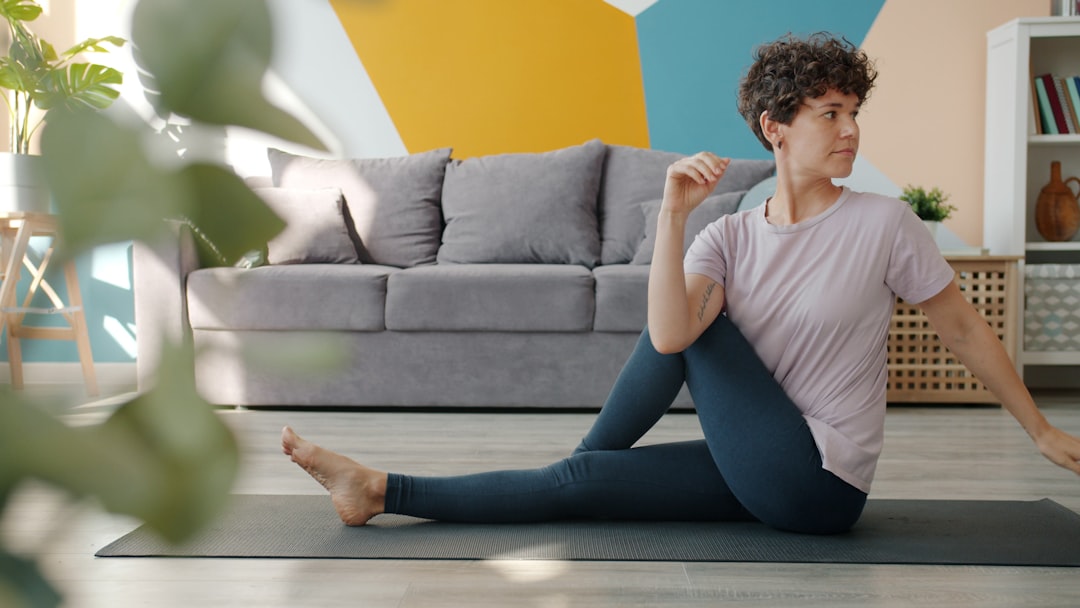
Joints can change as we get older as the structure and quality of the cartilage, the smooth, cushioning surface on the ends of bones, changes, along with the fluid that surrounds and lubricates the joints.
Stiffness on getting up in the morning or standing after sitting for a while is common. Some women will also develop arthritis.
Resting a stiff joint is tempting, but too little movement can leave it feeling worse. Cartilage doesn’t have a blood supply of its own, instead, it’s squeezed during movement like a sponge to help nutrients get in and out.
Gentle, regular exercise, such as walking, cycling, swimming, or range of movement exercises, can help. Stronger muscles also take some of the load off the joints. That’s another reason to keep those weekly strength sessions.
Balance and reflexes need more attention
Balance requires the intricate and integrated functioning of multiple body systems: vision, the inner ear and sensory receptors in the feet and ankles. With age, some of these systems don’t work as quickly and efficiently as they used to, making it more challenging to respond appropriately when you trip. Balance also requires adequate strength.
In addition, everyday activities such as walking on level ground along predictable paths offer limited challenge to our balance. Add to that a more sedentary lifestyle, and balance suffers.
The good news is that with practice, balance can be improved within a matter of a few weeks. Try balancing on one foot while you brush your teeth, walking heel-toe in a straight line and working on getting down to the floor and back up, with support nearby if you need it.
Myth or fact? The midlife body edition
1. Your metabolism falls off a cliff at 50.
Myth. A 2021 study found that when researchers controlled for changes in body size and body composition, energy expenditure was relatively constant from ages 20 to 60. Other factors, namely muscle mass, physical activity, sleep, and changes in body composition, including how and where you store body fat, contribute to difficulty managing your weight in midlife.
2. Bone loss is fastest in the first five to seven years after menopause.
Fact. You can lose as much as a fifth of your bone density in the first five to seven years of menopause. Get screened for osteoporosis so you and your doctor can discuss ways to improve bone density before you suffer a fracture.
3. A stiff joint mostly needs rest.
Myth. Lack of activity worsens stiffness, including in people with arthritis. Gentle movement helps keep joints limber and delivers nutrients to cartilage.
Skin and hair change, too
With menopause, collagen, a protein that helps give our skin its youthful, bouncy appearance, declines rapidly, with much of the loss in the first five years, because estrogen helps signal the body to make collagen. As a result, skin can become thinner, drier and more prone to cuts and bruises. It may not heal as quickly, either. Hair can change too, sometimes thinning or changing in texture.
Daily care still matters. Sunscreen protects the skin, and getting enough protein provides the body with the building blocks it needs to make collagen. And emerging studies suggest strength training may improve some measures of skin health.
Sleep often becomes lighter
We spend less time in deep, restorative, slow-wave sleep with age and are more likely to wake up during the night. That can explain why eight hours in bed doesn’t always feel like eight hours of rest.
Go to bed and get up at similar times each day, get some daylight each morning and try to drink less alcohol later in the day. Some change is common, but talk with your doctor if problems persist and disrupt your days. Don’t just shrug and say, well, I’m old.
Height is worth keeping track of
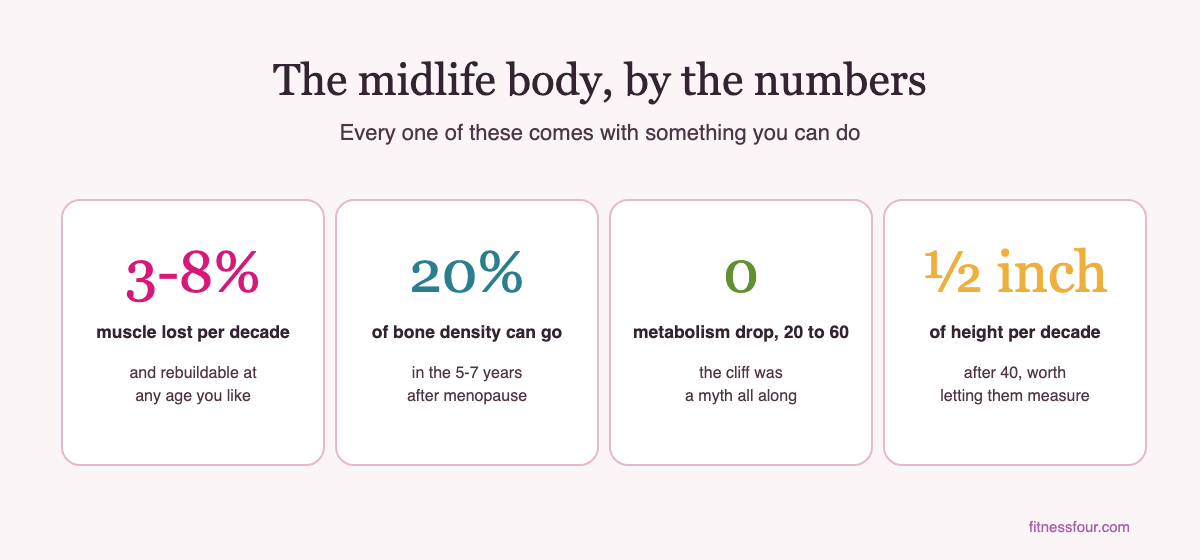
After age 40, we begin to lose some of our height, about 1/2 inch per decade is normal, caused by the discs in the spine losing water and the vertebrae settling closer together.
Talk with your doctor if you’ve lost more than an inch recently. That could be a sign of bone loss in your spine. Have your doctor measure you at your exam. That gives you a real gauge rather than the number you’ve been giving for years.
Where to begin
As with everything, you don’t need to change everything all at once. You’re more likely to stick with long term changes if you do them in smaller increments.
We recommend starting with strength because more muscle mass helps a whole slew of things like your joints, balance and overall ability to get around.
Then add in walking and an increase in protein. Before you know it you’ll feel like a younger you!