The Only 4 Supplements Worth Taking After 50, According to Research

You can easily go down the wrong path by taking too many supplements, and there are many out there. Women over fifty have access to about thirty different products, each designed for one of our fears: collagen for skin, gummies for hair, greens powder for vague overall wellness, plus a monthly delivery service to cover everything.
I am stating my unpopular opinion first: most supplements do not have solid research supporting them, food will always beat a pill if food can deliver what the pill delivers, and the research-supported list for healthy women past age fifty is only four items long, and two of those four you may not even need.

Before getting to the list, one general ground rule: discuss any new supplement with your doctor before using it, because of potential interactions with prescription medications you may currently be taking, blood thinners especially, and because two items on this list are worth a blood test first. Discussing all of it will take approximately five minutes at your next visit.
1. Vitamin D
The case for it: a large number of women older than fifty run deficient in vitamin D, primarily due to decreased skin production with aging, less time spent outside, and more frequent use of sunscreen (as it should be used). The deficiency matters for us specifically because vitamin D combines with calcium to help prevent the bone density loss that occurs post-menopause, and deficiencies have also been linked to muscle weakness and low mood during the limited-sunlight winter months.
However: if your current levels are already within normal limits, additional supplementation provides no further benefit, and that’s why the studies that administer vitamin D universally show such lackluster results. This product is intended for individuals with documented deficiencies, and many of us have them. Get tested at your next check-up, and if the test indicates you are deficient, ask your doctor how much daily vitamin D3 they recommend (usually between 1,000 and 2,000 IU). It’s cheap, safe and worthwhile.
2. Omega-3s (fish oil)
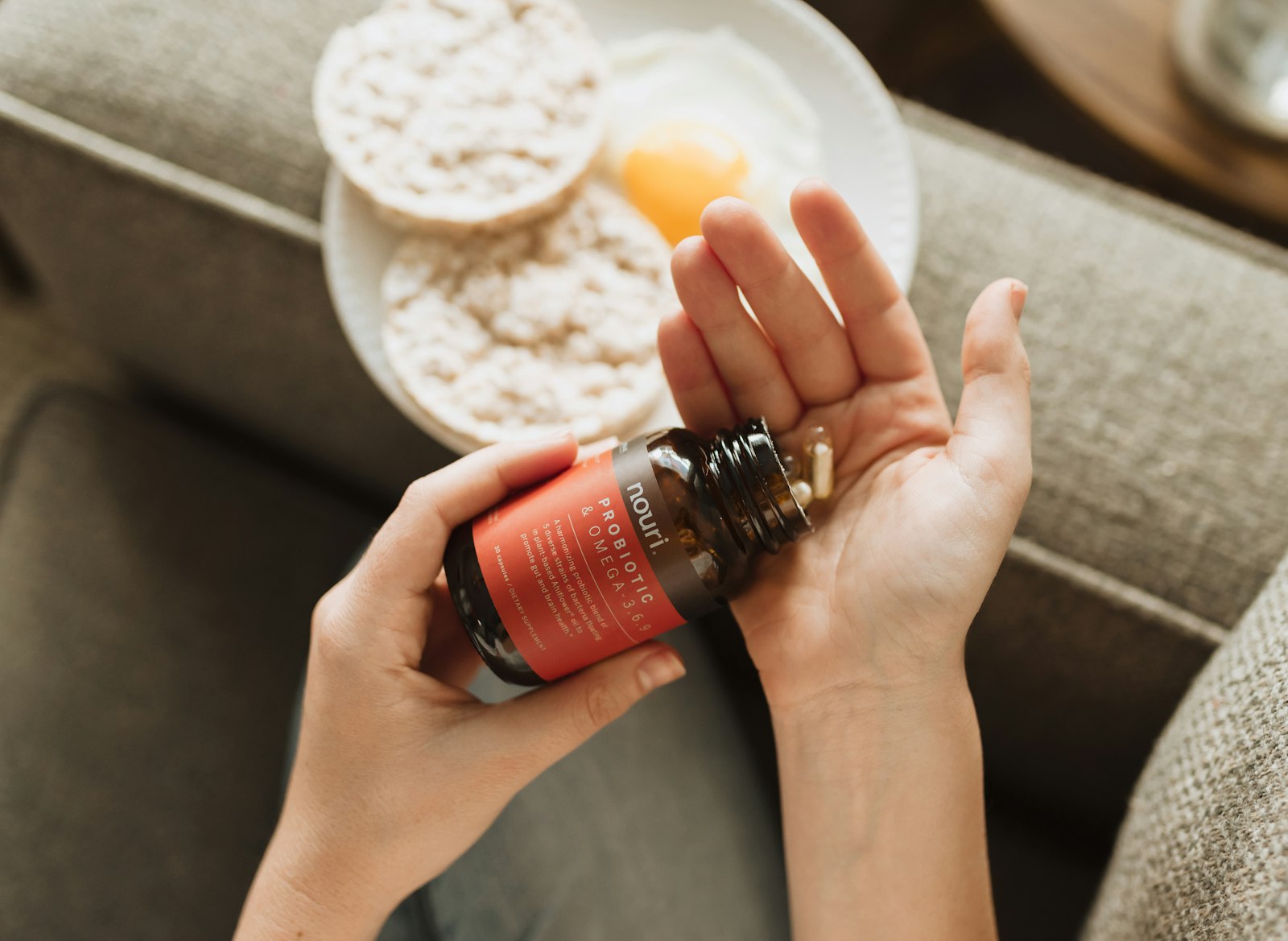
The argument in favor: the omega-3 fats EPA and DHA support both heart health and brain health while aiding in resolving the chronic low-grade background inflammation we’ve discussed before, and numerous studies relate higher omega-3 levels to better cardiovascular outcomes. Omega-3s are also among the handful of supplements demonstrating credible evidence on joint comfort.
The caveats exist in two forms. First: consuming fish twice per week demonstrates virtually identical benefits compared to taking the capsules, often better. So if salmon or sardines actually find their way onto your dinner plate, you can skip the pill altogether. Second: if you’re certain neither appears on your grocery list or your dinner table, purchase capsules from an independently lab-tested brand supplying roughly 1000mg of combined EPA and DHA daily, and store them refrigerated once opened.
And remember that fish oil thins the blood slightly, which is yet another reason for the discussion with your doctor before adding it to your regimen.
3. Creatine
This may shock you, given creatine’s history with weightlifters and bodybuilders, but it now stands as possibly one of the best-researched dietary supplements ever created. Specifically regarding women over fifty, the muscle and strength data indicate that adding creatine to a regimen of resistance training produces noticeably more muscle than resistance training alone. Early but increasing evidence suggests creatine carries some cognitive advantages as well, which makes sense, since muscles and brains use similar cellular energy systems. Three to five grams per day of plain creatine monohydrate comprises the entire regimen.
Two caveats exist. Creatine functions WITH strength training, not instead of it, and if you do not perform strength training, ingesting creatine merely enables carrying a slightly heavier water bottle. And anticipate an instantaneous increase on the scale ranging from one to two pounds immediately after beginning, due solely to water absorption into muscle tissue, which is precisely where we wish it to reside, versus fat.
4. Protein powder
Strictly speaking this represents food inside a container versus an actual legitimate supplement, which is exactly why I included it here. With traditional cooking alone, finding adequate protein per meal, the twenty-five to thirty grams that sustains muscle mass post-menopause, proves extremely difficult, especially at breakfast. Thirty seconds with protein powder addresses what meal planning fails at weekly. Whey digests rapidly and mixes well into just about anything, and plant-based options work equally well if dairy creates issues for you.
Two caveats here too. Protein powder addresses gaps within existing meals versus establishing the foundation, so if you currently consume enough real protein through your meals, you won’t need any tub. And purchase one containing approximately 20 to 25 grams per serving, select the option with a minimal ingredient list, and avoid anything tasting like liquid candy bars and regret.
What didn’t make the list, and why
Collagen boasts highly enthusiastic marketing but lacks substantial evidence behind its claims, and sufficient protein via food accomplishes similar goals. Greens powders represent expensive vegetables with the fiber removed. Multivitamins display little to no demonstrated benefit in the larger studies of well-nourished populations, although they could serve as suitable insurance when your eating is irregular.
Calcium provides superior advantages via food first, since high-dose calcium supplementation raises some concern regarding cardiovascular risk, so reach for yogurt, cottage cheese and greens before the tablets. Magnesium provides benefit to individuals whose levels fall below the threshold, worth discussing if sleep or muscle cramping difficulties arise, but it failed to meet the everyone-should-consider criteria.
| Supplement | The dose | Worth it if |
|---|---|---|
| Vitamin D3 | 1,000-2,000 IU a day | A blood test shows you run low, and many of us do |
| Omega-3s (fish oil) | About 1,000mg combined EPA and DHA | Fish isn’t making it to your plate twice a week |
| Creatine | 3-5g a day | You’re strength training; it doesn’t work without it |
| Protein powder | 20-25g per serving, as needed | Your meals keep falling short of 25-30g of protein |
The summary: test and correct vitamin D, obtain omega-3s through fish with capsules as the secondary method, add creatine only if you’re performing strength training (which you should be), and use protein powder as needed when existing meals fall short. A maximum of four bottles, two of them conditional, and every single dollar not spent on the other thirty supplements is better spent on actual food, where the real supplements have been all along.