The Evening Routine That Finally Fixed My Sleep at 51


Medically reviewed by Stephanie Wright, RN, BSN
Falling asleep can be easy for you, but for me, somewhere along the way in my late forties, I began having trouble getting to sleep. Sometimes it would take an hour for me to fall asleep. Or, I’d fall asleep fine but wake up in the middle of the night replaying every embarrassing moment of my life. Either way, I’d get up in the morning feeling like I hadn’t slept well.
At first I blamed it on the change in sleep patterns and assumed that eventually it would improve. It did, but not because I sat back and waited. I implemented some small changes to my daily and nightly routine. In fact, I’d dare say that I sleep better now at 51 than I did at 48.
Here’s my evening wind-down routine.
My last coffee is at noon
How fast you clear caffeine varies a lot from person to person, and it shifts for reasons that have little to do with age — genetics, medications, liver function, how much you drink day to day. So I can’t tell you that turning 50 is what changed it. What I can tell you is that coffee in the afternoon used to be no big deal for me. Now, it interferes with my ability to fall asleep.
After just four days without my customary after-lunch two o’clock cup of Joe, I noticed an immediate difference in falling asleep at night.
If I want a hot beverage later in the day, I’ll sometimes have a cup of green tea. Green tea is not decaf, it’s just much lower in caffeine.
Dinner is around 7, followed by a walk
I eat dinner around seven and then go for a walk afterward. The walk is a signal to my body that this is my wind-down time for the evening.
At 9, I turn the lights down
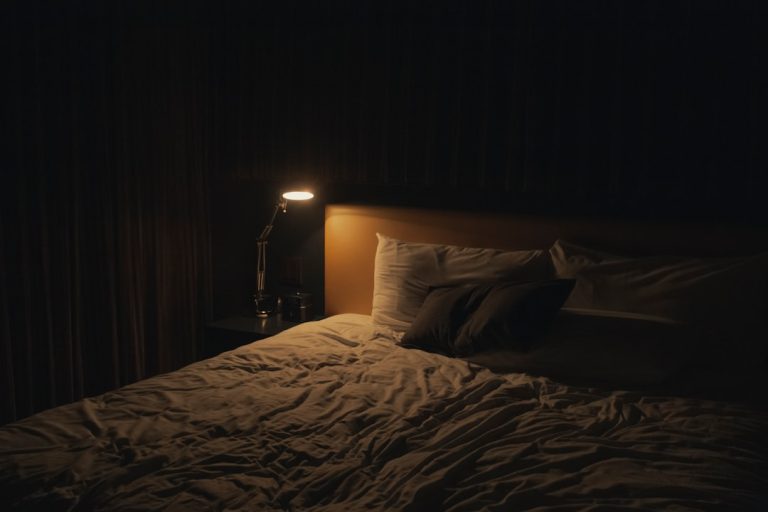
Exposure to light can delay your brain’s release of melatonin, the hormone that makes you sleepy. To encourage melatonin production, I turn off most of the lights in the house at nine and leave only a couple of lamps on. I soon start to feel tired.
My phone charges in the kitchen
I put my phone in the kitchen. This prevents me from staying up too late scrolling or catching up on the latest world news or responding to a barrage of texts.
By the time I realized it was 11:40, I was wide awake.
Leaving the phone in another room is an excellent case of out of sight, out of mind. Now, when I’m in bed, I have to get up and walk into another room if I want to check my phone.
I bought a simple, inexpensive alarm clock, about $12, for my bedroom and leave my phone in the kitchen all night.
I keep the bedroom cool
I keep the temperature in my bedroom between 65 and 68 degrees Fahrenheit.
Your body’s core temperature drops as you’re gearing up for sleep, so a toasty room can interfere with sleep.
Instead of getting hot and sweaty and waking up in a mess, I stay cooler and sleep through the night. During the summer, a fan keeps the air circulating. During the winter, I leave a window open. I also switched to a cotton sheet set, which is more breathable.
I’m in bed by 10 with a paper book
Fiction only. If I read anything else, my brain will start making lists of things that I need to do and I’ll stay up much later than I planned.
At ten, I climb between the sheets, pick up my book and settle in for the night. Under the light of a lamp on the nightstand, I’ll read a couple of pages, maybe as many as twenty pages. Then, I turn off the lamp and go to sleep.
I get up at 6:45 every day
My alarm goes off at 6:45 each morning, weekends included.
Researchers emphasize that it’s important to keep the same wake-up time in order to train your body’s circadian rhythm to peak in sleepiness at the same time each evening.
I gave up being a Sunday sleeper-in, which was contributing to tossing-and-turning Sunday nights.
If I wake during the night, I leave the clock alone
I used to reach over and look at the clock when I’d wake up during the night. Instead of relaxing back into slumber, I’d calculate how much longer I’d be able to sleep and toss and turn trying to drift back off.
When I glanced at the clock at 3:14 a.m., I started counting down the hours left to sleep.
Now, if I happen to wake up during the night, in the glow of a little lamp I’ll read a few more chapters from my novel and then climb back into bed.
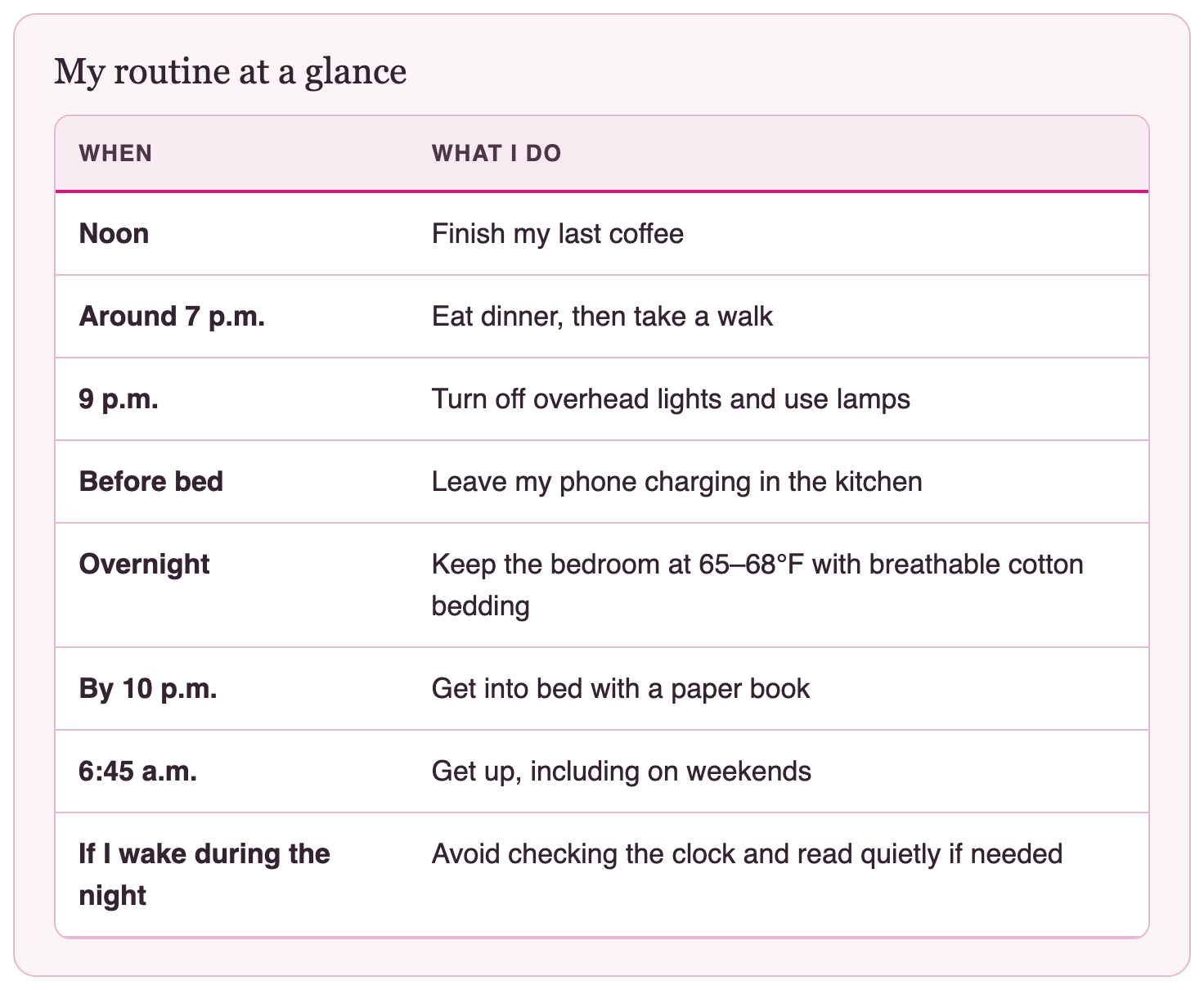
My routine at a glance
Start with one change
Most of what I changed was moving or tweaking habits I already had. They took weeks of repetition to cement.
Pick out the easiest tweak and try it for two weeks. When you’re exhausted from poor sleep, small, gradual changes are best.
Keep doing it until it becomes a regular part of your nightly routine. Then, pick another idea to implement.
But poor sleep isn’t your lot in life, and not something to just put up with. You can change your situation.