Ten Days of App-Based Mindfulness Improved Sleep in a Danish Trial, With One Odd Side Effect

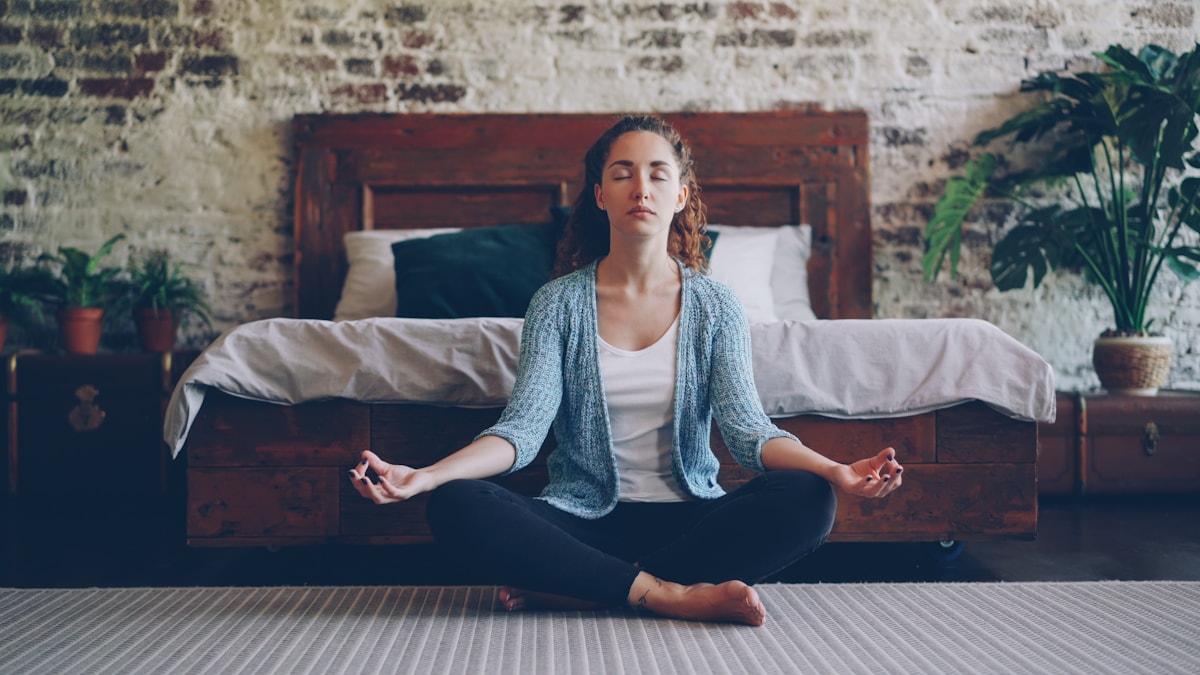
Mindfulness has been around for a long time (with things like Transcendental meditation etc) but it really came into the public consciousness when the Headspace app exploded around 2016. That took “being mindful” or meditating from something people thought had to happen by saying the word “om” while sitting on top of a mountain with your legs crossed.
But Headspace made that accessible (almost easy…too easy?) to anyone with a smart phone. And they could meditate anywhere. In their car, on their couch…literally anywhere.

But there was always an underlying question: Do these mindfulness apps really work? Can you actually get the benefits of meditation on a phone? It flew in the face of what a lot of people assumed made things like TM work so well. Complete and utter focus.
But a new study out of Denmark says there may be something to these apps…with one little catch.
The University of Southern Denmark studied 81 adults (49 who got the app, 32 who waited) to see if the ones who used the app for 10 days saw any specific benefits.
Each one of the participants wore an Oura ring (even the ones who were still waiting.) So their sleep was measured instead of asking them to fill out a questionnaire when they woke up.
What improved
After just ten days the mindfulness group had better sleep, more total sleep and more deep and light sleep. They also fell asleep faster. Each component of those measurements were better than the group that was on the waiting list.
And then after a four-week followup it showed that every single one of the sleep improvements were still there except for the deep sleep. That shifted back to the participants’ pre-mindful baseline.
In addition to sleep improvements, their heart rates fell and heart rate variability (HRV) rose. Which tends to happen when you shift yourself out a stress mode. Which are pretty significant in terms of how that can impact your overall health.
“A brief, app-based mindfulness program produced sustained improvements in sleep efficiency and enhanced HRV, demonstrating that digital mindfulness can favorably influence biobehavioral sleep-stress metrics.”
Kirk et al., Scientific Reports, March 2026
Anecdotally, they also said that they felt more present in the moment.
This is a small study, so we can’t say that these results are going to work for everyone. But it’s a good sign that there are some physical improvements from the mental ones.
And the short duration of the trial may make people be more open to trying meditation. Since a lot of people say that the big commitment is something that holds them back.
The odd side effect, and the limits
One almost humorous side effect was that the mindfulness group said that they had higher rates of personal burnout after using the app for ten days.
And I say that it’s humorous because one of the downsides to being more present is that you also are more keenly aware of the negatives. So if you are feeling tired you are more present with the tired as much as you are with the more positive moments.
“The significant increase in self-reported personal burnout (CBI1) immediately following the intervention presents a paradox: objective sleep metrics improved, yet participants reported feeling more burned out. […] Participants may have become more conscious of pre-existing fatigue and burnout symptoms that were previously operating below their threshold of awareness rather than experiencing an actual worsening of burnout.”
Kirk et al., Scientific Reports, March 2026
But one thing to note is that their personal burnout scores returned to pre-mindfulness in the four week follow-up.
But if you’re interested in trying this, you don’t need an Oura ring. Just download one of the hundreds of apps out there and give it a shot for ten minutes before bed and see how you feel after ten days. (Don’t do it once and quit if you don’t wake up feeling fresh faced and ready to face the day.)
If you are looking to upgrade your whole sleep and evening schedule, check out our evening routine article.
Five mindfulness apps worth trying
- Insight Timer – the biggest free library, thousands of guided sessions plus a plain timer, no subscription needed.
- Headspace – the structured beginner course that made all of this mainstream.
- Calm – strongest for sleep, with wind-down sessions and sleep stories.
- Balance – asks a few questions and builds a personalized plan around your answers.
- Smiling Mind – completely free, run by an Australian nonprofit, good for families.
What trying it could look like in your own life
So where does that leave you, someone who’s decided to give mindfulness a go? Interestingly, participants in the Danish study were asked to conduct a session, a ten-minute Headspace exercise via the Oura app called “destress,” which the researchers pointed out isn’t specifically geared toward improving sleep, once per day, at whatever time worked best for them.
Maybe for you, practicing at bedtime does seem like the best idea. Or maybe adding one more thing at the end of your day seems daunting. Consider other times that might work for you, then. After breakfast? During a quiet lunch? Before things get busy in the evening? Find a time that tends to be less fraught with interruptions; don’t worry about finding the perfect time and place.
Choose one session and give it a fair chance
Download a meditation app and it’s easy to be overwhelmed by choice, in a similar way to streaming services. There will be instructors you’ve never heard of, recommendations, categories, and this can take away from what should be a relaxing experience. The whole point is to find one track that’s suitable for beginners and short enough that you’re not daunted by it, since there’s plenty to choose from that focus on breathing, on the body, on sounds etc. More importantly, it should be one that you’re comfortable with, meaning that the pace doesn’t bore you or go too fast, the intro is not too long and the instructor’s voice is one you like listening to. That’s completely normal and important because chances are, you’re going to want to be able to repeat it the following day. Titles will sound enticing, promising, catchy… Don’t be tempted to listen to a different one each time. Pick a favorite and stick with it.
A wandering mind comes with the territory
All this being said, it’s important to remember that your thoughts will probably start to wander after a couple of minutes. That’s okay. That’s totally normal. You’ll begin thinking about what you’ll have for dinner or something that someone said to you yesterday. That doesn’t mean you’re not allowed to be mindful, or that you’re doing something wrong. That’s not a bad thing. Simply acknowledge that your mind has strayed, and redirect your attention to the next suggestion. If you think about a list of things you need to pick up at the grocery store, acknowledge them, but leave them be for now. They can wait. It’s also normal for your body to feel restless during meditation. That’s okay. Don’t try to copy images you’ve seen of people meditating if they aren’t comfortable for you. Get creative. Find a supported chair that helps keep you comfortable. Don’t hurt your knees. After ten minutes, you may be feeling calmer, or you may be aware that you’ve done something you’ve never done before. Whichever that may be, you’ll be ready to try again tomorrow, and that’s all that’s necessary.
Use your phone without inviting the whole phone along
Before starting a session on your phone, consider muting notifications, unless you need to be available for particular phone calls, as there is an option for that. Once the session is selected and playing, you can lay the phone down screen-side down, because you don’t need to be able to see it. Some people like headphones, some are happy with their phone’s speaker as long as they’ve got enough privacy, so keep it simple. If it’s part of a wind-down routine in the evening, it can be helpful to think in advance about what you’re going to do once the session has finished. For example, might you put your phone on its charger and pick up a book? Otherwise there’s a danger that a ten-minute session could turn into thirty minutes of scrolling through your phone. The goal is easy, accessible relaxation, avoiding unnecessary additional time on the phone.
Notice how your days feel, too
Sleep is an obvious focus as any changes, such as staying awake for shorter periods of time, bad nights becoming less frequent, or increased energy when you get up, are tangible and immediate. But you’ll also want to think about your state during the day: do you feel less agitated come bedtime? More rested?
So log: How well (roughly) you slept? How you feel the following day? Did you manage to do the session? How enjoyable was it as this will determine whether you manage to maintain your new-found mindfulness? Keep notes of factors which might be affecting your sleep, such as illness, stress, or travel, so that you don’t give the mindfulness app undeserved credit/blame for any positive/negative effects. This won’t give you scientific proof as to whether mindfulness has an effect but it will give you an idea as to whether it works for you.
Keep the study’s participants in mind
But there are a couple of caveats. First, this is a very particular study. The authors were clear on this. They studied healthy adults aged 20 to 60 and analyzed data from subjects with a low level of stress. What happens when mindfulness is put to the test among populations that weren’t considered, say, among postmenopausal women and people with diagnosed insomnia? We just don’t know. Second, it’s unclear if mindfulness meditation is better than other ways of decompressing because the control group simply waited. They weren’t assigned a different activity, say, listening to a relaxation recording. It’s hard to tease apart whether mindfulness is more effective than spending time alone and enjoying the silence. With these caveats in mind, it’s important to understand what the study can tell us. These results are encouraging and warrant further research. But this study does not tell us that downloading a meditation app is good for everybody. The paper describes these limitations itself.
Take the burnout finding seriously without assuming the worst
Not everyone responds positively to meditation. In fact, according to the National Center for Complementary and Integrative Health (NCCIH), some people have adverse effects from meditating. Anxiety and depression are the most commonly reported negative effects of meditation.
It’s possible, the researchers suggested, that meditating has highlighted burnout you hadn’t been noticing. There’s not enough data to say that meditation increases burnout. Apps can’t make decisions about getting enough rest, delegating some of your tasks, or dealing with demands that have gotten hard to manage. So while meditation itself may not have made you more burned out, meditating may have made it possible for you to identify how burned out you are. If you continue to feel distressed, or feel that your symptoms are getting worse, it’s important that you stop meditating and get the right support and help. Feeling worse during or after meditation does not mean it’s working.
Know when a sleep problem needs more attention
While these apps are fine to use along with other treatments, it’s important not to avoid getting help for a sleep issue by using a mindfulness app. If you’ve been having trouble sleeping and are concerned you may have a sleep disorder, talk to your clinician about your symptoms. Cognitive behavioral therapy for insomnia (CBT-I) is usually the first-line treatment suggested by the National Heart, Lung, and Blood Institute (NHLBI) for chronic insomnia. CBT-I may be available in-person, via phone, or online. If you’re experiencing loud snoring, gasping for air during sleep, or excessive daytime sleepiness, let your doctor know. Fatigue and insomnia are two symptoms of sleep apnea listed by the NHLBI, and these two symptoms are more common among women with sleep apnea. After ten days, ask yourself whether your app’s mindfulness routine has been worth the trouble. If you’re still having difficulty sleeping, keep in mind that’s information you can usefully provide to a clinician, not a referendum on your ability to meditate.
The Bottom Line
This is a very small study, so don’t take it as gospel. But it shows the potential for how mindfulness apps can help both mental and physical metrics. They are pretty cheap so if you want to try them out, the downside is pretty minimal.