Foods, Drinks and Habits That Make Hot Flashes Worse: Evidence vs. Anecdote

If you’re nearing menopause, you’ve probably already been told to avoid certain foods or beverages, or maybe even some lifestyle habits, because they make hot flashes worse. And while there is some evidence to back up many of these claims, not everything you’ve likely heard is supported by cold, hard data.
Some information you’ve been given is quite sound, while some of it is just anecdotal stories that have spread like wildfire, like old wives’ tales that, for better or worse, turned out to be deeply false.
We rank each and tell you how to find your own triggers so that you can make changes to find relief that are based on real evidence and your own experiences.
What a “trigger” can and can’t do
When you hear the word trigger, it sounds like it’s a direct cause. But that’s not the case. Hot flashes aren’t really brought on by anything on this list, but are rather physiological changes taking place in your body.
The hypothalamus, a small region inside the brain, regulates core temperature to keep you at comfortable levels. This is called the thermoneutral zone. Think of it as the perfect fall day when it’s neither too cold nor too hot, just perfectly comfortable. When the body goes through perimenopause, estrogen rises and falls in unpredictable ways, leading to changes in the central nervous system.
When those changes meet a narrower thermoneutral zone, or a smaller threshold for temperature fluctuations, it leads to hot flashes. So, triggers act as an additional push over a baseline the body was already at risk of crossing, leading to hot flashes.
1. Smoking
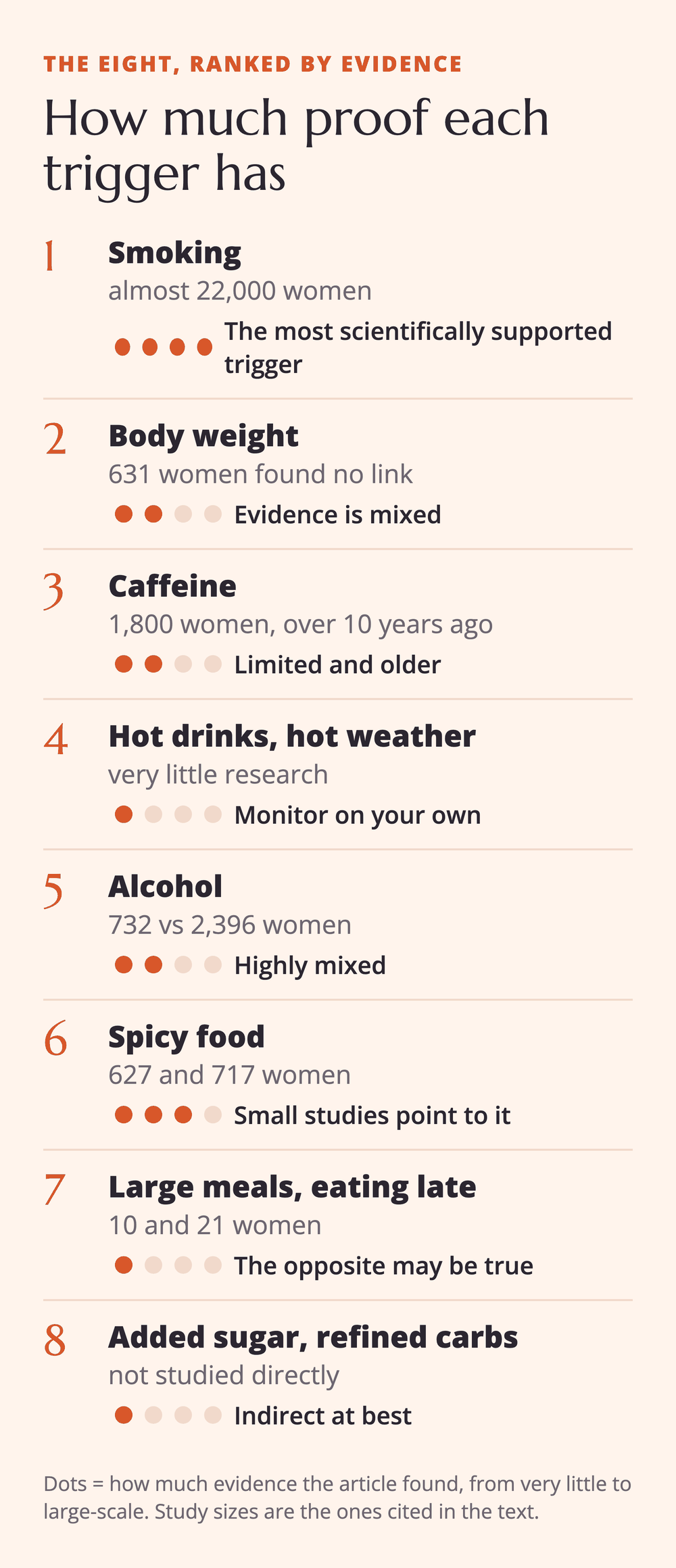
Smoking ranks among the most scientifically supported hot flash triggers, with large-scale study evidence finding that the toxins from tobacco and nicotine drive estrogen loss at a much higher rate while impairing how well the vascular system can regulate temperature.
One specific study looked at almost 22,000 women between 49 and 50 years old across eight different studies. Those in the study who started smoking earlier in their lives and had more years of smoking under their belts were more likely to experience hot flashes more often and more severely than non-smokers, and smokers who were also obese had three times the risk of never-smokers at a normal weight.
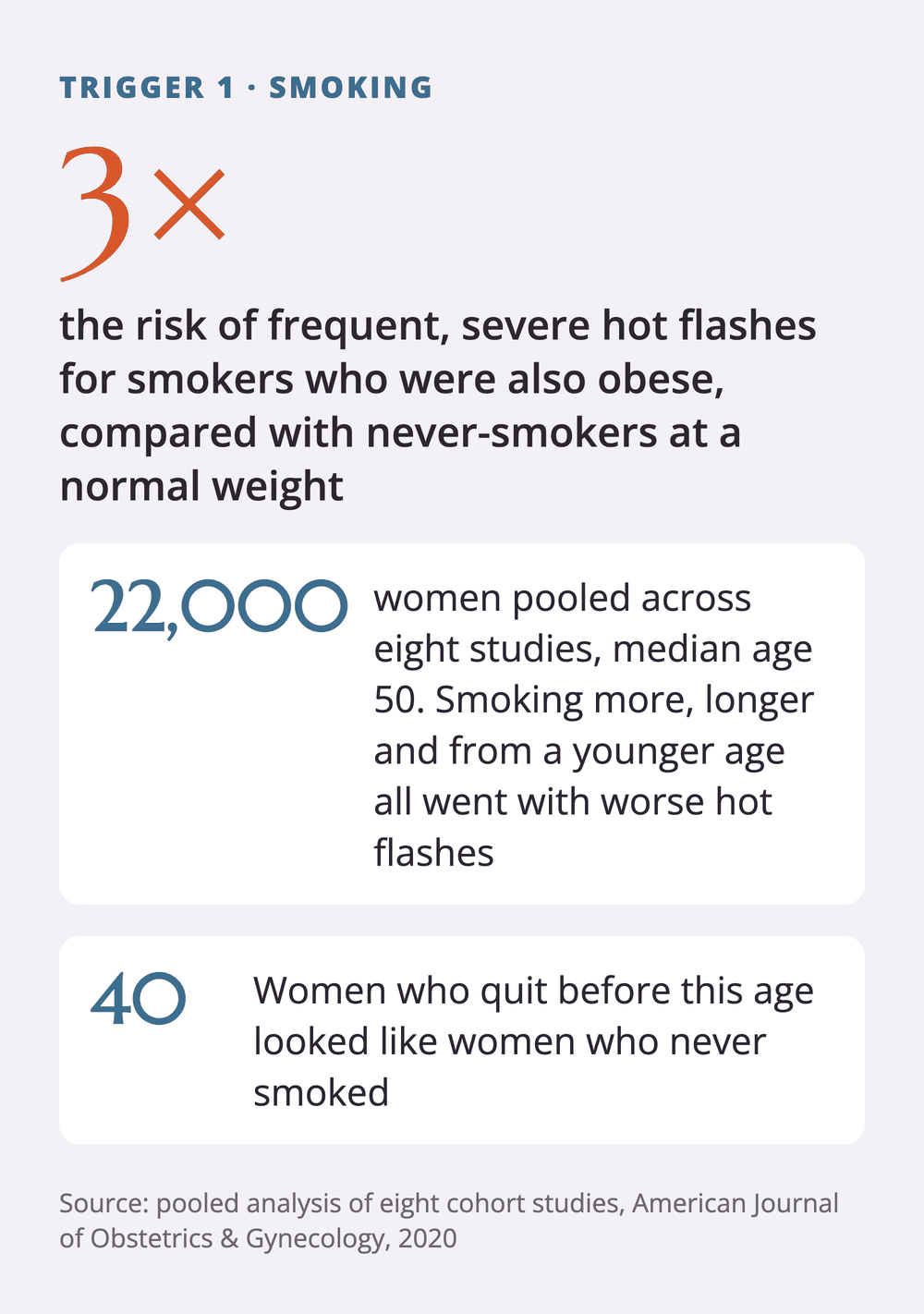
That said, those who quit before the age of 40 showed similar results as those who never smoked. Quitting will help combat hot flashes, but that’s easier said than done. Consider contacting your doctor for potential smoking cessation options that work for you and your current lifestyle.
2. Body Weight
The same research study that linked smoking to hot flashes also links higher body weight to a about 50% higher risk of worse hot flashes. It’s thought that carrying excess weight traps internal body heat, puts stress on the already-stressed nervous system, and changes how estrogen signaling works.
However, this particular study examined people who smoked and lived with obesity or overweight, and other studies found that there is no correlation between body weight and hot flashes. The research that found no connection was a much smaller cohort study, looking at only 631 women between the ages of 45 and 54 over five years.
Because the evidence is mixed, body weight may contribute to hot flashes, but it’s important to consider other factors alongside it when determining if your weight is playing a role.
3. Caffeine
Limited new research exists on caffeine consumption and hot flashes, with the most notable data published over 10 years ago. That specific cross-sectional survey, conducted by Mayo Clinic, looked at 1,800 menopausal women over the course of 6 years and found that the women who drank more caffeine were more likely to experience hot flashes than those who didn’t.

It’s thought that because caffeine expands blood vessels to increase blood flow, it can raise heart rate and make the body think it needs to adjust to cool down even if the temperature isn’t actually increasing.
Another older study looked at 196 people who drank caffeinated soda and found a slight increase in frequency and severity of hot flashes. Because caffeine is in many beverages and in varying amounts, it may be worth assessing how it affects you individually, even with minimal older research showing a connection.
4. Hot Drinks and Environments
Being outside in hot weather and drinking hot drinks can both trigger hot flashes, according to many well-meaning health sites. That said, very little research confirms that. It’s thought that because internal thermoregulation is more sensitive, drinking hot beverages or being outside in hot weather pushes an already-sensitive system to the brink when it tries to cool itself down.
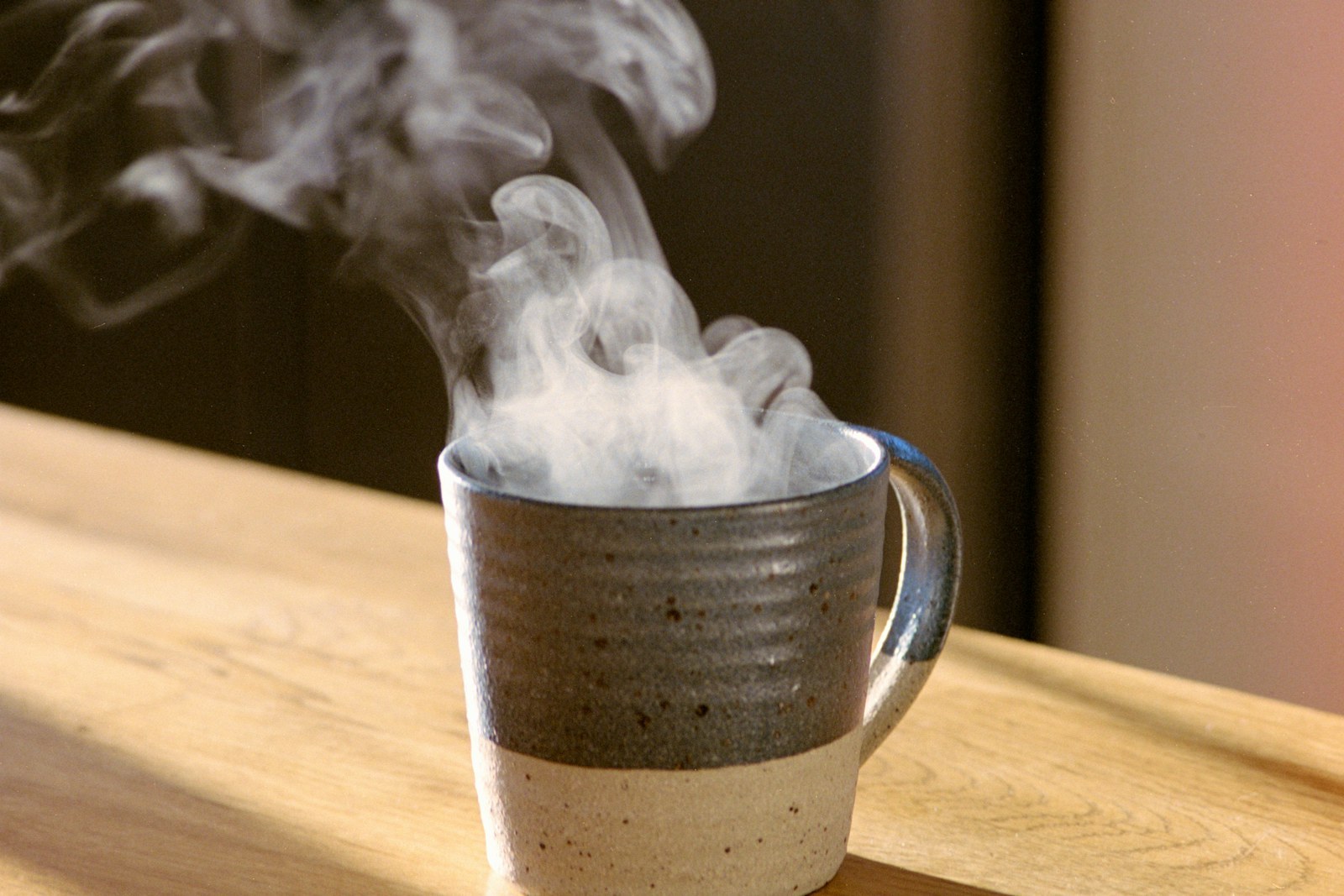
Because of a lack of clinical evidence, this trigger may be something to monitor on your own to determine if it applies to you.
5. Alcohol
The information regarding alcohol as a hot flash trigger is highly mixed. One study from 2016 examined several potential causes of hot flashes in 732 women between the ages of 45 and 54, including smoking history, mental health history, the use of oral contraceptives, and alcohol use. It found that higher current alcohol intake was actually associated with decreased frequency and severity of hot flashes.

Newer research from 2022 examined alcohol consumption and its connection to hot flashes and found something different. The cohort study examined 2,396 women aged 42 to 52 from 2014 to 2018, based on their status as an alcohol drinker: never drank, drank but quit, and current drinker.
Those who drank alcohol were broken up into categories based on how much they drank: light, moderate, heavy, and very heavy. Those who drank more were more likely to have moderate-to-severe hot flashes. In this study, it was thought that because of the way alcohol affects temperature regulation, hot flashes were more likely.
It also suggests that alcohol’s ability to increase certain hormones, such as follicle-stimulating hormone, and its effects on balancing estrogen and male sex hormones play a role.
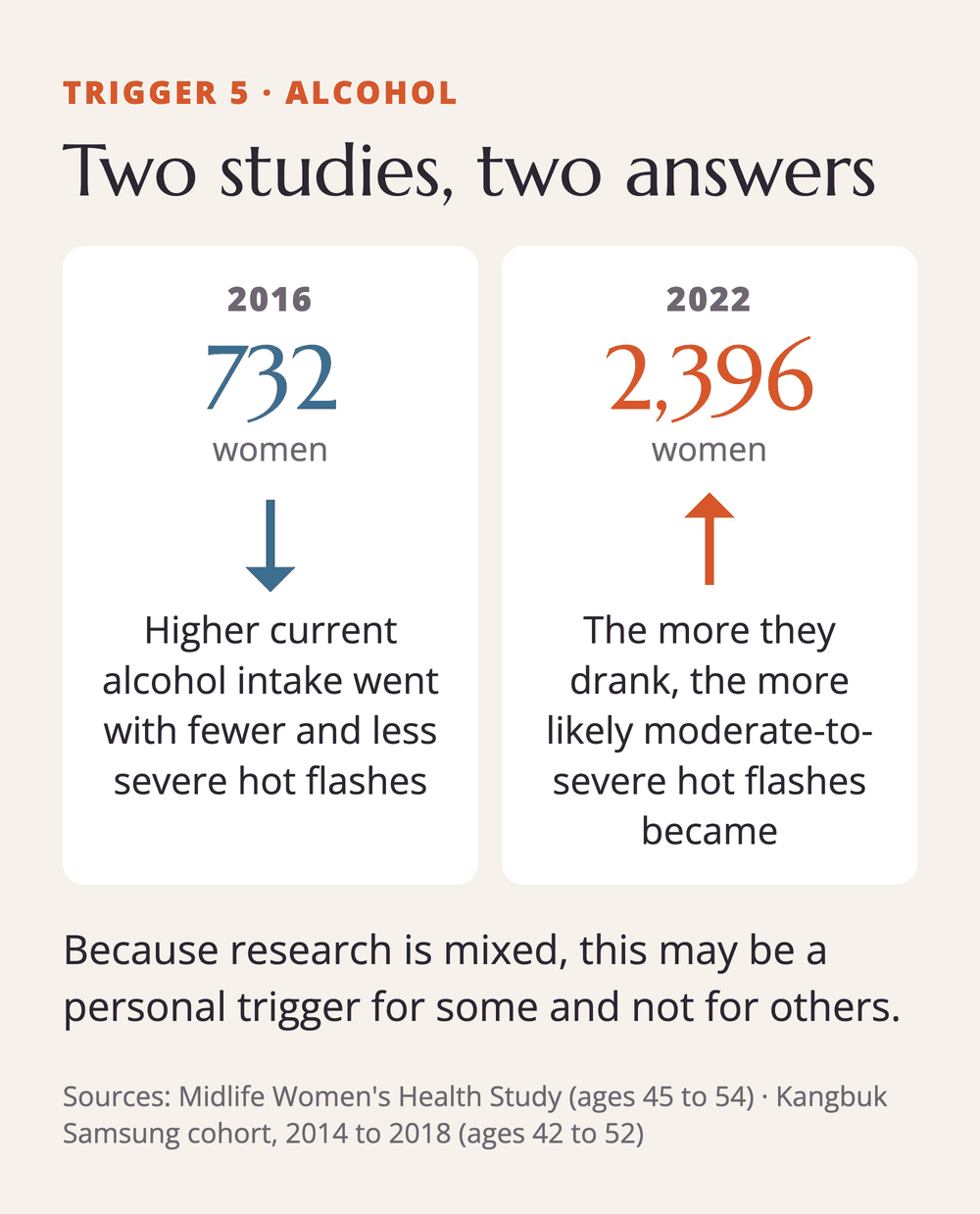
Because research is mixed, this too may be a personal trigger for some and not for others.
6. Spicy Food
Eating spicy food is widely recognized as a hot flash trigger, and while it may affect some more than others, the data points to it being a potential trigger.
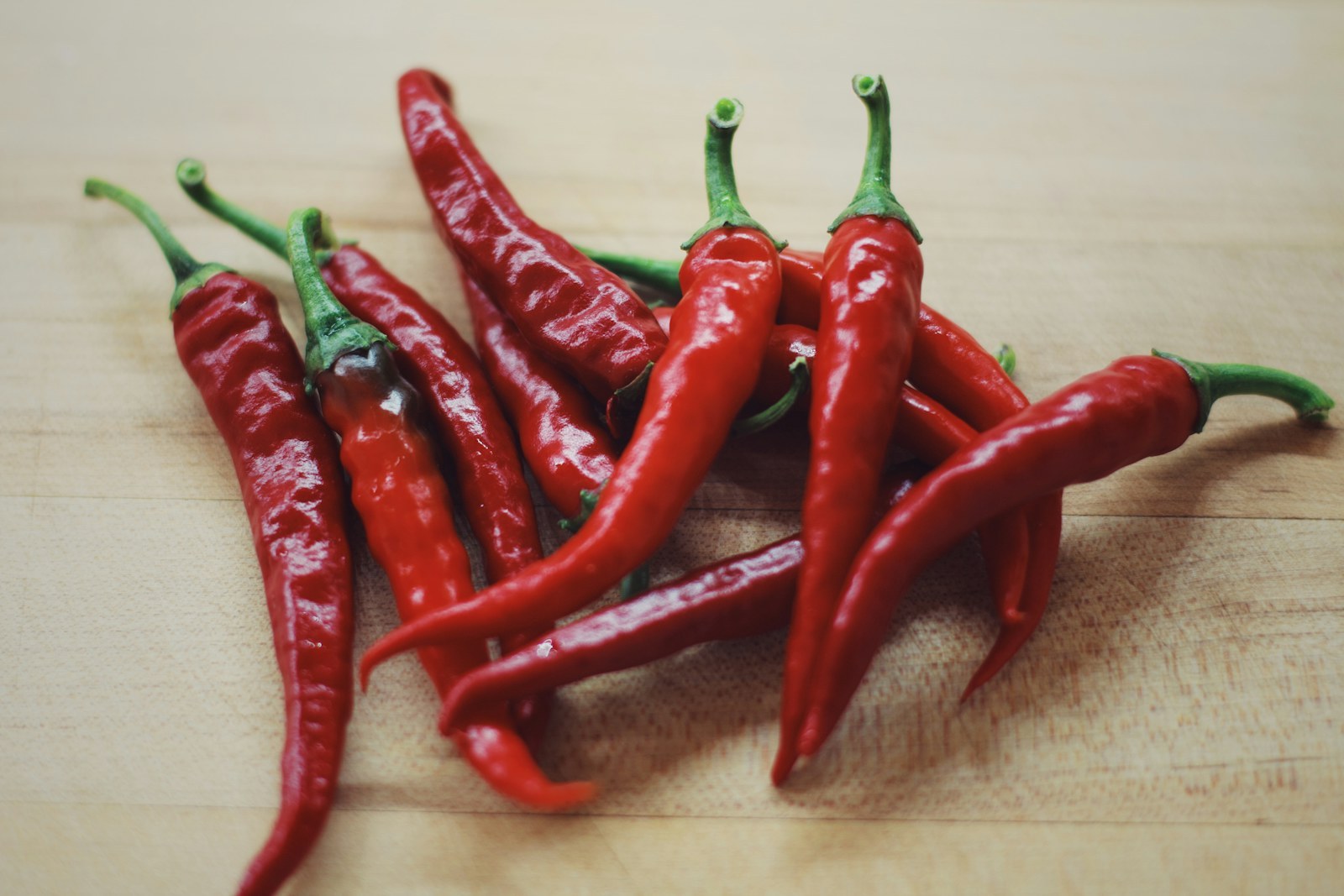
One cross-sectional study of 627 women aged 45-67 examined hot flash prevalence against spicy food consumption and found a direct link between self-reported spicy food intake and more hot flashes. The research suggests that spicy food increases serotonin, which then resets the body’s internal temperature and tricks the brain into thinking it’s hot.
Another study looked at spicy food intake in 717 peri- and postmenopausal women and found the same result: hot flashes correlate with spicy food intake. It’s worth noting that these studies were small and examined only specific populations.
7. Large Meals and Eating Late
Eating large meals or eating late is thought to be connected to a higher prevalence of hot flashes, but research suggests that the opposite may be true. Two very small studies looked at 10 and 21 women to check hot flash status in relation to mealtime. They found that for 90 minutes after meals, the women were hot flash-free. Further, the longer the time between meals, the more frequent hot flashes became.
The data suggests hot flashes are more likely to occur between meals because when blood glucose drops and estrogen is already low, the brain triggers a response to rush extra sugar to the brain to correct it. This reaction causes a hot flash.
It’s worth noting here that the study size was incredibly small, so it should be taken with a grain of salt unless you yourself notice that eating late causes worsened hot flashes.
8. Added Sugar and Refined Carbs
The same study above can also indirectly suggest that added sugar and refined carbs may contribute to hot flashes because they can cause a sharp drop in blood sugar after you eat them.
In the study, drops in blood glucose levels were shown to trigger worse hot flashes, with more hot flashes occurring when meals were spaced further apart.
However, because refined carbs and added sugar cause high blood sugar spikes followed by steep drops, it’s possible that those drops may trigger more hot flashes. That said, the study itself was small and did not investigate the connection between added sugars and refined carbs directly.
Other research may also confirm that added sugars and refined carbs cause hot flashes indirectly because of how the brain manages blood glucose levels when estrogen is low.
When estrogen stores begin to deplete, the brain doesn’t respond as efficiently to its energy needs, so when a person eats foods that can spike blood sugar, the brain may overreact and stimulate neurovascular responses to get more energy to the brain.
How to Find Your Own Triggers
If you’re unsure of what triggers your hot flashes and want to find out, the best way to go about it is by creating a two-week log. Write down everything you eat and drink, when you eat it, and record every hot flash you have, rating it from 1 to 3 based on severity. Once you suspect a trigger after the two-week period, remove it for a week and keep logging to see if anything changes.
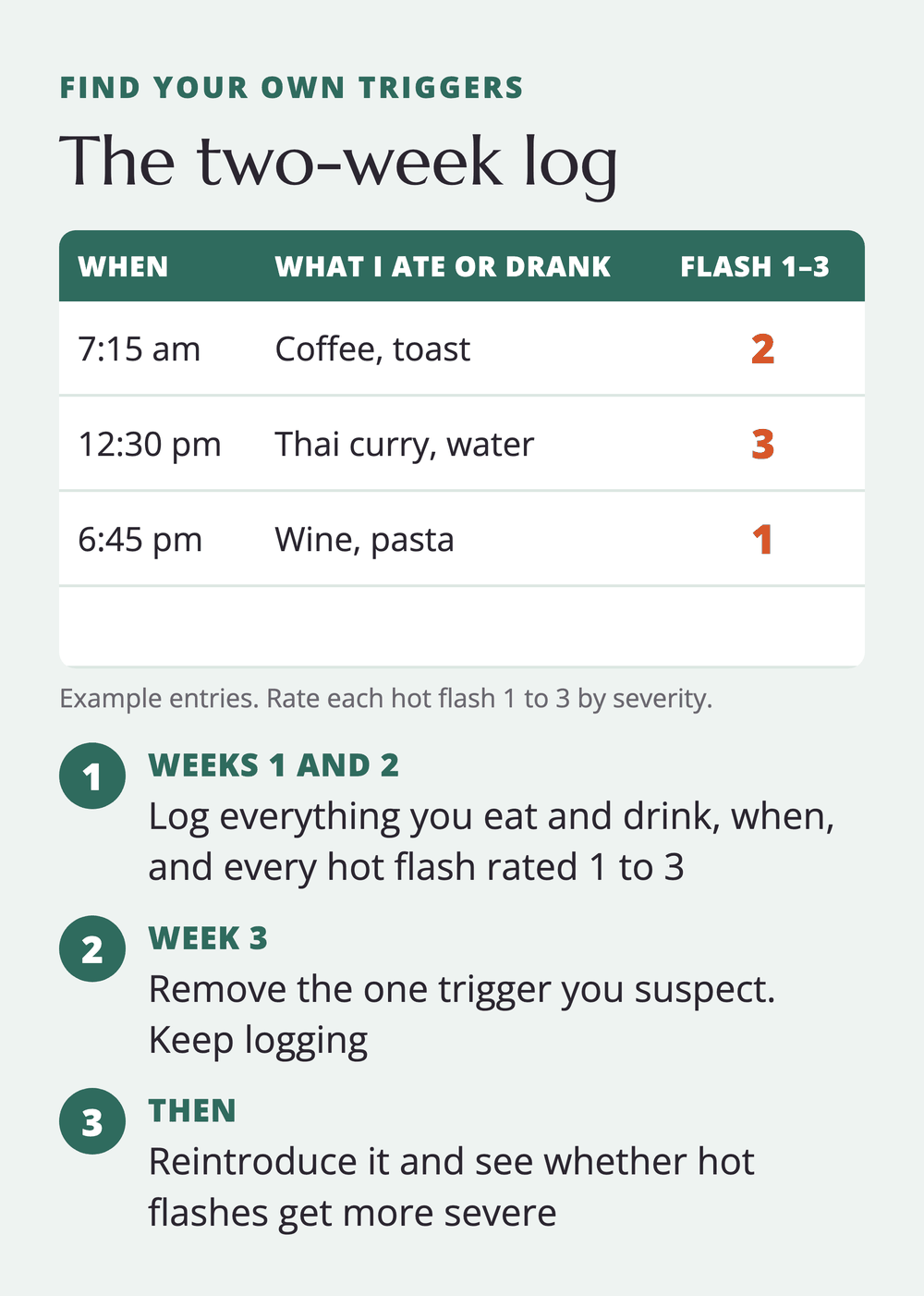
Monitor any changes, and if needed, reintroduce a suspected trigger to see whether it makes hot flashes more severe. The best thing you can do is know what works and what doesn’t for your body so you can find relief.
What Actually Reduces Hot Flashes
While diet changes are always worth trying and easiest to do, they are not a treatment for hot flashes. If you want to combine diet changes with other options, several therapies are available. Cognitive behavioral therapy, clinical hypnosis, and potentially weight loss may all help based on clinical evidence.

If medications are required, hormone replacement therapy is the gold standard. However, other options include SSRIs/SNRIs and gabapentin. It’s important to speak to your healthcare provider about what options may work for you, as everyone is different and medications are a personal choice based on your health history and clinical needs.