14 Daily Chair Exercises & Seated Workouts for Seniors

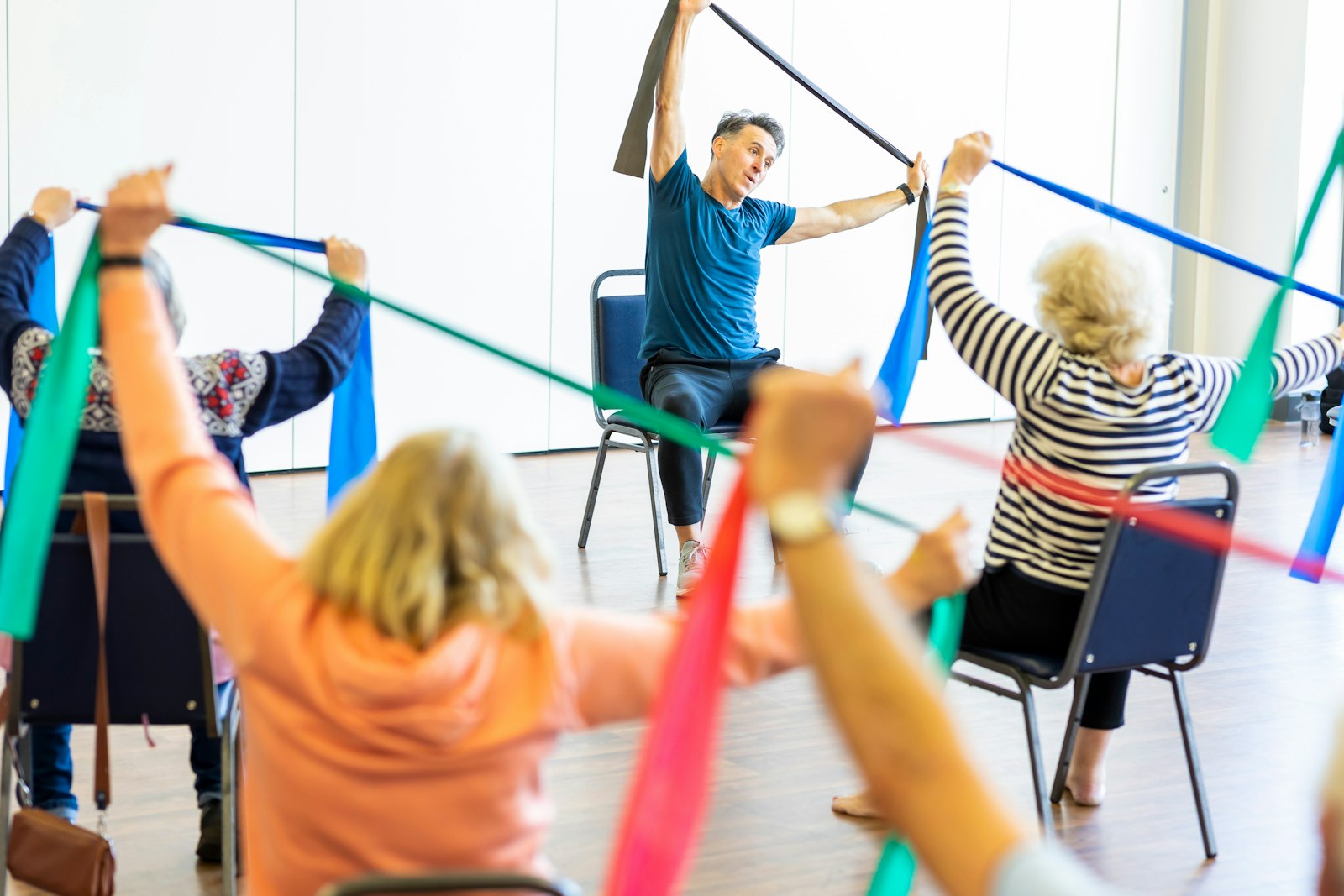
There’s a common misconception about exercising, particularly for seniors, that a “real” workout needs to be done in the gym or on the floor. I’m going to retire that myth now. There are many very effective exercises you can perform while seated in a simple kitchen chair, fully dressed, all in under 15 minutes, and the research supports chair exercise for older adults to maintain flexibility and muscle function as well as stimulate the cardiovascular system.
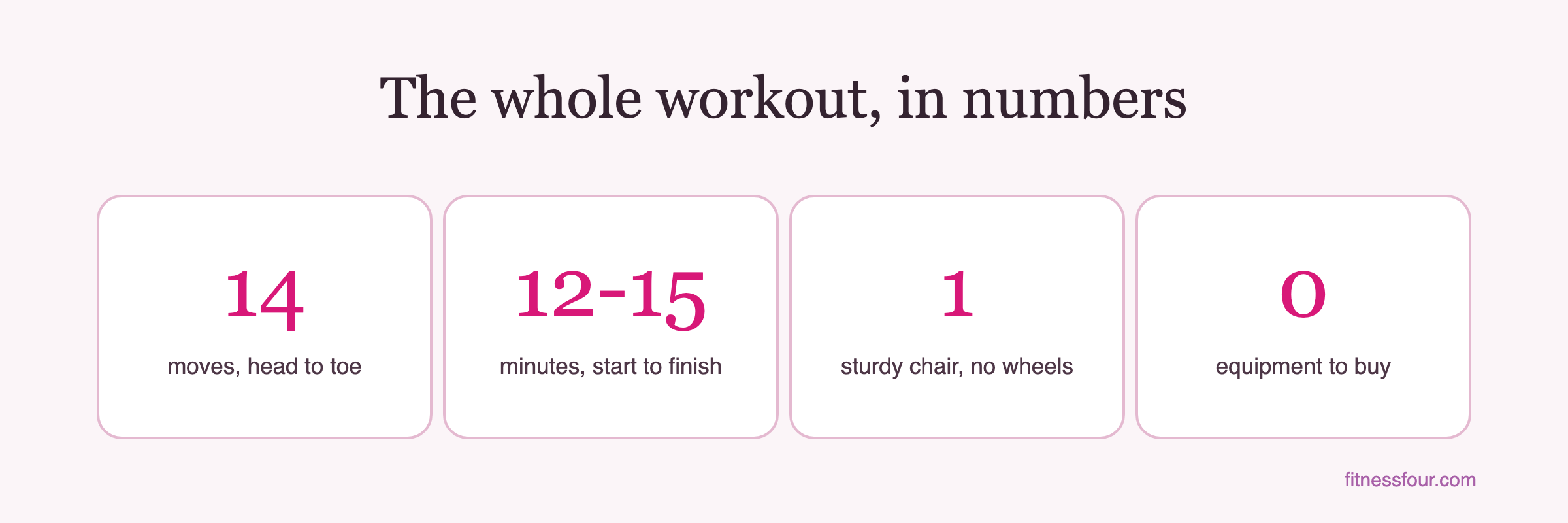
This routine is 14 movements performed in order, daily, and the entire routine takes approximately 12 to 15 minutes to finish. The only equipment needed is a stable chair without wheels (dining chair, not the recliner) and shoes with adequate traction. Sit tall toward the front of the chair, feet flat on the floor, breathing naturally during each exercise.
If any exercise causes pain (and I mean true pain, not effort), skip it and continue with the rest of the routine. And if you have osteoporosis, recently had surgery, or are unsure, please check with your doctor or physical therapist prior to starting. They will likely say yes, but it’s a fast conversation worth having.
| The move | How many |
|---|---|
| 1. Seated marching | 20 total |
| 2. Overhead reach | 10 |
| 3. Leg extensions | 10 per leg |
| 4. Torso twists | 10 per side |
| 5. Heel raises | 15 |
| 6. Arm circles | 20 seconds |
| 7. Neck glides | 8 per side |
| 8. Wrist rolls | 15 |
| 9. Seated jacks | 15 |
| 10. Knee hugs | 5 per leg |
| 11. Ankle rotations | 10 per foot |
| 12. Chest squeeze | hold 10 seconds |
| 13. Forward reaches | 12 |
| 14. Side reaches | 8 per side |
1. Seated marching (20 total)
Begin here because this movement gets everything warmed up. Sit up straight, hold onto either side of your chair for support if desired, and raise one knee upward like you’re marching in place, then bring it back down and repeat with your other knee, alternating until you’ve completed a total of twenty lifts.
This gets blood flowing, and by raising and lowering your knees it works your hip flexors, the muscles that assist in lifting your feet when you walk, which helps prevent tripping over rugs.
2. Overhead reach (10)
Stretch both arms straight up toward the ceiling as far as they will extend, like you’re reaching for items on the top shelf of a cabinet, hold for a brief second, then lower them back down, repeating until you complete ten repetitions. This loosens tight muscles in the upper body, including the shoulders. If your shoulders do not wish to extend fully vertically, stretch up as high as possible; tight shoulder muscles will loosen over time, so be patient.
3. Leg extensions (10 per leg)
Straighten one leg out in front of you as far as it will comfortably go, flexing your foot at the same time so your toes pull back toward you, then lower the leg slowly, taking extra time doing so, and repeat until you’ve completed ten repetitions per leg. This works the quadriceps, the big muscles on the front of the thigh, and your quads provide strength when standing, walking, and bending, which assists in preventing falls. The slow lowering is where the strength gets built, so don’t let the leg just drop.
4. Torso twists (10 per side)
Sit upright, cross your arms over your chest or place your hands on your shoulders, and twist your torso gently toward the right side, hold momentarily, return through the middle, and twist toward the left side, continuing until you’ve completed ten twists per side. Gently twisting keeps the spine and the muscles surrounding it flexible for everyday tasks like backing the car out or reaching into a cupboard.
Be gentle! Twist only as far as feels comfortable. Anyone with osteoporosis should keep the twist small or skip this one, since the twisting action puts additional pressure on the spine, and ask your doctor about it first.
5. Heel raises (15)
With your feet flat on the ground, lift your heels off the floor so you’re pressing through the balls of your feet, squeeze your calf muscles tightly at the top, and lower your heels gradually back down, repeating until you’ve completed fifteen. Your calves generate the force behind every step you take, and strong calves also help pump blood back up out of the legs, which is why this one is a favorite for anyone whose ankles swell by evening.
6. Arm circles (20 seconds)
Hold both arms extended out to the sides, forming a letter T, and make small circular motions approximately the diameter of a dinner plate for twenty seconds. This very small movement creates a burning sensation surprisingly fast, and it strengthens and maintains mobility in the shoulders for tasks above chest height, like drying your hair or putting groceries away. If your arms start complaining before the twenty seconds is up, that’s the exercise working, not a problem.
7. Neck glides (8 per side)
Slowly turn your head to look over one shoulder, return to center, then turn to the other side, continuing until you’ve done eight per side, with smooth, slow movements, avoiding jerky or fast actions. A neck that turns freely without restriction makes it easier to check your surroundings, whether that’s traffic or the top shelf, without turning your whole body.
8. Wrist rolls (15)
Extend your arms forward, hands relaxed, and roll your wrists in circles, fifteen in one direction, then reverse for fifteen more. Though this appears nearly effortless, joint stiffness develops gradually and often goes unnoticed, and stiff wrists lead to poor performance opening jars, turning doorknobs, gardening, and so on.
9. Seated jacks (15)
This is the cardiovascular moment. Start by sitting upright, kick your legs out wide while simultaneously sweeping your arms up and out, in similar fashion to a jumping jack, seated version, then bring everything back in and repeat the sequence until you complete fifteen. If coordinating arms and legs simultaneously proves overwhelming prior to consuming coffee, perform solely the legs portion for the initial sets and attempt the full version once you acclimate.
10. Knee hugs (5 per leg)
Draw one knee upward toward your chest, grasp it with both hands, hug it in briefly, then allow the knee to descend slowly back to its normal position, repeating with the alternate leg until you’ve completed five per leg. This stretches the lower back and hip region, and it just plain feels good.
11. Ankle rotations (10 per foot)
Raise one foot slightly off the floor and rotate the ankle in full circles, ten one way and ten in reverse, then switch feet and perform the identical sequence. Flexible ankles are an excellent fall-prevention tool, since an ankle that can adjust to uneven sidewalks keeps a stumble from becoming a fall.
12. Chest squeeze (hold 10 seconds)
Press your palms together at chest level, elbows wide, squeezing as firmly as possible for a duration of ten seconds, then release and take a breath. You’ll feel the chest muscles fire immediately. No equipment required, simply your own body weight for resistance, and it keeps the pushing muscles strong for getting up off low sofas and out of cars.
13. Forward reaches (12)
Reach both arms out directly in front at shoulder height, stretch forward in similar fashion to sliding an item away from you on a table, feel the upper back stretch, then return your arms and repeat the process, completing twelve total reaches. Hours of sitting cause a forward tilt in the upper back, and this movement helps counteract that effect, literally.
14. Side reaches (8 per side)
Finish the routine here. Reach one arm above your head, leaning gently to the opposite side, hold a brief moment, return to center, then repeat on the other side, continuing until you’ve done eight per side with smooth, gradual movements. It stretches the entire length of the upper body and helps overall posture, leaving you sitting taller than when you began.
Making it stick
The magic word in the title is daily, and daily only happens if the routine attaches itself to something you already do, like the morning coffee or the end of the noon news. The first week, some moves will feel awkward and some reps will feel like plenty, and that’s fine, do what you can and stop before strain.
When it all feels easy, add a few reps, slow the lowering phases down, or run through the whole list twice. Moving a little every single day is how you stay moving for years to come, and this is one of the easiest ways I know to make that happen.