The Japanese Walking Method Women Over 50 Swear By

I was intrigued because interval walking can be done on your normal walking routes, no special training or athletic prowess required, and you’ll start noticing benefits in your ability to do everyday activities in a few weeks. It’s ideal for people who are looking for a simple and convenient way to stay active that doesn’t include joining a gym, or buying fancy exercise equipment. Interval walking is nothing exotic, just walking.

What is Japanese interval walking?
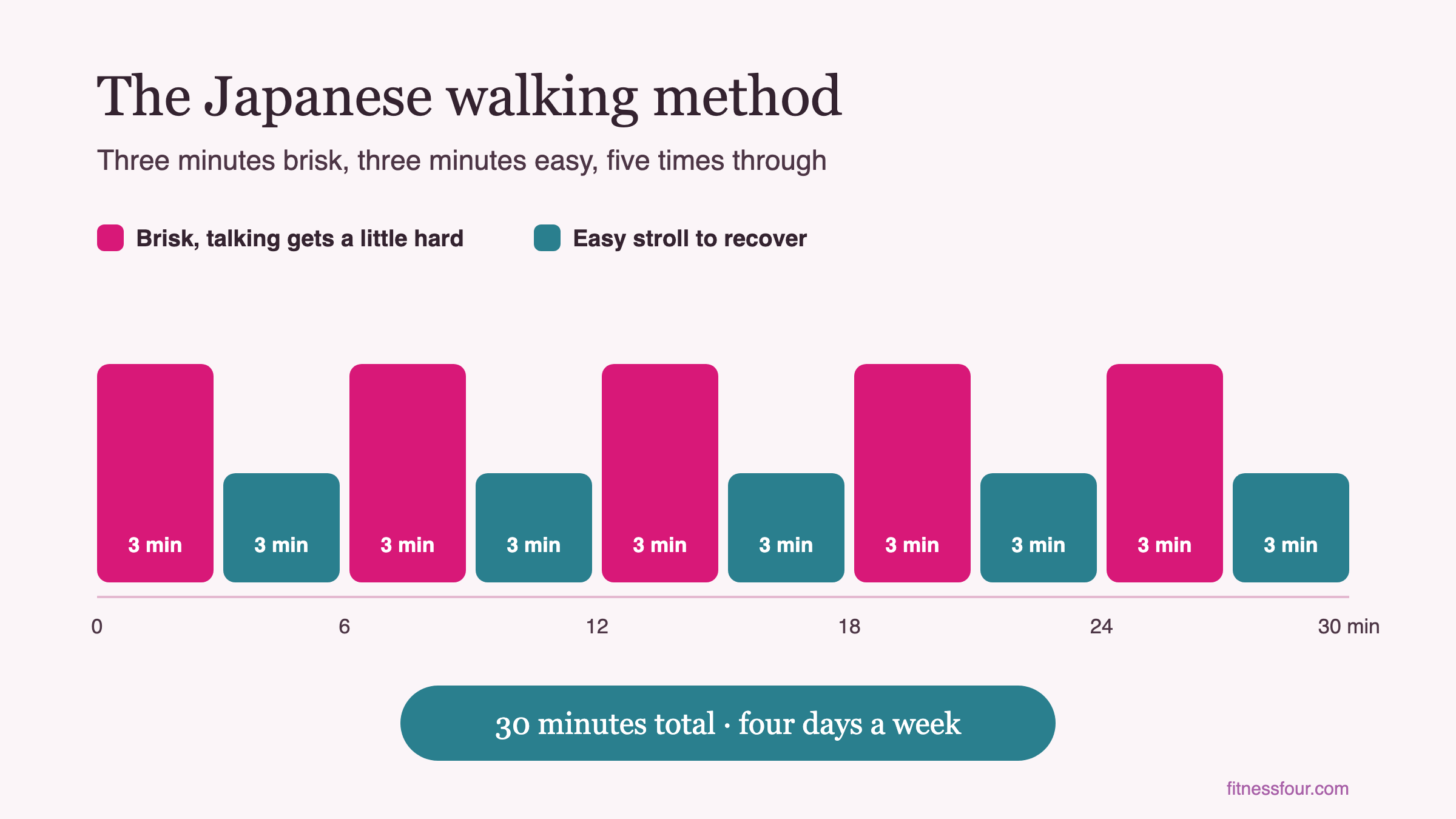
Interval walking involves walking fast for three minutes then easy for three minutes and repeating this process five times, preceded by a short, easy walk. It adds up to a half-hour of walking. It may seem difficult at first to alternate between “walk fast,” and “easy,” but it’s simpler than you think.
During the “walk fast” phase, pick up the pace. If you rate the amount of effort you’re making on a scale of one (standing around) to ten (all-out sprinting), walk at a pace that registers about a six or a seven. At this pace, you should be able to speak, but not tell long-winded stories.
Swing your arms vigorously to help propel you forward, bend your arms at the elbows and swing them to the front and back.
During the easy-walk phase, slow down and recover. Imagine you’re strolling through a museum.
What the researchers found
I came across interval walking when I read about a study conducted by researchers at Shinshu University in Japan. The study involved hundreds of middle-aged and older people, men and women in their 50s, 60s and 70s, who did interval walking several days a week and were compared with people who walked at an even pace for a similar duration.
After five months, the interval walkers had better aerobic fitness, lower blood pressure, and, most relevant for getting up those stairs, increased thigh strength. Those gains in cardiorespiratory fitness were the equivalent of making yourself, say, ten years younger. Many have continued interval walking and report that they’ve maintained their fitness gains for more than a decade.
How to do the walk
- Walk briskly for three minutes. Aim for a pace that makes conversation take some effort.
- Walk gently for three minutes. Let yourself recover.
- Repeat that pair five times. The intervals total 30 minutes.
- Finish with a few easy minutes to cool down.
Interval walking is something I recommend to nearly every woman over the age of 50 who goes for regular walks. If you’re feeling intimidated by interval walking, here are some ideas for easing in:
- Interval walk for three instead of five three-minute fast/easy pairs.
- Do interval walking during a few of your walks, then work up to doing it four days a week.
You don’t have to watch the clock constantly
Do you want to bring a stopwatch or other timing device along for interval walks? If so, great, set an interval timer or alternate short and long buzzes every three minutes. Otherwise, if you know your neighborhood really well, choose landmarks, houses, trees, a particular stretch of road, that demarcate three-minute intervals. Alternatively, bring along your music player and alternate between songs with quick and slow tempos to mark your fast and easy-walking intervals.
Make the brisk sections count
Some people feel some shin pain during the first few weeks of interval walking as their leg muscles become stronger and apply greater force to their shins. If this happens, slow down a tad during fast-walk phases. Some people, such as those with bad knees and arthritis, can’t walk as vigorously as others. That’s OK.
Simply shorten the duration of your “fast-walk” phase. The key is to make sure you’re breathing deeper during the “walk fast” phase.
Why it appeals to women over 50
Have you ever found it difficult to get up stairs or stand up from a chair? If so, interval walking can help. Interval walking is an easy-to-do way to strengthen the thigh muscles that can be adopted by anyone, no matter their physical ability.
Muscle mass starts to decline in our 50s, and aerobic capacity diminishes as well. So it’s never too soon to start interval walking.
Make your first route an easy decision
Interval training is easier when you have a route in mind. Opt for a place you’re familiar with and that’s relatively flat. That will make it easier to adjust your pace. Choose a place where you can walk without interruptions from other walkers, uneven terrain and traffic.

You also don’t want to end up far from home when you’re ready to finish, so it’s best to find a short loop that starts in your neighborhood. An indoor track or a quiet shopping mall works great, too. Save the pretty routes for another day.
For now, you’re learning how it feels to walk at different paces, where you can walk comfortably and how to listen for your interval timer. Remember, it’s OK if your first interval walking workout isn’t perfect. You’re building a new exercise routine. Soon, you’ll be able to explore new places on foot.
Find your brisk pace without chasing someone else’s speed
How hard are you working out? One way to measure is to pay attention to how hard you’re working. During moderate-intensity physical activity you should be able to talk, but not sing. During vigorous-intensity activity you wouldn’t be able to say more than a few words without taking a breath. This is called the “talk test,” and the CDC uses it as a rule of thumb.
You can also use the CDC’s 0-10 scale for measuring exertion, where 0 means sitting and 10 is maximal effort. Moderate-intensity physical activity would be a five or six. Vigorous would be a seven or eight.
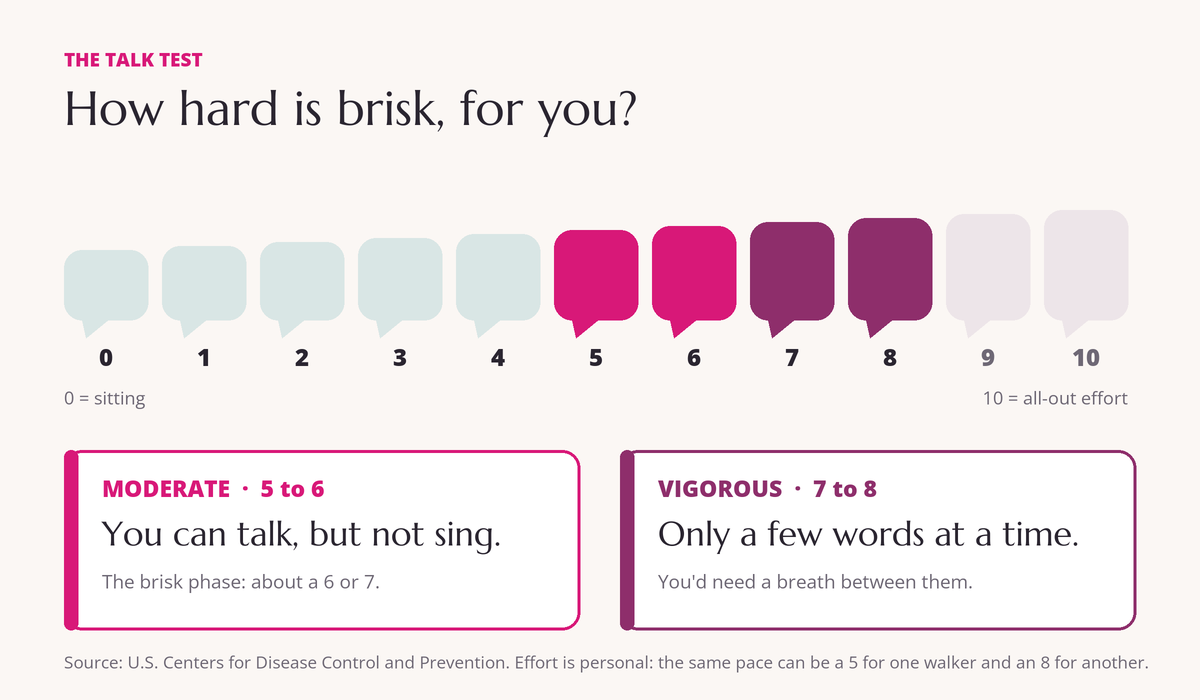
So if you go for a walk with a friend, resist the urge to keep up with her pace. Her effort level might be a five or six. For you, matching her pace might make your effort level much higher. Choose an intensity level that’s challenging, but sustainable.
If you’re new to exercise, try to walk just a little faster than your normal pace. Save the vigorous intervals for another day. And if you have a health condition that impacts how hard or long you should be exercising, talk to your doctor about your intensity goal.

Shorter intervals can help you get acquainted
The National Institute of Diabetes and Digestive and Kidney Diseases (NIDDK) recommends starting slowly and adding a little at a time. So, if the full routine seems overwhelming, shorten the amount of time you walk at a faster pace and increase the amount of time you walk at an easy pace.
For example, try walking briskly for a minute, followed by three minutes of easy walking. It’s not necessarily the same as what was studied in Japan, but you can still get in the swing of alternating between a slower pace and a faster one without feeling like the full routine from the study is a requirement before starting.
Do as many repetitions as feel manageable, and be sure to make the easy parts easy. If you find you’re not recovering during those three minutes, lengthen that portion of the walk, or end your walk.
Leave room for the beginning and end
The five fast-and-easy pairs add up to 30 minutes, so remember that a warm-up and a cool-down take additional time. If you’re on a strict 30 minutes for your exercise, do fewer fast-and-easy pairs, but make sure you have enough time to warm up and cool down. Don’t rush. Your workout should start with some comfortable walking that gradually gets faster.

Likewise, it should get slower and slower as it comes to an end rather than ending abruptly. NIDDK’s physical activity tips for older adults describe warm-up activities as ones that slowly raise your heart rate, and cool-down activities as ones that let your heart rate and breathing slow down afterward.
Perhaps you can use the beginning and end of your route, say, walking from your house to the park, as your warm-up and your walk back as your cool-down.
Let the timer handle the counting
If you are doing interval walks by yourself, it helps to use a timer rather than counting landmarks or songs, which won’t necessarily get you accurate three-minute intervals. Setting a timer before you leave saves you from continually distracting yourself to figure out how much time is left.
Make sure you know how your timer will let you know the time has expired (a buzz, a beep, etc.) and where you will put your phone. Test out an unfamiliar timer at home before heading outside so you aren’t wrestling with your phone on the street.
Photo by Akin Cakiner on Unsplash
If you are doing interval walks with another person, plan ahead so you do the easy sections together and each of you picks your own pace for the brisk sections. The last thing you want is for your partner to feel pressured to match your pace or have trouble catching their breath during conversation.
Don’t treat shin pain as proof of progress
Working hard and being in pain are two different things, and shin pain isn’t automatically a sign your muscles are getting stronger. If you have shin splints, the NHS advises not to keep doing the exercise that caused them.
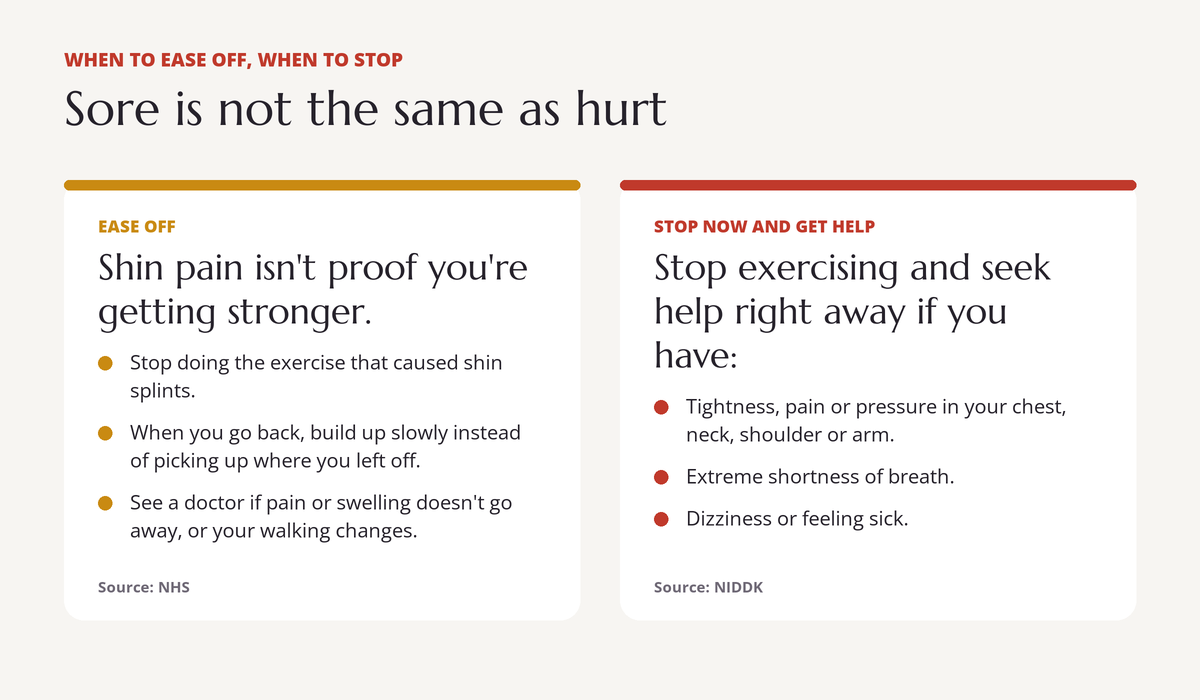
And, when you do return to exercise, don’t jump right back up to the same level of activity you had before your shin splints, and build back up slowly. So if it hurts when you’re walking, stop. If you’re supposed to briskly walk five intervals, it’s not okay to ignore this symptom just to get them all in. Altering your exercise regimen is all part of learning where your comfort zone is.
See a doctor if you have pain or swelling that doesn’t go away, or changes in the way you walk. According to the NIDDK, stop exercising and seek help right away if you have tightness, pain or pressure in your chest, neck, shoulder or arm, extreme shortness of breath, or dizziness or feeling sick.

Keep strength and balance in your week
Interval walking doesn’t tick the strength and balance boxes. Adults 65 and older should be doing aerobic activity, balance-improving and muscle-strengthening activities according to the CDC. They should do muscle-strengthening activities at least two days per week. They also need at least 150 minutes of moderate intensity aerobic activity per week, or 75 minutes of vigorous activity or an equivalent combination.
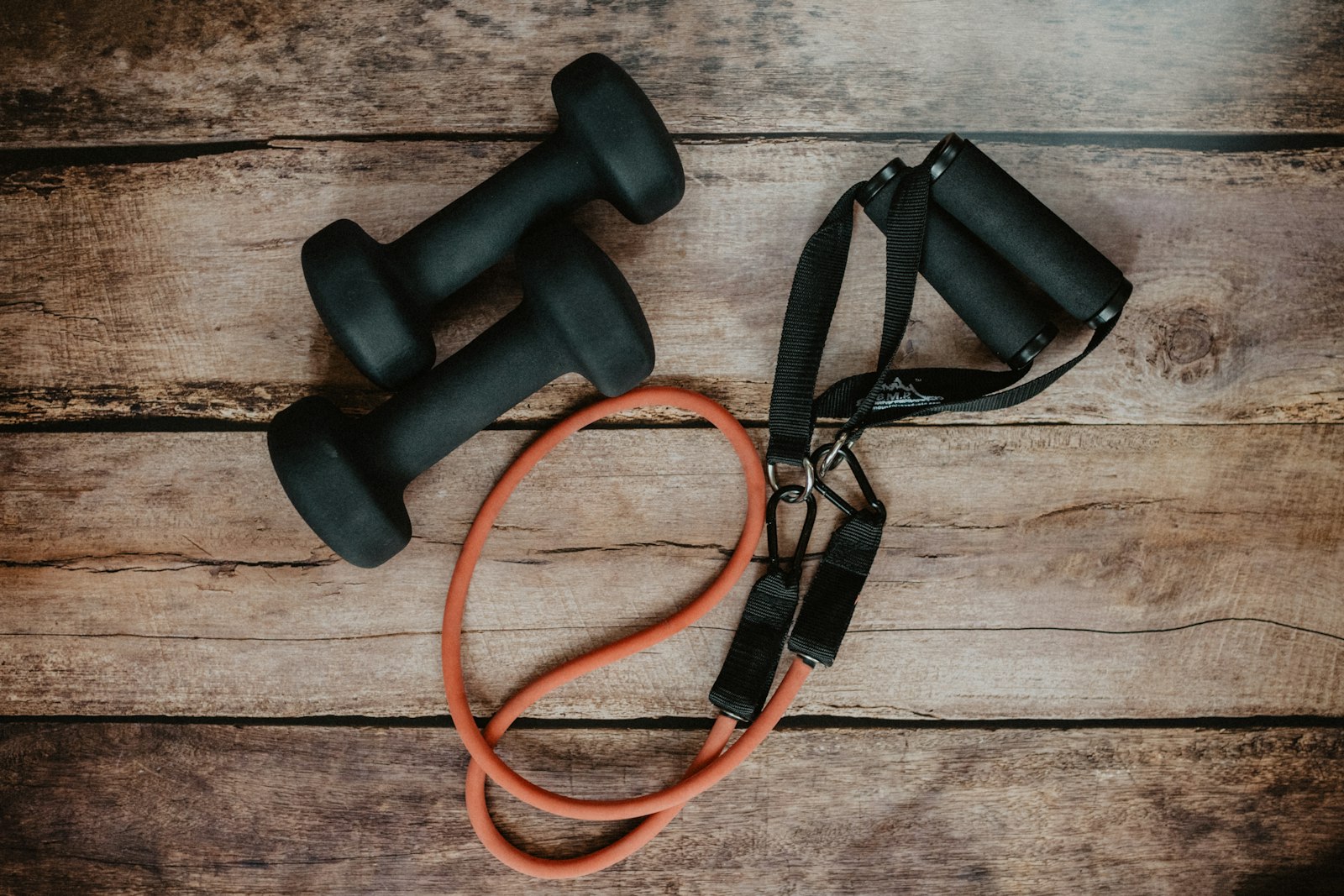
Your walks count toward your weekly allotment of aerobic activity depending on the intensity. So those recovery walks may not count toward that goal. Think of ways to work strength, such as weights, resistance bands, or body-weight activities with support, and balance activities into your weekly fitness routine that meet your abilities.
It’s best to mix it up and fit in these types of activities throughout the week instead of feeling like you have to combine everything in one workout.
Give improvement more than a deadline
Don’t panic if you’re not seeing big improvements within just three weeks. The original Japanese study was conducted by Shinshu University and published in Mayo Clinic Proceedings in 2007. It looked at 246 middle-aged and older adults, including 186 women and 60 men, with an average age of 63, over a period of five months.
Participants were randomly assigned to one of three groups: one that did not undertake a walking training program, one that walked at a moderate intensity in a consistent manner, and one that walked at a high intensity in intervals.
Your results are going to depend on your current level of fitness, how consistently you’re walking, and your general state of health. It’s impossible to say with certainty what’s going to happen with any given individual based on results seen in groups of people. So it’s important to track your own progress in your own way.
This might mean noticing how much easier a given route is for you to walk, how quickly you catch your breath when you walk at a faster pace, or your ability to establish a consistent exercise routine. It may not always be possible or even realistic to expect to cover more ground more quickly each time you go out to walk.
Plan the walk you can repeat
Try to plan your next outing before finishing the first week. Look for an actual free space on your schedule. Make a plan for bad weather. Keep your walking shoes handy, along with the timer. If you are going to miss a walk, consider a shorter version. Don’t feel obligated to make up for missed walks with an especially strenuous session.

As you continue, you will learn about yourself, such as your favorite types of routes, what counts as a challenging but manageable brisk pace and how much recovery time you need. Use the program as a guideline and adjust as necessary to accommodate your life.
Start with two walks in your first week
I’ve been doing interval walking every time I go for a walk now and love that I can structure my walks. I’m the type of person who needs an element of structure or purpose to everything I do, even exercise, otherwise, it’s unlikely I’ll do it.
Interval walking requires only a tiny element of planning, and then my mind is engaged throughout my walk. And because interval walking gets my heart pumping more than walking at an even pace, I get a lot of exercise in a relatively short time.
Within three weeks, many women say that interval walking makes a difference in their lives. Why wait any longer to try interval walking?
The method at a glance
- Walk briskly for 3 minutes, at a pace where talking gets a little hard.
- Ease off to a gentle stroll for 3 minutes to recover.
- Repeat that pair five times, which comes to 30 minutes.
- Aim for four days a week. That is the whole method.