9 Healthy Breakfast Ideas for Women Over 40

I harp on adequate protein for muscle building/retention, which is particularly important after 50. Researchers call it anabolic resistance, meaning our bodies don’t respond as well to protein as we get older, making adequate amounts even more important. Breakfast is often lacking in protein but you need protein at all meals and snacks. Protein at breakfast keeps you more satiated, supports muscle building/retention and sustains energy levels.
A protein-packed breakfast of 25 to 30 grams of protein will keep you feeling great and full until lunchtime. Try these high-protein breakfasts.
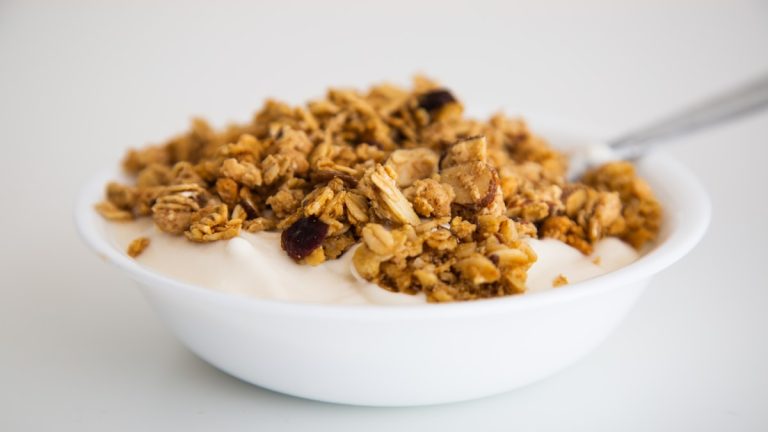
1. The Greek yogurt sundae
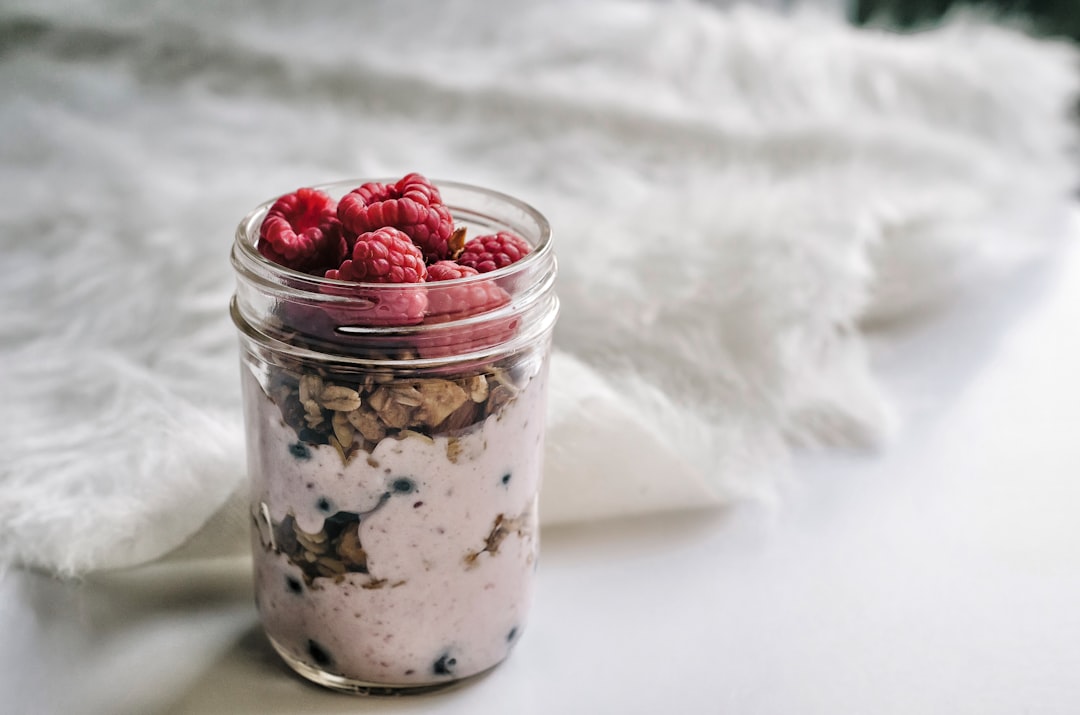
Top one cup of plain, whole milk or 2% Greek yogurt, which has about 20 grams of protein, with berries, honey, walnuts and granola, and you’ll have a bowl with about 25 grams of protein, plus the bone-building mineral calcium. Choose a yogurt that tastes good to you – Fage, Chobani, etc. The brands vary greatly in taste and texture. Plain beats any of the fruit-on-the-bottom brands, which have less protein and about three times the sugar.
2. Cottage cheese toast, sweet or savory
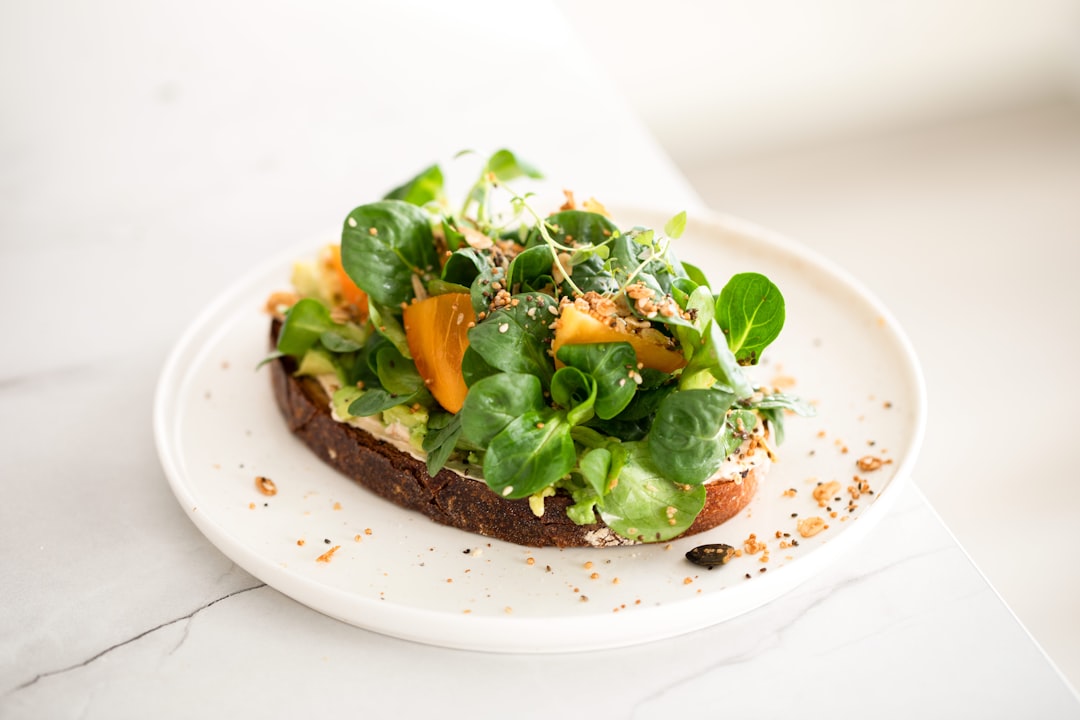
Spread half cup cottage cheese, with 13 grams of protein, on a piece of toast, like sourdough. Make it savory or sweet. For savory: top the cottage cheese with a slice of tomato, grind of black pepper, everything bagel seasoning. Add an egg and you’re close to 25 grams of protein. For sweet, top with cinnamon, berries or peach slices, honey, spoonful of hemp seeds. Not crazy about the lumps? Try whipped cottage cheese, which has a much smoother consistency.
3. Eggs with a little backup
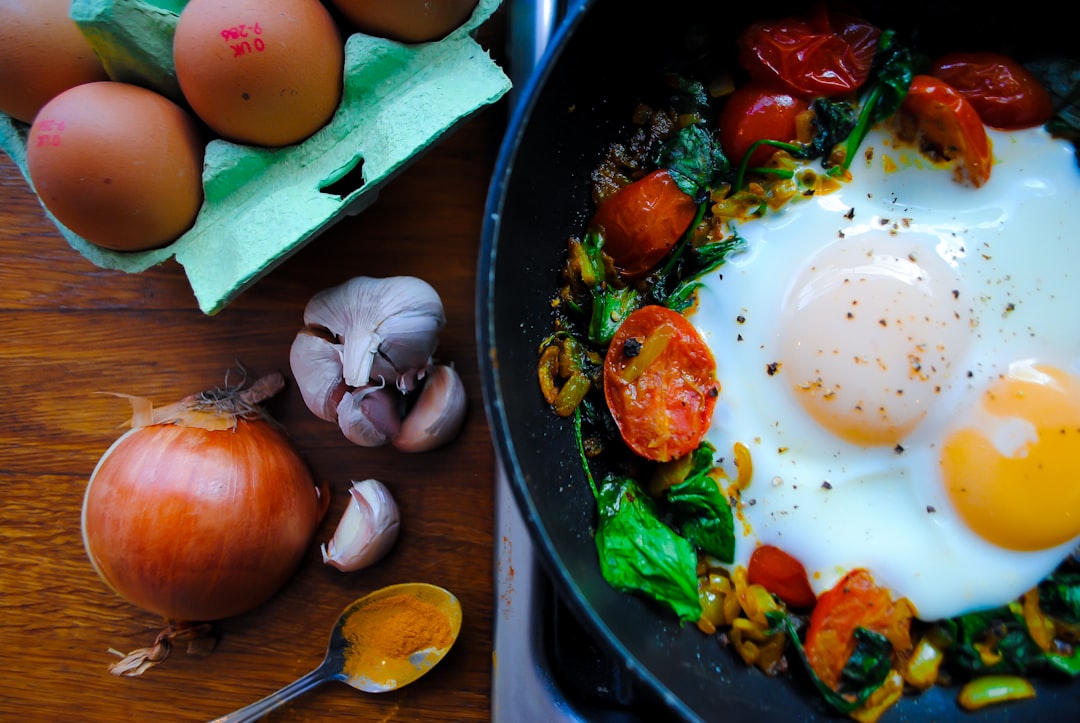
Eggs are delicious, healthy, convenient, inexpensive, easy-to-use breakfast food. Two eggs have about 12 grams of protein, so you’ll have to add a few things to bump up the protein. Try these ideas: Scramble two eggs with a slice of cheese and a handful of spinach. Serve on a slice of whole-grain toast, with protein in the mid-20’s. Batch-cook a pan of egg muffins on Sunday. Grab one, pop it in the microwave for 90 seconds Monday-Friday. My current version: egg, veg, feta.
4. Overnight oats with a protein upgrade
Plain oatmeal (half-cup serving) has a mere five grams of protein – not great. This recipe triples that. And if you add protein powder you’re looking at nearly 30 grams of protein. Start by combining rolled oats and milk, chia seeds and plain, whole-milk Greek yogurt in a container. Add a scoop of protein powder – vanilla works well here. If not, just add more Greek yogurt and maybe a spoonful of peanut butter. Seal tightly and store in refrigerator overnight. Spoon frozen berries on top before storing. Overnight, the frozen berries will soften and become sort of jammy. Serve cold, top with honey and enjoy. I make three jars on Sunday afternoons so I’m all set for my weekday breakfasts.
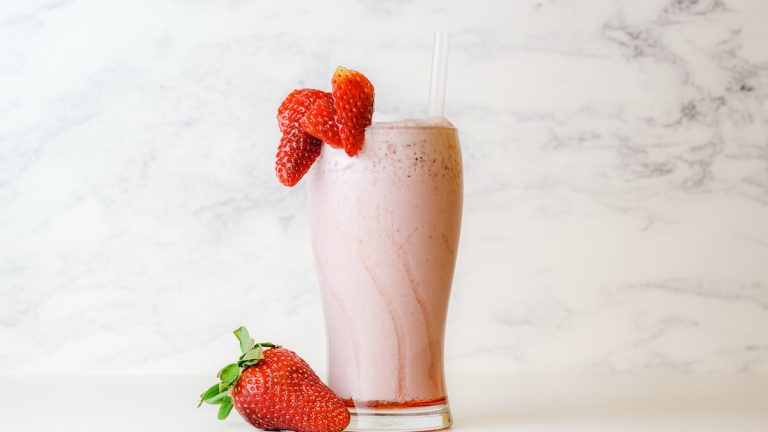
5. A smoothie that keeps you satisfied
My usual formula is:
- One cup of milk or soy milk
- A generous scoop of Greek yogurt or protein powder
- A handful of frozen fruit
- A handful of spinach
- A spoonful of peanut butter or chia seeds
Smoothies are easy to think of as nothing but fruit and ice, but in fact, it’s what else you add that gives smoothies their staying power. My usual formula lands around 30 grams of protein; a mostly fruit version ends up with only about four. Start with some frozen fruit for a frosty and thick smoothie and adjust the rest to what you have. The peanut butter or chia seeds will keep you fuller in the morning, too.
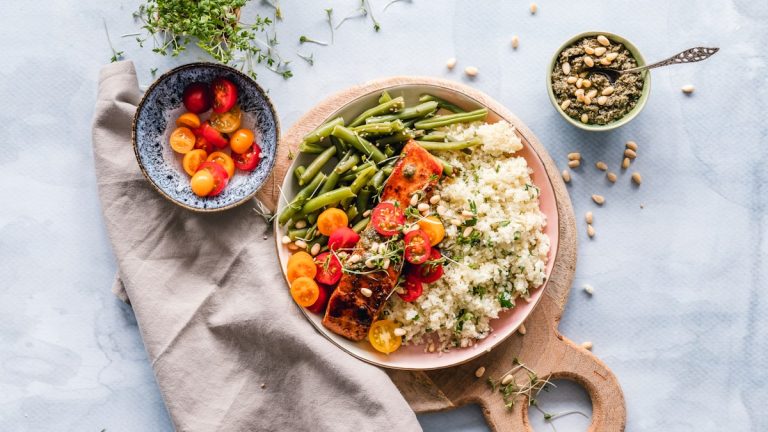
6. Smoked salmon on whole-grain toast
Three ounces of smoked salmon has about 15 grams of protein, but salmon also has omega-3s that have been linked to better heart and brain health. To make this super-simple toast, start with whole-grain bread and add cream cheese or mashed avocado, smoked salmon, cucumber slices, and a squeeze of lemon. Smoked salmon can be a little pricey more so than your run-of-the-mill eggs, but you’ll still save money compared to paying for this at a café. Unopened, smoked salmon keeps for weeks in the fridge; follow the date on yours. This has become my regular Saturday breakfast.
7. Last night’s leftovers
Maybe chili isn’t technically a breakfast food, but who says it can’t be? Especially when it’s leftover from last night’s dinner and there’s zero cooking involved. Some of my favorite leftovers for breakfast: chili with a fried egg, any kind of salad with leftover salmon, beans & rice with salsa and avocado. Savory breakfasts are common in many parts of the world, and eating them myself helped with that tired feeling I used to get mid-morning.
8. Chia pudding with fruit and yogurt
Three tablespoons of chia seeds soaked overnight in 1 cup of soy milk will yield a tapioca-like pudding that’s loaded with fiber, omega-3s and calcium, with some protein, too. Add in maple syrup if you’d like. Soy milk has 7-8 g of protein per cup, but add in some yogurt and berries or mango and you’ve got a breakfast with protein in the low-twenties range. Just stir or shake the milk and chia twice during the first 10 minutes to avoid clumps.
9. Make-ahead breakfast burritos
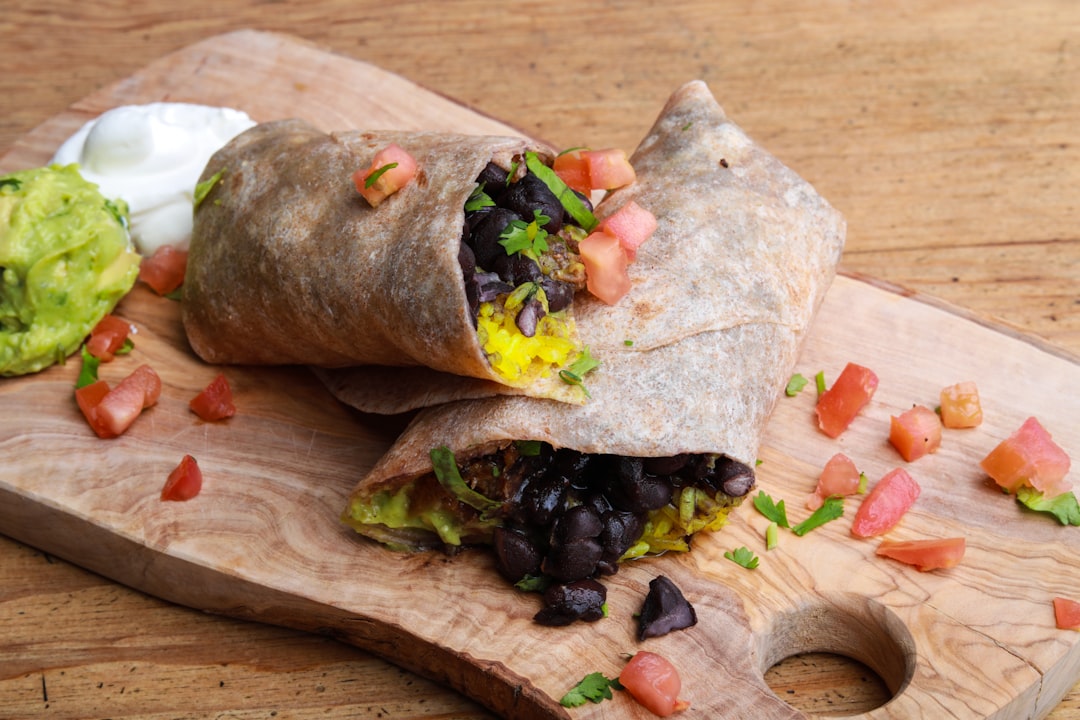
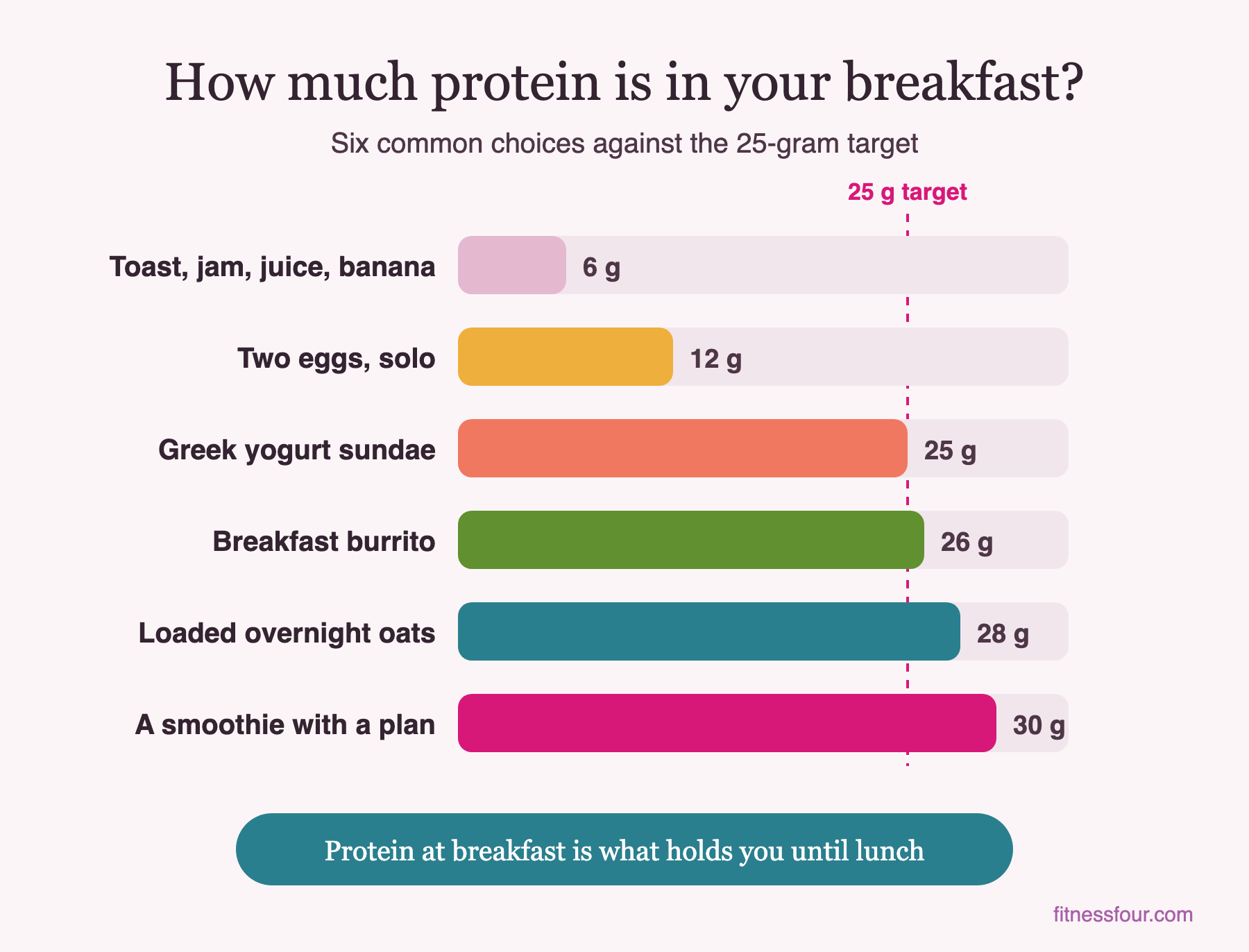
A burrito stuffed with scrambled eggs, black beans, salsa, and cheese will have upwards of 25 g of protein. And black beans add protein and fiber, which supports improved digestion and cholesterol levels as well as improved blood sugar control. Make six on a Sunday and freeze them individually, and you’ll be rewarded with an easy-to-fix on-the-go breakfast the rest of the week. Just pop them in the microwave for about two minutes (remove the foil first), and you’ll save a couple of dollars or more per burrito compared to picking them up at the drive-through. Use whole-wheat tortillas if possible.
Make weekday mornings easier
Having a smaller repertoire of go-to breakfasts makes planning and meal prep easier. Think about which of these sound appealing to you or spark other ideas. Stock up on protein-rich staples like eggs, milk, Greek yogurt, cottage cheese. Do a mini-meal prep on Sunday, mixing up a few jars of overnight oats, baking a tray of egg muffins or freezing breakfast burritos. Consider what’s involved, what’s realistic, what’s tasty. Find things you enjoy that deliver enough protein, as it is not just what you eat but how much, so pay attention to servings and food labels.
Not hungry first thing? Split it
Some women in their 40s and 50s tell me they just aren’t hungry at all at 7 am. It’s okay to have a protein-focused snack upon waking and eat your “breakfast” at 10. Whatever works best for your body.
The universal breakfast formula
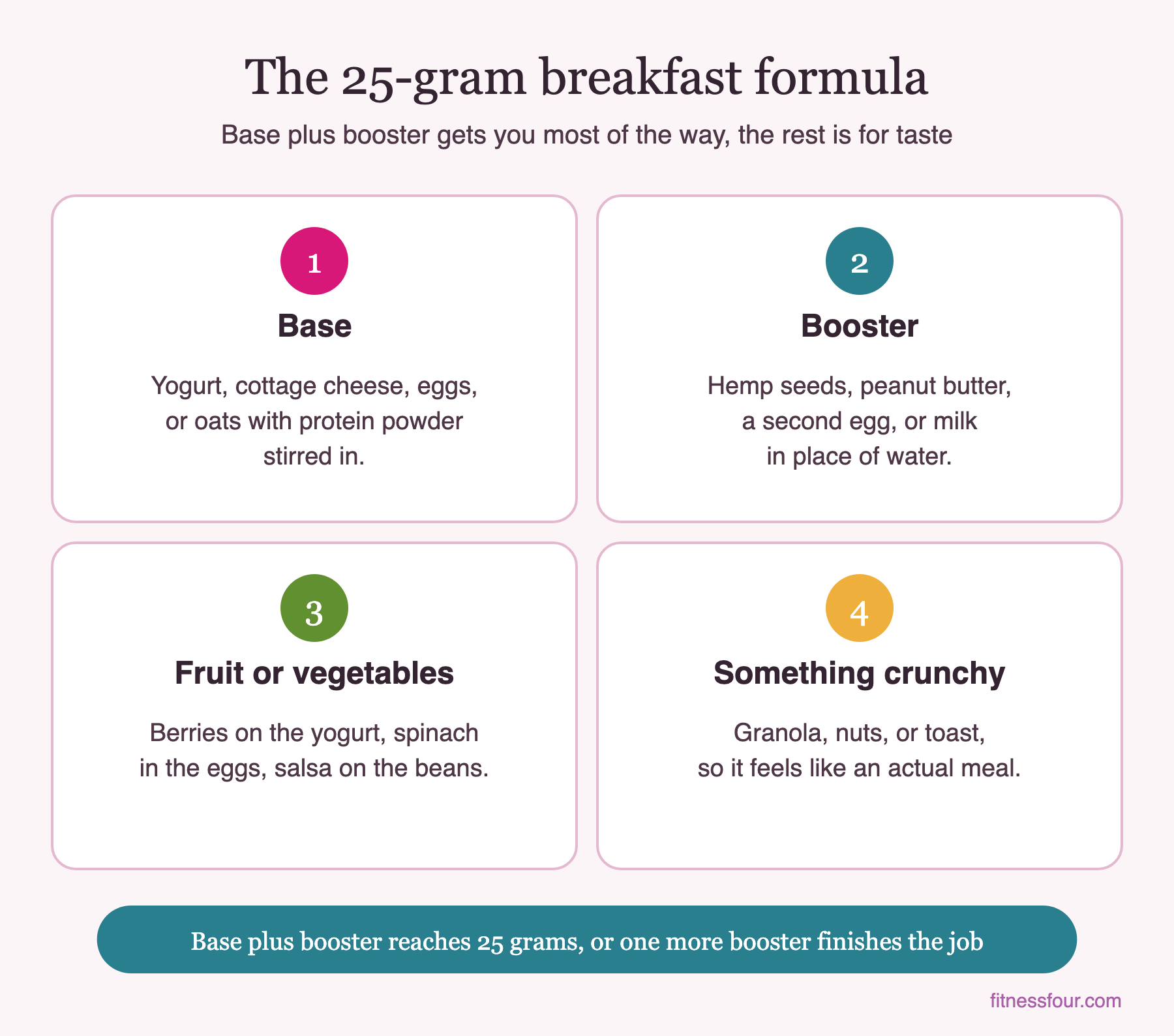
No matter what kind of eater you are or what foods you enjoy, you can apply this formula to reach the 25 to 30 grams of protein goal:
A high-protein food to serve as the foundation of your breakfast, like yogurt, eggs, or cottage cheese. An ingredient that raises protein by an additional 5-10 grams, like milk, seeds, or a second egg. Some fruit or veggies. Something crunchy for texture and satisfaction.
When you combine a foundation with a booster, you’ll reach the protein goal or land within one more booster of it. Greek yogurt alone can be surprisingly high in protein: a cup holds anywhere from 17-23g of protein, so check the label since it depends on the brand. Add hemp seeds or nuts on top and you’re over the finish line. Compare that to oatmeal and banana, which may sound healthy but doesn’t come close.
Fiber-focused breakfasts
It’s not just protein, fiber is a nutrient many people are short on as well. Women should be shooting for approximately 25 grams per day, until age 50 when the goal decreases to 21. Breakfast is an ideal time to increase your intake. Some of my favorite fiber-focused breakfasts:
Yogurt + chia seeds + raspberries: One cup of raspberries and 2tbsp of chia seeds will net you 8 grams of fiber each. Add Greek yogurt for some protein and you’ve got yourself a winner.
Eggs, veggies, avocado on a piece of whole-grain bread. Fiber: veggie variety determines how much you’ll get, avocado adds fiber, whole-grain bread will have 2-5g depending on the loaf.
Overnight oats with pear + pecans + flax seeds. Fiber: oats at 1/2 cup dry has around 4g, pear is around 5, flax adds extra
If you’re new to eating lots of fiber, start out adding a few grams and work your way up. Otherwise, your tummy will rebel. It can take about two weeks to get your intake where it should be and you’ll want to increase your water intake as you add more.
Breakfast prep
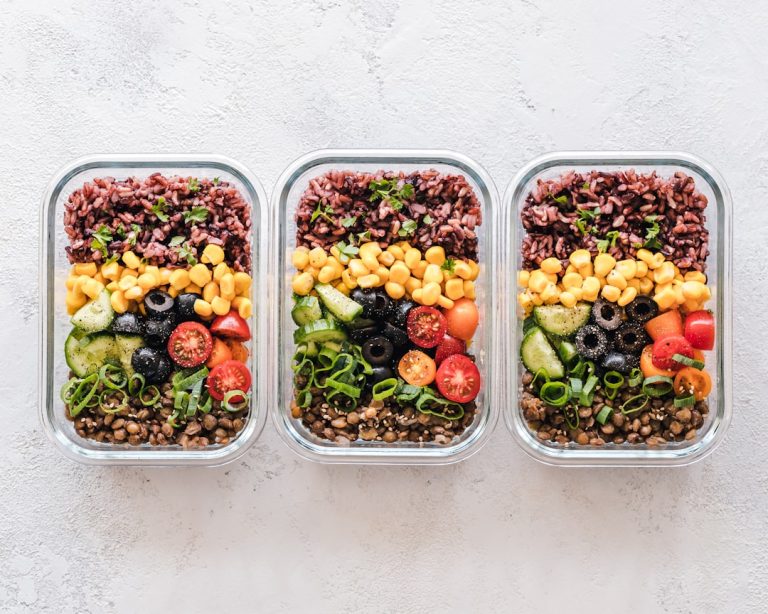
These are my favorite quick-and-easy protein-filled ideas that take minutes, not counting cooking time, to make on Sundays during meal prep. Preheat the oven and you can have these three projects going for about 30 minutes, which covers your breakfasts for the week.
Protein-packed egg muffins: Crack eggs, pour into muffin tins, top with veggies/cheese/meats of choice. Pop in a preheated oven to cook for 20 min. Keep in fridge and microwave as needed.
Overnight oats: While egg muffins are cooking, spend 5 min filling up three glass jars with oats, soy milk, protein booster of choice + sweetener/spices if desired. Keep in fridge and add fruit/nuts each morning.
Smoothies: While the rest of the eggs are cooking, measure out fruit + protein booster into three ziplock bags. Keep in freezer and blend with soy milk upon waking. Add spinach to each bag for some sneaky greens.
Hard boiled eggs: There’s usually time to boil a half-dozen eggs during the remaining minutes the muffins are cooking. Peel, store in the fridge and eat throughout the week.
Once you’ve mastered each of these recipes, consider making breakfast burritos every other Sunday. Freeze in batches of 12, unwrap and microwave in the morning for a quick and filling meal.
Protein boosters to reach the goal
If you’re eating eggs, yogurt, cottage cheese or oatmeal for breakfast, chances are you’re getting most of your protein from those ingredients. However, adding one of the following will guarantee you’re reaching your goal:
A glass of milk: Add to coffee, cereal, oats, smoothies, baked goods. A glass of milk adds 8 grams of protein. A latte made with dairy milk and 12 oz serving size holds 8-10g of protein.
Firm tofu: Crumble half of a block and saute with salt + turmeric for a veggie scramble that will remind you of eggs. Or, crumble into muffin or burrito batter to add 15-20 grams of protein. Tofu is a complete protein that has a mild flavor and holds up well in cooking.
Single serve Greek yogurt: Most of the small yogurts hold around 12 to 16 grams of protein, plain ones at the top of that range and make a filling snack when paired with berries, whole-grain crackers or a piece of fruit.
Protein powder: Aim for a brand that holds 20-25 grams of protein per serving with a short ingredients list that doesn’t hold any sketchy ingredients. Some brands are tested by a third-party which provides an added level of quality control. Look for the testing company’s seal upon purchase. Protein powders aren’t healthy or unhealthy, medicinal, or required.
They are convenient when you’re falling short of protein with whole foods or in a pinch for time. Skip the scoop if your breakfast is already holding 25 grams.
Make it dairy-free
Swap soy milk, which holds 7-8 grams of protein per cup, in place of dairy milk in your coffee, oats, smoothies, pudding…pretty much anywhere you’d add dairy.
Swap half a block of firm tofu for eggs in recipes like egg muffins or breakfast burritos.
Instead of cream cheese on smoked salmon toast, mash avocado for a dairy-free win.
Enjoy a cup of beans on toast with a drizzle of tahini: this combo takes you into the low 20’s of protein without dairy!
Soy or almond yogurts don’t hold a candle to dairy for protein, with many holding less than 7g/serving, so enjoy them with an added protein booster (seeds, nuts, granola) or a scoop of protein powder.
Breakfast away from home
At the coffee shop: Instead of oatmeal plus nuts at around 10g of protein, order two egg bites from the case: they hold anywhere from 12-20g of protein depending on the variety.
Hotel breakfast: Skip the baskets of pastries and build a plate with eggs, yogurt, cottage cheese. You’ll be guaranteed to reach the goal.
Keep an eye out for portion creep
When we start out strong, it’s easy to ease off with time and inadvertently lower the amount of protein in breakfasts. Check in, measure your go-to breakfast ingredients and make sure you’re still on track. Also, beware of front-of-package labeling that promotes protein-packed granolas, protein bars, pancake mixes and the like that actually hold a meager 8-12 grams of protein, sometimes paired with 15-20 grams of sugar. Flip over the package and read the fine print.
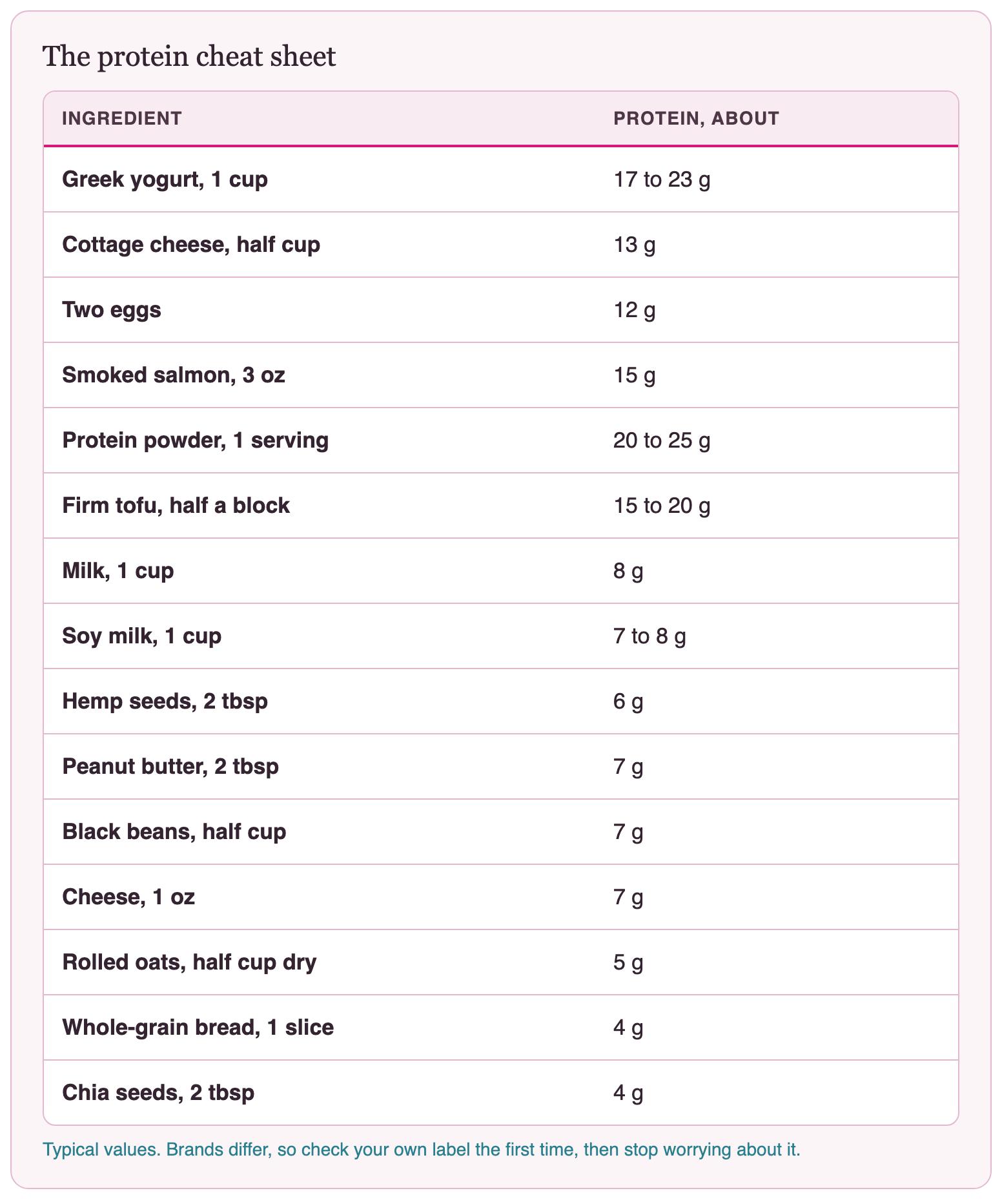
Numbers are typical values. Brands differ, so check your own label the first time.