
These Are the Healthiest Ice Cream Brands (That Use Real Cream)

It is an interesting phenomenon that the recipes of ice creams can be quite varied, even when they’re under the same brand. This is why I pay attention to the ingredient lists of ice creams, sometimes all-too-critically so.
With this post, I hope to share with you a handful of brands that have pleased me so far, ice creams that taste of cream and have an interesting flavor. This exploration has not only helped me identify some good brands, but also find inconsistency within them.

Now, these picks are not an attempt to scientifically identify the healthiest ice cream, though a quick ingredient list is a plus when I’m on the hunt for ice cream; saturated fat, serving size and sugar content should be on your radar as well. Rather, they reflect my own choices for ice creams that have a traditional, cream-based flavor.
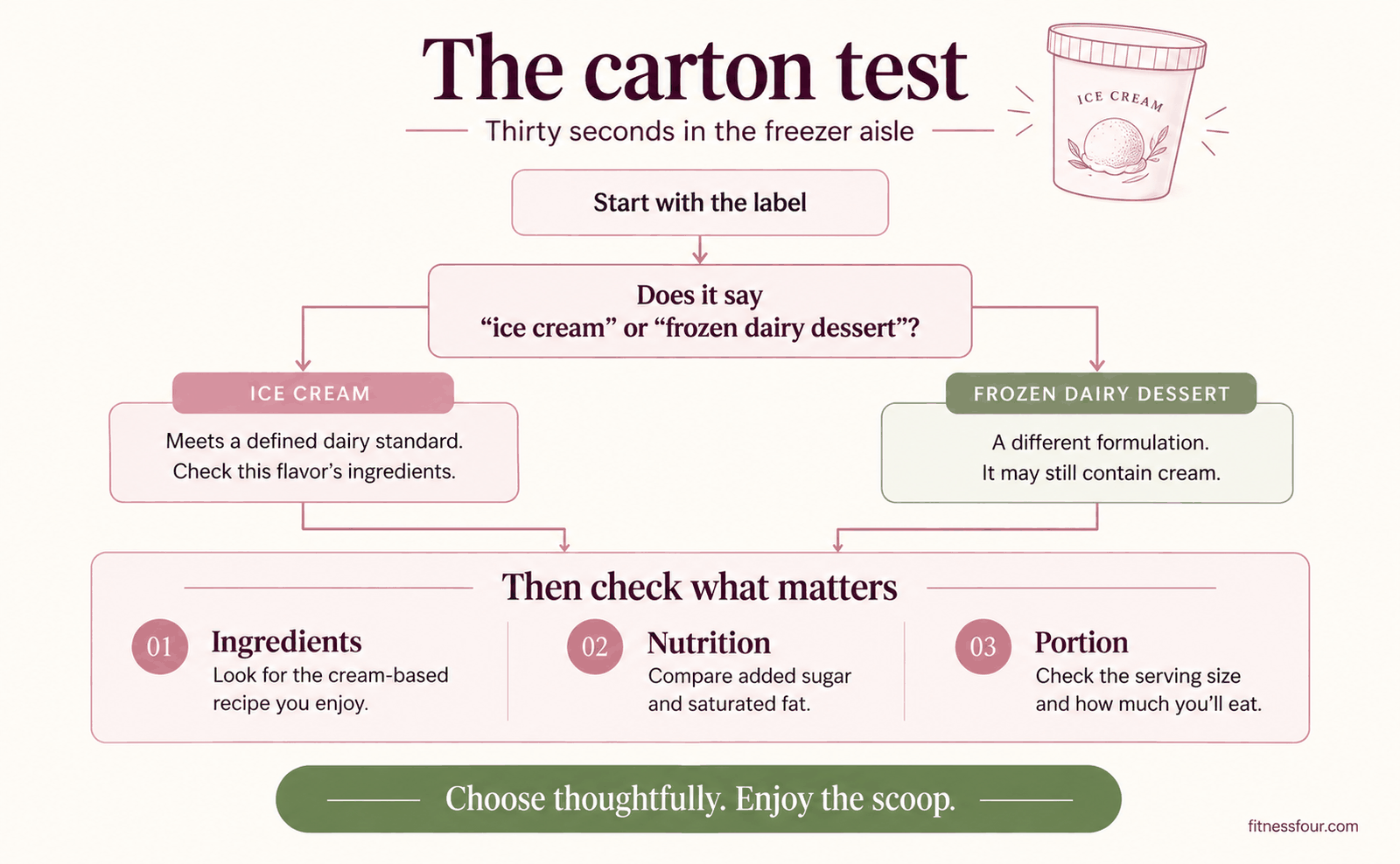
Start with what the carton actually says
Once you’ve chosen your brand and flavor, it’s worth digging into the fine print on the front of the carton and double-checking the ingredient list.

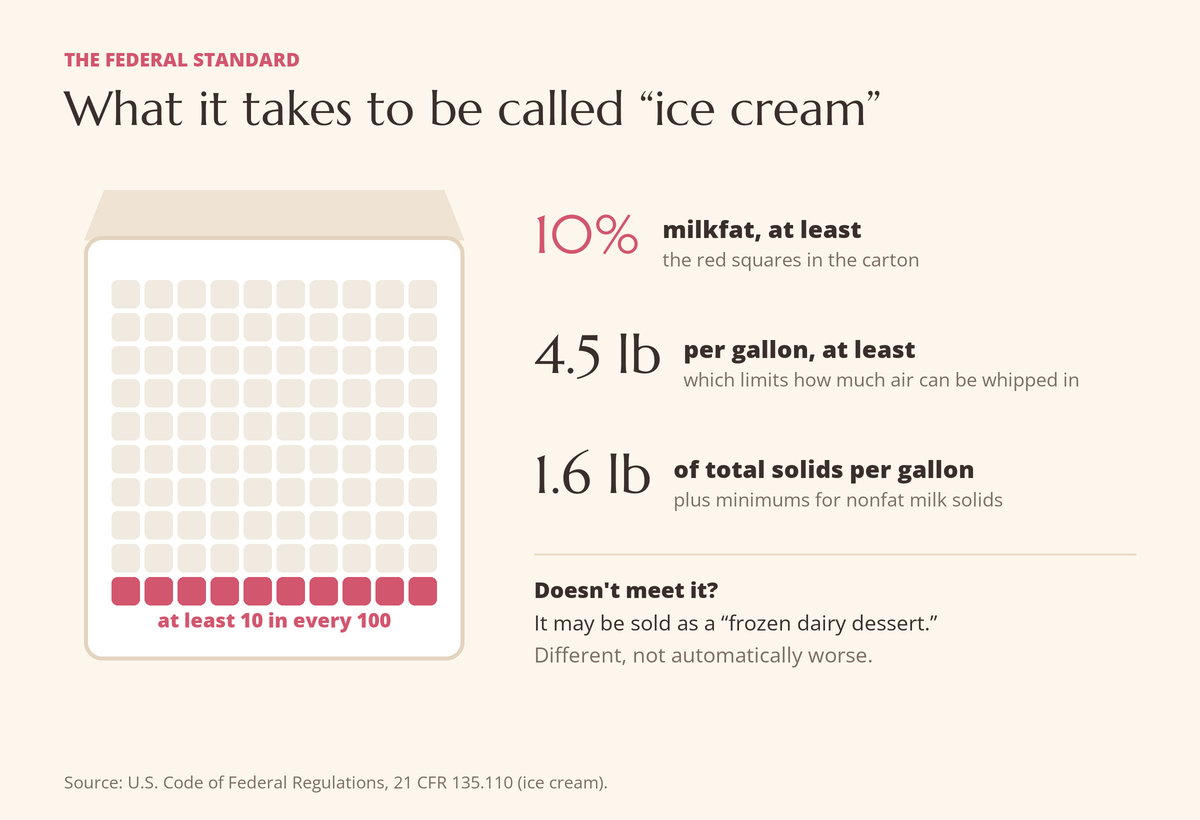
In the US, “ice cream” has a particular formulation, at least 10% milkfat, plus requirements for other dairy solids and minimum weights per gallon. Anything else might be labeled as a “frozen dairy dessert,” which is formulated differently. This doesn’t mean that it’s bad for you, just that it’s different than ice cream.
Brand names can be deceiving in this sense, so it’s important to read each carton to know what’s in it.
Halo Top’s Vanilla Bean is labeled as light ice cream, it’s a perfectly acceptable option if you’re looking for something on the lighter side, and it contains cream.
Beware: just because one flavor from a particular brand fits the bill, it may not necessarily be so with another.
Watch: how to read an ice cream carton in 15 seconds, front, back, and Nutrition Facts.
Four brands to start with
Häagen-Dazs
Häagen-Dazs classic vanilla contains only cream, milk, eggs, sugar, and Madagascar vanilla.
Once I’m in front of a brand’s products in the supermarket, I’ll pick up a few cartons and compare ingredients, flavors, and nutritional facts. Häagen-Dazs is a great example of a brand where the recipe varies by flavor. The classic vanilla is super-simple, but some of their other options have a few additives.
Straus Family Creamery
Straus’ Organic Vanilla Bean is organic cream, organic milk, organic sugar, organic egg yolks, organic vanilla extract, and vanilla bean. This is the epitome of a simple, deliciously creamy recipe that I like to reach for when I’m looking for ice cream.
Van Leeuwen
Van Leeuwen offers a few options with very straightforward recipes. Their French-style line of ice creams all start with a rich, eggy base loaded with yolks, then add flavor. They also offer vegan ice creams, if that’s your bag.
McConnell’s
McConnell’s ice cream is made with a house-made base with over 18% milkfat, way over the required minimum.
A gum or two doesn’t automatically put me off
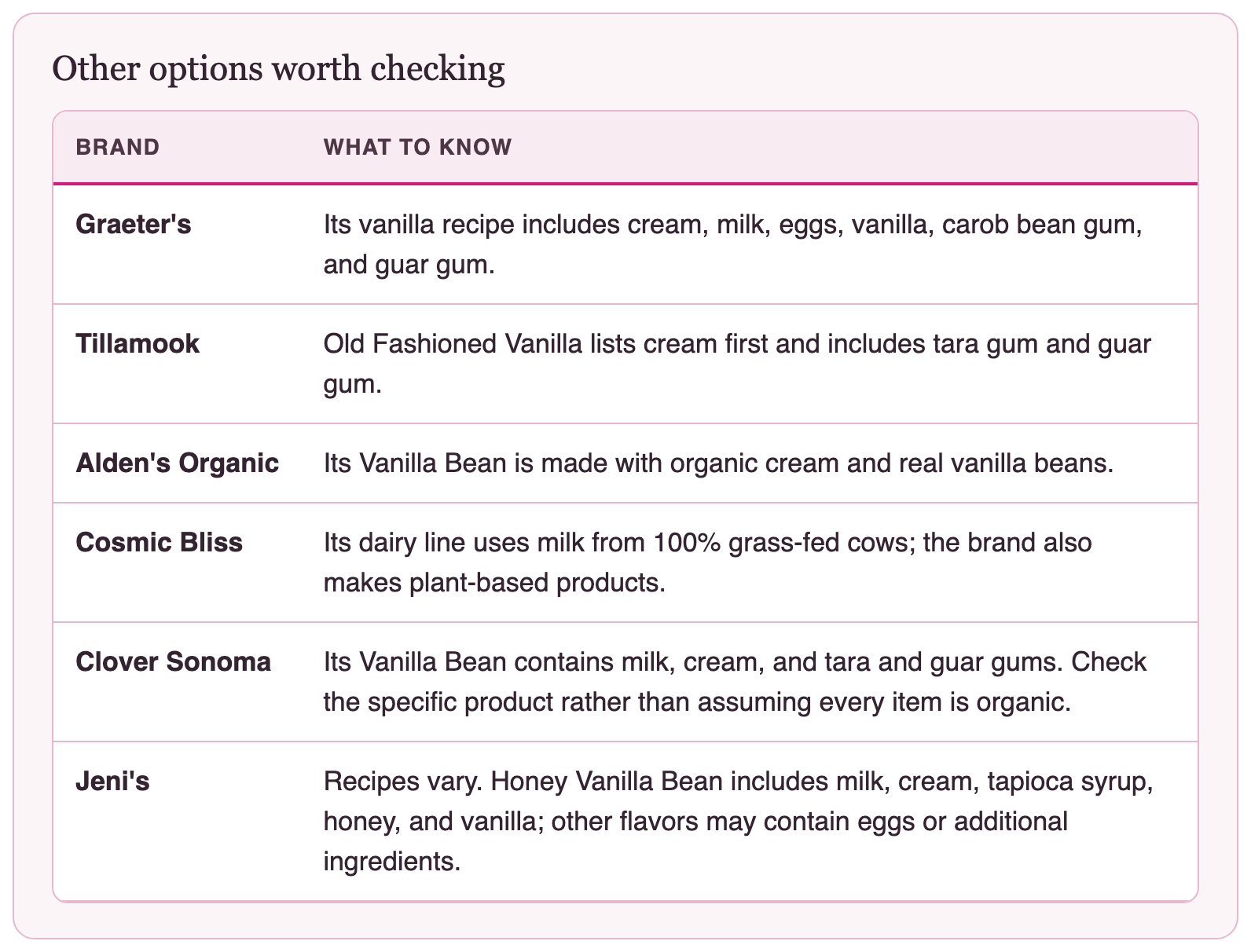
My general rule of thumb is that I’m not opposed to additives like guar gum and locust bean gum as long as they’re not being used to take the place of cream. Sometimes they’re necessary to create a smooth, consistent texture. This doesn’t always mean that an ice cream with guar gum is worse than one without, just that I prefer to eat ice creams without guar gum, personally.
What about the additives people worry about?
Ingredients like cellulose gum and locust bean gum may be alarming, especially after seeing social media posts about how certain food additives might cause inflammation and other health problems. And after reading articles about a study that gave humans cellulose gum, or carboxymethylcellulose, and looked at changes in their microbiomes and inflammatory markers.
But that study gave the volunteers 15 grams of carboxymethylcellulose for 11 days. It’s interesting to understand what happens to humans when they consume a large amount of cellulose gum for a sustained amount of time, but it doesn’t tell us what happens when you eat a pint of ice cream spread out over a few days.
It’s nice to know about potential problems that could arise from consuming large amounts of food additives, but we’re not necessarily getting large amounts of them from our foods, especially if we’re being reasonable and mindful of the foods we choose to eat.
Real cream still contains saturated fat
It’s easy to assume that more-natural foods with shorter ingredient lists are healthy foods just because they’re more-natural foods with shorter ingredient lists. It’s nice to eat foods that don’t have additives, and I personally like to choose foods with fewer additives whenever possible, but that doesn’t automatically make them healthy.

It’s always worth digging into the nutritional facts to make sure you’re aware of what’s in the foods you’re eating. Ice cream contains saturated fat. The American Heart Association recommends replacing some of the saturated fats in our diets with unsaturated fats from other sources. The AHA recommends limiting added sugars as well.
Different brands may list different serving sizes, which makes comparing tubs difficult. It’s important to think about how much of any given food you’re likely to eat and compare products based on the amount that you’re most likely to consume. It’s not the same for everyone.
Compare the flavor you’re buying, not the brand’s reputation
Once you’ve found a brand you like, it’s tempting to stop checking. Different flavors in the same brand of ice cream can be entirely different formulations. The vanilla might have a short ingredient list while the chocolate fudge brownie has a much longer one. It can be surprising to look at two cartons that seem nearly identical on the outside and see significantly different ingredient lists.

When you’re shopping, compare vanilla to vanilla. It’s the easiest to compare, and you’re not comparing plain ice cream with something full of cookie pieces and caramel swirls. Once you know which brands and types you prefer, check the ingredients on the flavor you actually want.
Take a picture of the ones you like with your phone, so next time you’re standing in the ice cream aisle you’ll have a quick and easy reference. Recipes and serving information can change, so check the package you’re buying, too.
Understand what the serving size means
The serving size on a Nutrition Facts label is based on what people typically eat, and it doesn’t necessarily reflect the amount you should be having. When the FDA updated the Nutrition Facts label, it changed the serving size for ice cream from 1/2 cup to 2/3 cup to better reflect how much people actually eat.
If you’re having less or more than that, make sure to adjust the calories, sugar, and saturated fat to reflect the amount that you’re eating.
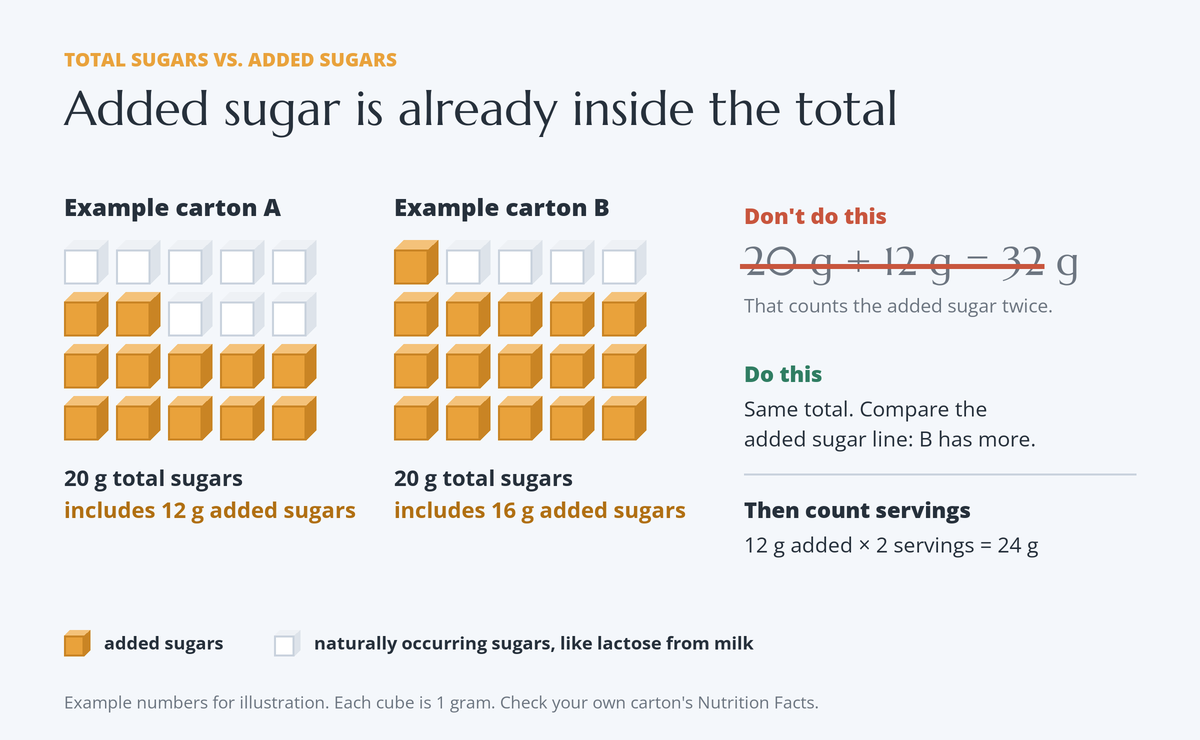
For instance, if a product has 12 grams of added sugar per serving but you’re eating two servings, that’s 24 grams of added sugar. It’s helpful to measure out your normal portion once so you have an idea how it stacks up nutritionally to what’s on the label. Then you can refer back to that mental note in the future.
You don’t have to measure it every time, just have an idea of the number of servings you’re consuming from the package.
Total sugar and added sugar tell you different things
Milk contains a naturally-occurring sugar called lactose. Ice cream usually has sugar added during production, too. It may also contain sauces or other ingredients that are sweetened. Even an ice cream that’s made with just a handful of ingredients, including cream and sugar, can surprise you when you check its Nutrition Facts panel.
That panel will include lines for total sugars and added sugars. The former reflects the amount of both naturally-occurring sugars as well as sugar added during the ice cream-making process. The latter reflects how much sugar was added. Don’t add up the two lines and compare the sum with other brands’ sums.
That would count added sugars twice since they’re included in the total. Instead, compare products’ added sugar numbers. Two cartons can list the same amount of total sugar, but one may be higher in added sugar than the other.
Keep in mind, however, that neither line paints a full picture without considering other Nutrition Facts and your own health goals, including serving size and saturated fat.
If cholesterol is a concern, give saturated fat more attention
If your goal is to lower your LDL, one of the factors to consider with food is the amount of saturated fat in a portion. The American Heart Association lists cream and ice cream among its sources of saturated fat.
The association says eating too much saturated fat can raise LDL cholesterol, and that replacing foods high in saturated fat with unsaturated fats can lower your risk of heart disease. It’s true, ice cream made with real cream sounds lovely. But ‘made with real cream’ isn’t a heart-health advantage by itself.
None of that means any given carton of ice cream is off-limits. It’s a matter of looking at the saturated fat, how much ice cream you typically eat, where it fits into your diet, whether it makes sense given your cholesterol numbers, which is something to discuss with your doctor or dietitian. It might have a simple recipe and taste great. It might not make sense, however, as a frequent dessert if it’s high in saturated fat.
Dairy-free doesn’t automatically mean lower in saturated fat
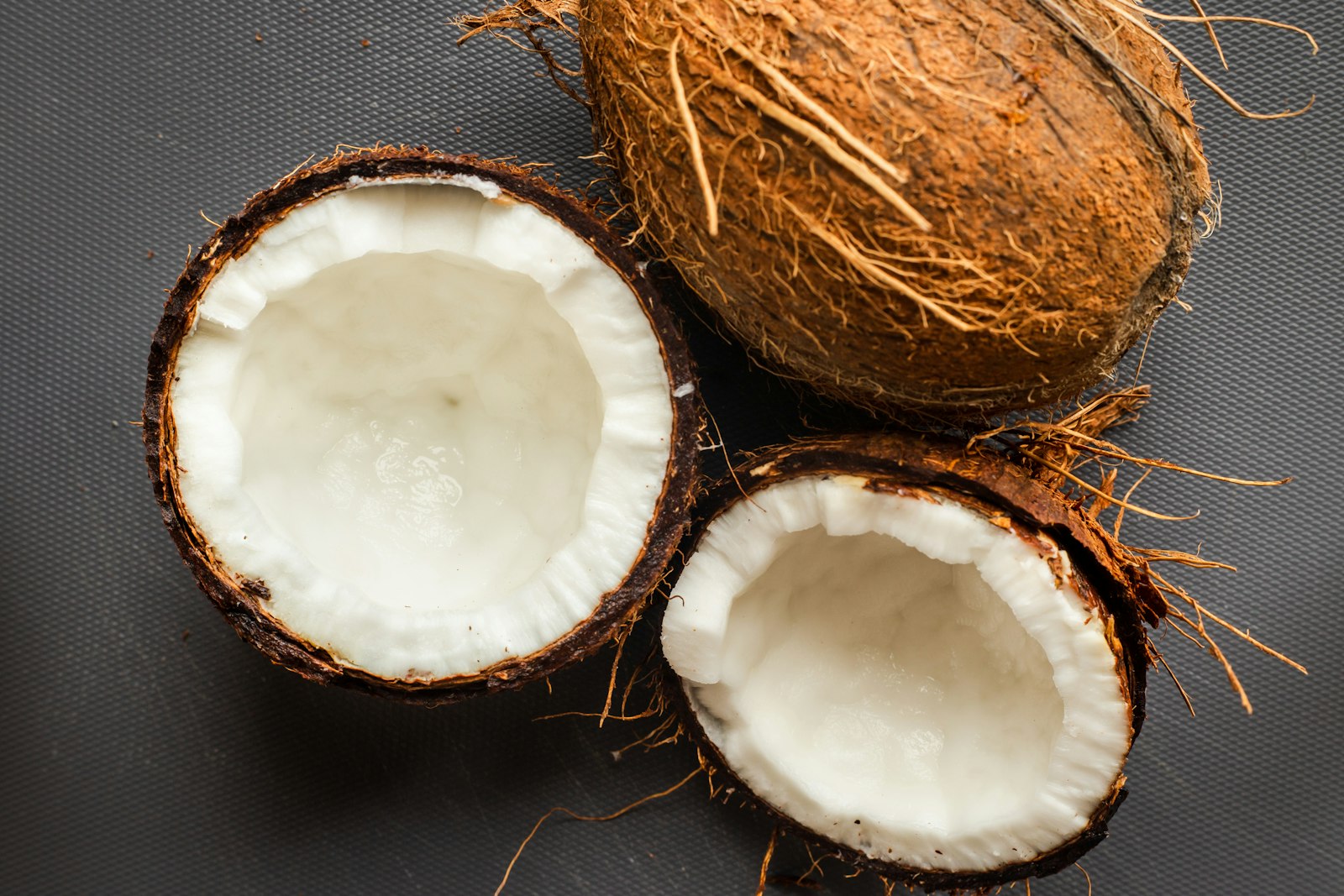
Dairy-free doesn’t automatically mean healthier. The nutritional value of plant-based desserts depends on their ingredients. For example, the American Heart Association lists coconut, palm oil, and palm kernel oil as sources of saturated fat. So, coconut-based ice creams are not necessarily lower in saturated fat than dairy-based ice cream.
Always read the entire product label, not just what’s on the front of the carton, and pay attention to the ingredients and nutrition facts. Of course, if you choose to buy a product because of taste or dietary restrictions or because you support certain values, that’s okay. Just don’t assume it’s healthier.
If ice cream bothers your stomach, consider more than one explanation
Digestive problems caused by ice cream could be related to lactose intolerance or an issue with other ingredients. Read food labels and keep track of the amount of ice cream or dairy products that you can tolerate. Everyone’s ability to tolerate lactose is different. According to the National Institute of Diabetes and Digestive and Kidney Diseases (NIDDK), most people who are lactose-intolerant may be able to have some lactose with no symptoms.
Lactose-free or lactose-reduced milk products may help. Some lighter or reduced-sugar desserts are made with sugar alcohols, and NIDDK reports that for some people sugar alcohols, such as sorbitol, mannitol, and xylitol can cause diarrhea. Recording what kinds of products and how much causes symptoms can help you learn what you can tolerate instead of avoiding ice cream entirely.
If you have continuing digestive problems, talk with a doctor. NIDDK points out the difference between lactose intolerance and milk allergy, and people who are allergic to milk cannot consume lactose-free dairy because it still contains milk proteins.
Read allergy information separately from the ingredient count
Never assume that just because a recipe appears to have five ingredients it’s not going to contain a major allergen. Even basic ice cream has milk and cream and often eggs. If there are other ingredients, those could contain other major allergens including nuts and wheat. Follow the Food and Drug Administration’s advice for people with food allergies, which is to always check the food label and avoid foods containing your allergen.

If you’re buying ice cream for another person, ask for specifics rather than make assumptions. Don’t assume that just because a product is ‘natural’ or ‘plant-based’ it’s OK for people with allergies. And don’t assume that just because you know a flavor, you’ll get the same ice cream from a scoop shop.
Always ask about ingredients and equipment. Some shops use the same equipment to make and serve their flavors. It’s a preference, not a requirement, but it’s nice to find recipes with short ingredient lists.
With diabetes, look beyond the sugar claim
If you have diabetes, check the label for the number of grams of carbohydrates in a food, according to the CDC. You should discuss with your doctor or registered dietitian the amount of carbohydrates you can have on a daily basis. While a product’s Nutrition Facts label tells you serving size which can be more or less than you think, portion size is the amount you choose to eat, says the CDC.
And while the front of the package might tout its healthiest attributes, it’s more helpful to look at total number of carbohydrates and think about how it fits into your diabetes care plan.
Make the final choice about the dessert you’ll enjoy
Sit back and enjoy your dessert. There’s no need to continue the nutritional debate while eating. The hard part is over. You did your thinking when you compared the richer ice creams with lighter-yet-delicious options by examining labels. You also made a conscious choice to buy the smaller and maybe pricier container of your favorite, rather than the bigger tub on sale, according to the needs of your crowd. And, if you’re planning to add crushed cookies or dessert sauce, you took that into consideration, too.

My quick label check
- What is it? Read whether it’s ice cream, light ice cream, or frozen dairy dessert.
- What’s in this particular flavor? Check the recipe rather than relying on the brand name.
- What does the serving provide? Look at added sugar, saturated fat, and portion size.
- Will I enjoy it? There’s little point buying a dessert I don’t actually want.
All that said, ice cream isn’t a health food. It’s not supposed to be. But that’s okay. It’s a treat. It’s delicious.
Sit down with a small bowl and enjoy. Avoid grazing from the carton, it’s easy to eat a pint without realizing it if you’re not paying attention.




Never even heard of most of these ice creams. What country are you writing from?
The United States! Most of these brands should be available in your local grocery store!
None of them are on my area of the Pacific Northwest except for Tillamook and Haegen
If you want healthy ice cream you have to go somewhere else besides Walmart. Walmart has Haegen and Ben and Jerry’s but the healthier ice cream is at Whole Foods,Sprouts and Maybe Trader Joe’s. Prices are reasonable too. Publix might have a few healthy ones too. I am in the USA too.
I am a Haegen girl thru and thru, Vanilla only, bean is the beam. I appreciate this company for their wholesomeness and consistency.
Taste most like the homemade than any, just a tad sweeter, but not sugary nor syrupy sweet, thats the win!👌🏼🤷🏼♀️
No one ever eats a portion size in accordance to it’s label (serving size) in a carton, box or canned good or frozen plastic bag or box. Many dont know its listed, and who is going to eat 1/2 cup of soup, or anything of that matter.
The only thing is some of these don’t really have any flavor