8 Exercises Seniors Should Do Daily For Mobility and Strength

I have found by interviewing my clients that starting any fitness routine is monumental. Many older adults have the capability, functional strength, and mindset, but starting the routine is probably the hardest.
My older clients find that if it seems like an uphill battle without any direction, they will not do anything at all. With this in mind, the fitness industry knows what older adults will or won’t do, and infographics have surfaced on social media and other outlets to encourage older adults in being more active with daily exercise charts.
I feel activity is important for every individual, but it is more important to have a simple, yet effective workout that helps to improve mobility and strength for the purpose of functional capacity.
What Does “Daily” Actually Mean?
I tell my clients that when designing a fitness program, it’s important to establish strength training and low-volume drills. I categorize strength training as something that requires a rest day, or a recovery phase—the fun part of exercise! But more importantly, strength training needs a good design.
A large 2020 systematic review in the International Journal of Behavioral Nutrition and Physical Activity looked at over 25,000 people and described the importance of exercise for older adults. This study found balance and functional exercises led to a 24 percent reduction in the rate of falls and mixed exercise and balance training led to a 28 percent reduction in the rate of falls!
But most importantly, this study showed that programs totaling three or more hours a week that included balance and functional exercises led to a 42 percent reduction in falls—which is an absolutely incredible figure! Simply adding exercise, a little balance training, or a combination of exercise and low-volume work could be the sweet spot for older adults.
When I give fitness advice to my older clients, I keep to the basics: exercise is good throughout aging so long as you pay attention to what your body tells you. Some clients get discouraged that they aren’t getting stronger as quickly as they want, but it takes time.
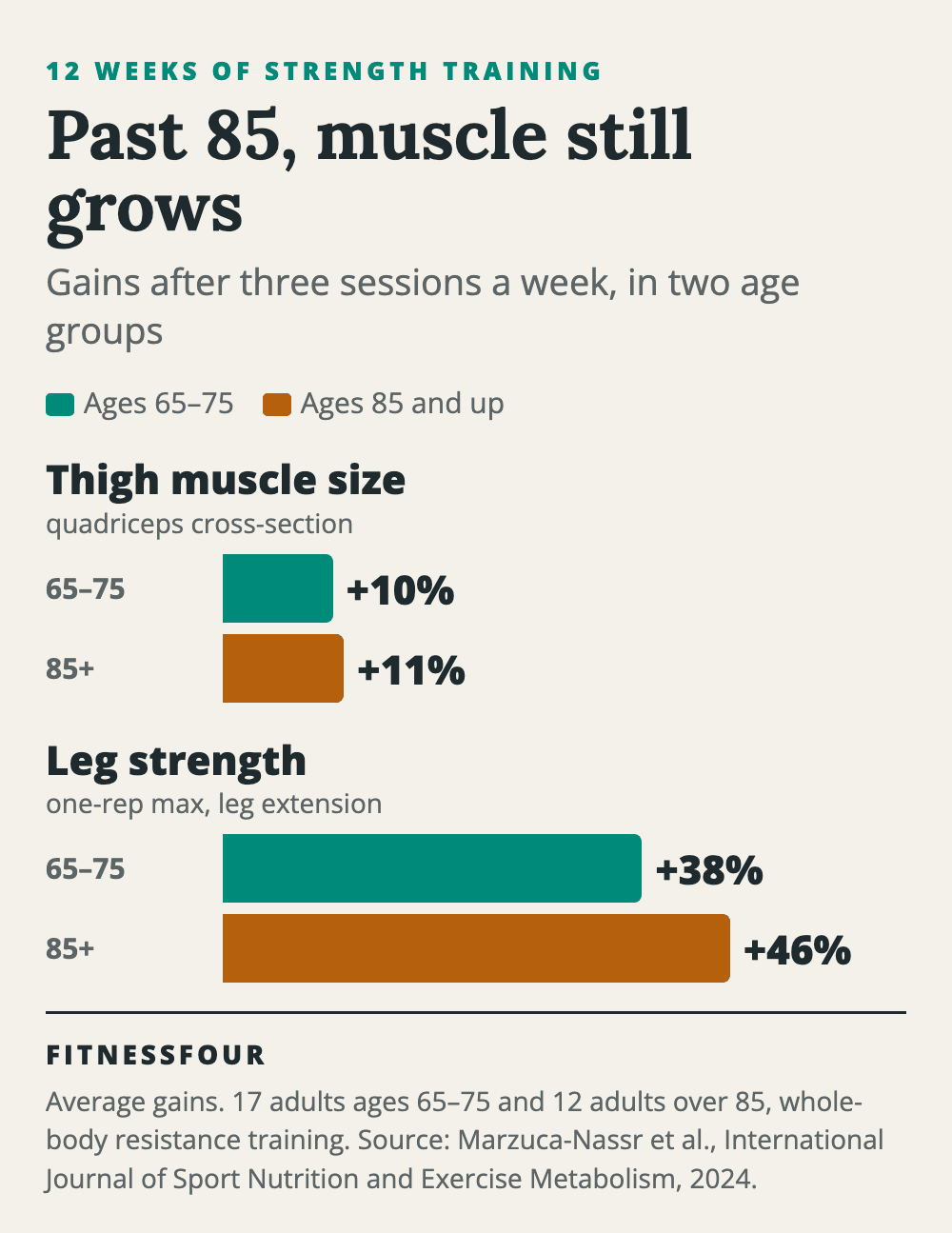
A small study from 2024 from the International Journal of Sport Nutrition and Exercise Metabolism compared older adults 85 years and older to those aged 65 years to 75 years old in muscle size.
This study showed that a 12 week resistance training program led to a 10 percent increase in quadriceps area and a 38 percent increase in one-rep maximum values—all with a frequency of three times per week! Ultimately, this could be crucial for older adults in maintaining strength for the purpose of functional independence.
Designed exercise is not the same as low-load, low-effort activity. The low-volume activities I’m talking about are the ones you can do daily—such as walking on a flat surface, gentle lifts, and light stretches. I separate this kind of work by asking my clients: “do you need to have a rest period after doing that?”
The Eight
It’s ok to do your low-load exercises every day—especially if they feel good—and your strength routine three times a week. Here are eight strength and mobility exercises that can help with daily living, using your bodyweight.
1. Chair Squats
Squats are one of the most efficient activities that can help to protect lower leg strength. With the help of a chair, these squats are simple, effective, and vital for working your glutes, quadriceps, and hamstrings.
Start this exercise by bringing the back of the chair within arm’s reach. The toes should face forward at a comfortable width. Stand tall behind a sturdy chair for balance if needed.
Sit your hips back to simulate sitting, while keeping a close eye on your knees positioning over your toes. Drive your weight through your heels to stand back in a tall position and aim for three sets of 10 to 15 reps based on your body’s needs.
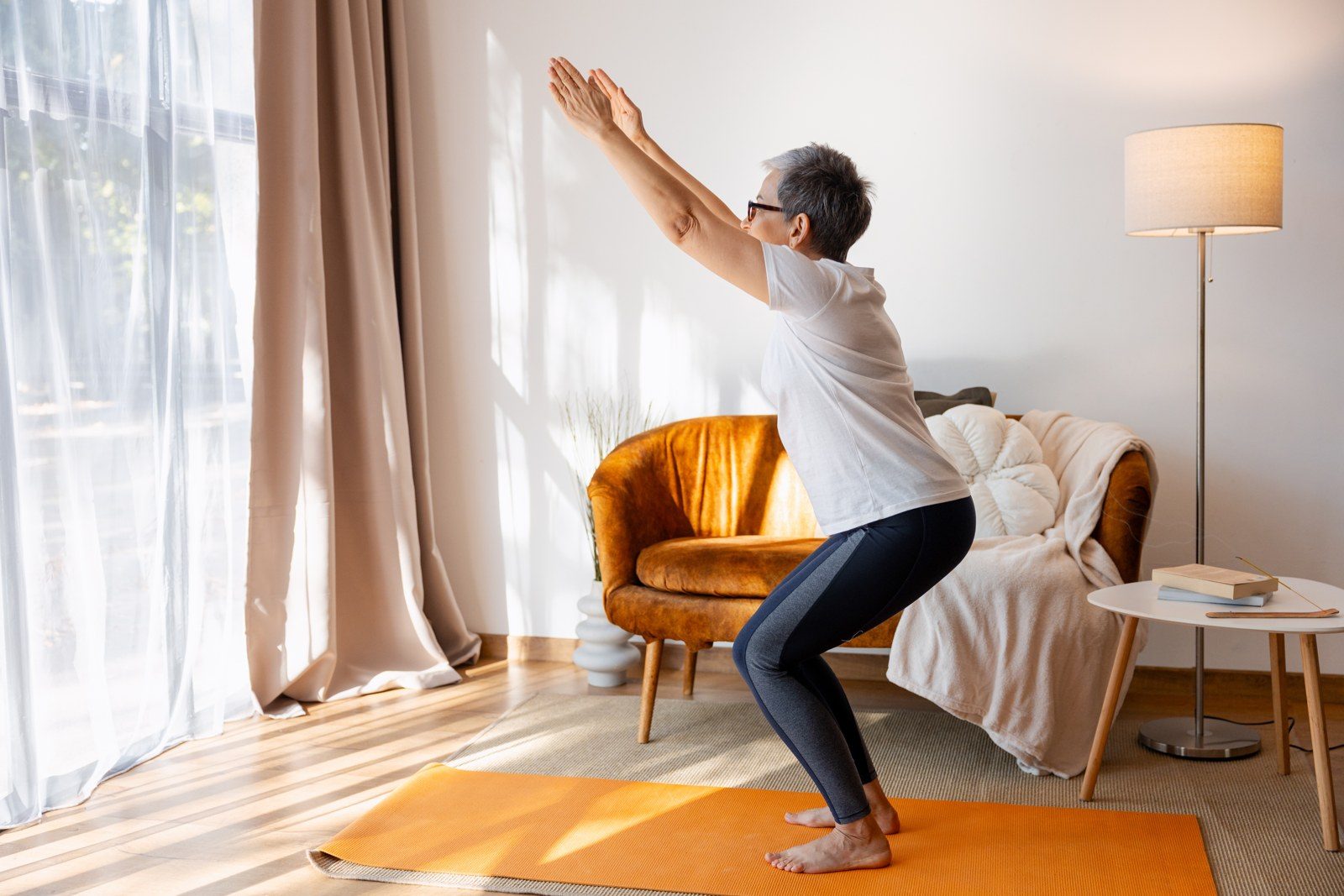
To make this more challenging, add five repetitions at a time until it is harder and decrease them by five to make the squats easier. The most common mistake I see is when the knees protrude in front of the toes. Knees past the toes changes how the legs need to work and it can place unnecessary external strain on the knees.
2. Calf Raises
The calf muscles help to maintain your lower leg strength, mobility, balance and stability while walking. Place your feet shoulder-width apart with the toes ahead and use a counter top or chair to help with balance if needed. To get your calves feeling the burn, raise the heels off the floor while keeping straight legs. Pause for two seconds at the top of the movement, and slowly lower to return back.
The calf muscles are designed to be strong, but are resistant to fatigue. Aim for three sets of 15 reps, with one minute of rest between sets, but add five reps to make it harder.
To make this exercise easier, cut out five reps or avoid the pause at the top of the action until your reps are effective. The one mistake I see with calf raises is when the thighs are used too much—which makes it harder to isolate the calves at this point!
3. Lateral Leg Abduction Kicks
This exercise is an absolutely great option for working the lower body—specifically the outer glutes. Working these hip abductors is important for maintaining balance when on your feet and while walking.
Start by standing with feet close together with your hand on the counter or back of a sturdy chair. With the feet facing forward and the right leg locked, slide the right leg out to the side at about a 45 degree angle.
Pause for two quick seconds then lower the leg slowly back down while resisting gravity. Do three sets of 10 reps on each leg and add it into your routine three days a week for optimal strength training! The real beauty and time saver of this exercise is that your rest period occurs when the other leg works!
This exercise can become harder by adding two reps at a time. Oppositely, make this exercise easier by subtracting two to five reps or taking the pause away if needed. The most common mistake I see is when the hips rotate during the leg lift phase or the toes rotate outward to make it a kicking action.
4. Wall Push-Ups
Maintaining upper body strength is non-negotiable for older adults and the wall push-up is one of the best multi-joint options to do. Find an open wall and plant your feet just wider than shoulder width apart.
Place your hands flat on the wall with the elbows close to the ribs. Take a short step backwards with your feet and press your hands firmly to push your body away from the wall. Hold the straightened arm position for two seconds before lowering back towards the wall.
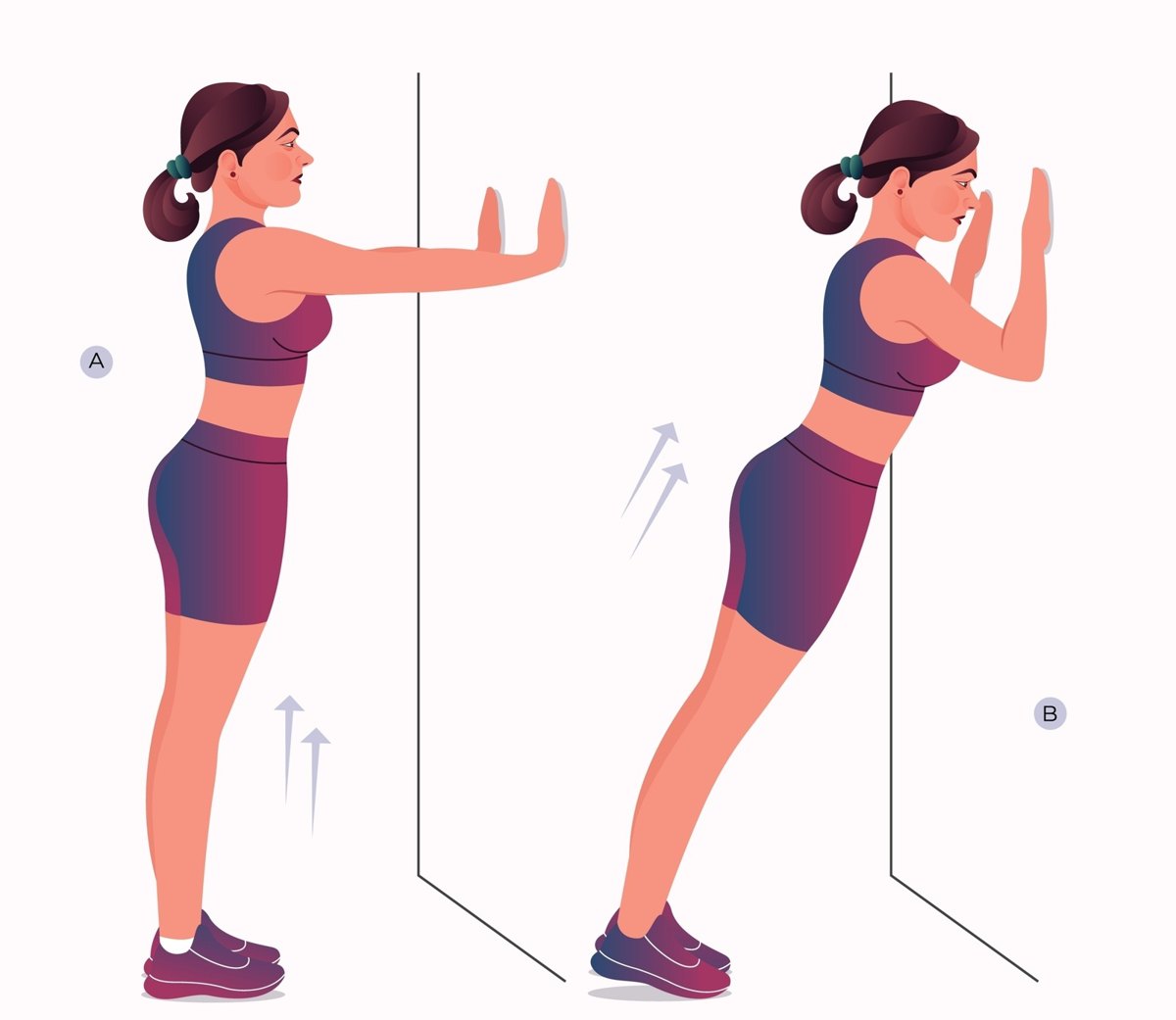
Start slower here with only two sets of 10 reps and 60 seconds between sets. Want to progress? Add a third set to this routine or lower your angle by moving your push-ups to a counter top instead. If two sets is too much, just work on five reps each until you progress!
One common mistake I see with pushup variation is a sagging midline. A pushup requires a rigid body and anytime the hips do this sagging action, it places strain on the body and turns your exercise more into a cobra pose stretch!
5. Loaded Carry Walk
I really enjoy this exercise for my older clients—it mimics real life movements such as carrying heavy groceries. This exercise is a powerhouse activity for the forearms, biceps, and really works grip strength, endurance, and the core!
All with a reusable cloth grocery bag, toss in a few cans of food or a full jug of milk until you reach roughly 10 pounds—a gallon of milk weighs nine pounds FYI! Pick up your cloth bag and head down your home hallway for roughly 60 seconds and then switch to the other arm to repeat. Since this is a practical low-volume movement, you can practice this every day if you wish.

If you want to level up this activity, hold a weighted bag in both hands at the same time. To tone it down, cut the walking time by half until your endurance is built. The most common mistake here is clenching the shoulders throughout. It’s natural for the body to compensate for a heavy weight and lift using the shoulders, but this activity should only work the arms and forearm muscles.
6. Cat Cow
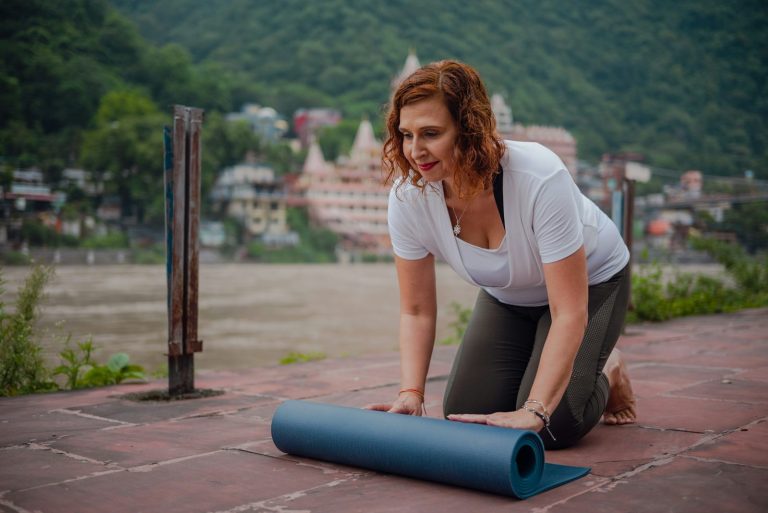
I like the cat cows because they are gentle for spinal mobility—and you can do them every day if your body allows. All you need to do is lower your body to the floor with your hands and knees planted on a padded surface—I suggest a carpet or yoga mat.
Start by taking a breath in while tucking your chin to your chest, curl your spine towards the ceiling, and tuck your hips under. Allow one breath in this position, then as you exhale: bring your chin back up and point upwards, let your belly button drop to the floor, and untuck your hips. Take another breath here and then repeat for three sets of five cycles.
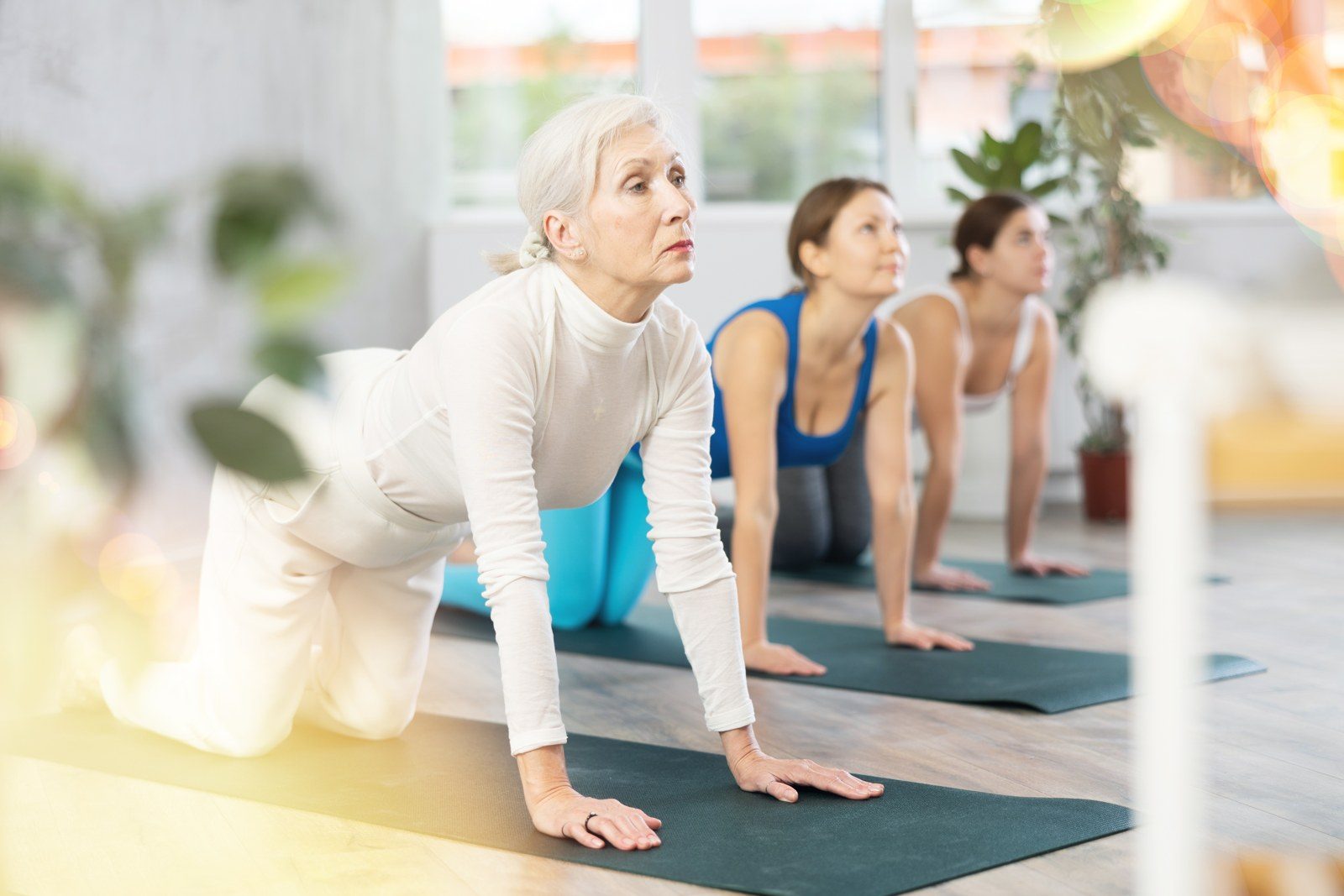
Don’t want to get on the floor? That’s ok, just perform your cat-cow from a chair in a sitting position instead. Perform the same movements, but the only modification you need to do is place your hands on your thighs. The common mistake I see with this exercise is moving too quickly. Cat-cow should be slow and controlled—while focusing on your spinal movements.
7. Seated Toe Touches
Low-volume flexibility is good for your daily routine and can be done at any time. Slide forward so your glutes are at the edge of a sturdy chair. The left knee should stay bent and the heel planted on the floor.
Extend your right leg straight in front with the heel planted on the floor. Bend forward and reach the hands towards the right toes in front of you and just hold here for 15 seconds.
You can easily do two sets of 15 seconds each day—just make sure you are not forcing your stretch so that it hurts your legs. If this is too easy, just add another 15 seconds—just make sure to calmly breathe while holding the stretch!
The most common mistake with toe touches is bending the knees while holding the stretch. The idea is you want your legs to remain as straight as your body allows and if it means you can only reach your knees so be it.
8. Dead Bugs
I like dead bugs because they are fun and help to maintain core strength. Because you’re lying on your back for this exercise, balance is not a factor—which makes it very safe!
Lie on your back on a padded surface (yoga mat or carpeting), hands shoulder width apart and raised up and towards the ceiling. Bend the hips and knees in 90 degree angles, so the thighs are now vertical and the lower legs are parallel to the floor.
Start by lowering the straight left arm to the floor, with the upper arm lying near the ear. The right leg straightens down to the floor, still hip width apart. Pause for one second and return the arm and leg back. Repeat on the other arm and leg to complete the repetition.
Start with three sets of five on each side, controlling the movements and adding 60 seconds of rest between sets. These can be performed daily since dead bugs are a low-volume activity. If you want to push yourself more, then increase your reps to seven or eight. The easier variation includes subtracting your reps to about three until you work your way up to more reps.
The biggest mistake with dead bugs is using jerking motions with the arms and legs. This is a controlled exercise for the core and is best performed at a deliberate pace.
Putting it Together
I like to have clients get their workouts done early in the day, preferably in the morning. On Mondays, Wednesdays, and Fridays—or three non-consecutive days—you should combine the strength exercises above starting with three sets of 10 chair squats.
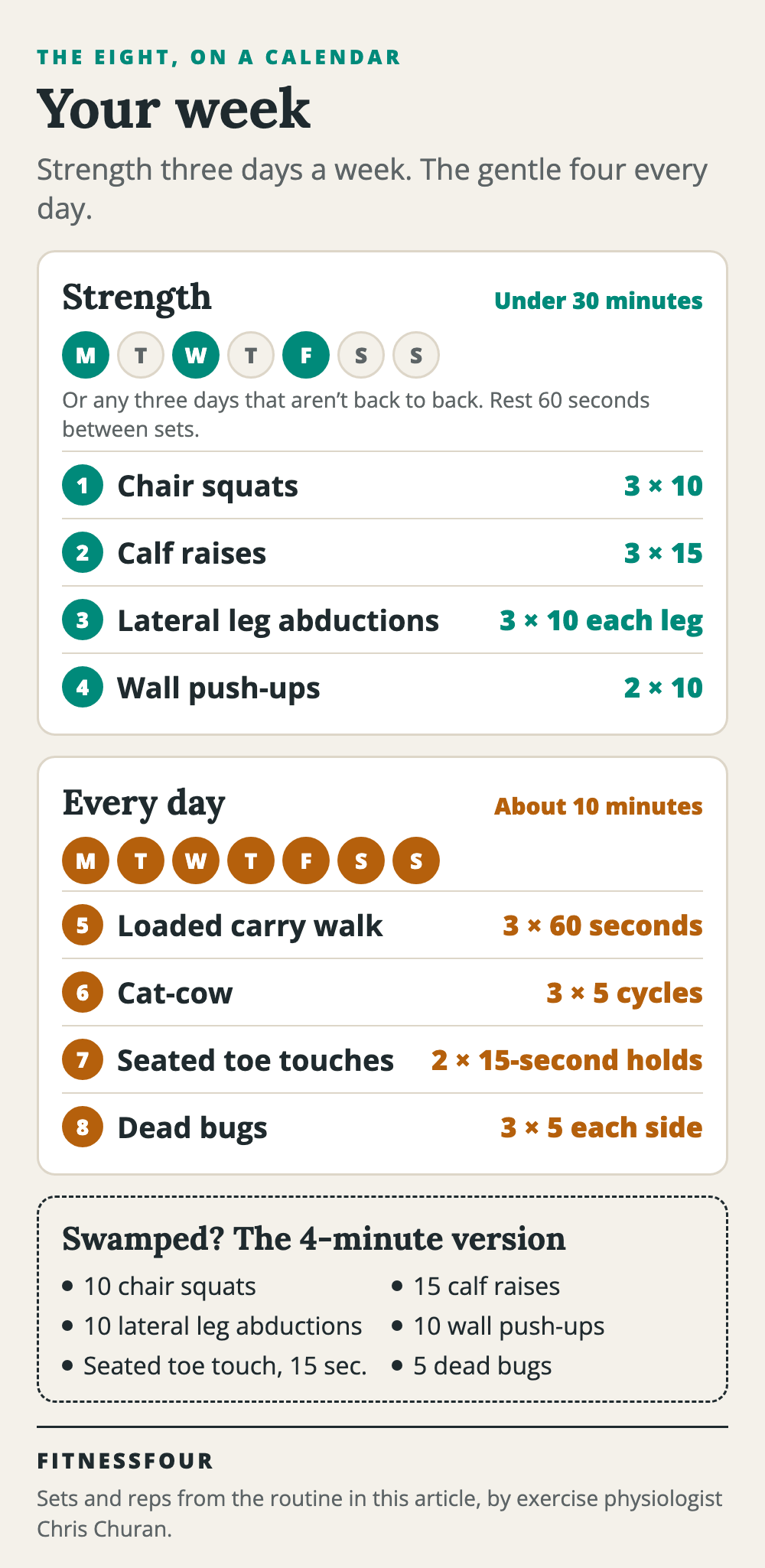
Move directly into three sets of 15 calf raises after this, making sure to take a breather between sets. Then go after your glutes with three sets of 10 lateral leg abductions on each leg—using your alternating leg action to allow for rest periods. Finish this part of the strength routine with two sets of 10 reps of wall push-ups, still remembering to add 60 seconds of rest between sets.
Following the strength portion, you should work on your daily exercises—you know, the low-volume activities. Grab your grocery bag for three sets of 60-second walks, then three sets of five cycles of cat-cows. Progress into two sets of seated toe touches and three sets of five dead bugs to round out this workout.
The strength workouts should not take more than 30 minutes to finish. The low-volume exercises are designed to last no more than 10 minutes. Lastly, if you are having a tough day—which we all have—just pick back up the next day and continue with the schedule as usual!
On the days you are simply swamped—like on days when you have appointments and other errands—consider a four minute quick workout! This would look like a quick set of 10 reps of chair squats, one set of 15 calf raises, one set of 10 lateral leg abductions and wall push-ups, a set of seated toe touches holding for 15 seconds, and one set of five dead bugs.
When and How to Progress
The key to succeeding with your workout program is consistency! There will be a time when everything clicks, and you think to yourself “it got easier.” I tell my clients something similar to this, but if you need to adjust your workout to make it more challenging, then you’re nailing it in a good way.
When your daily life is jam-packed with events, appointments, and obligations, just know that there are four minute options you can do and still hit the minimal mark. Your success will follow your consistency—bad days or off days happen for everyone, but pick back up where you left off and continue on your path towards functional ability.