These Are the Healthiest Ice Cream Brands (That Use Real Cream)

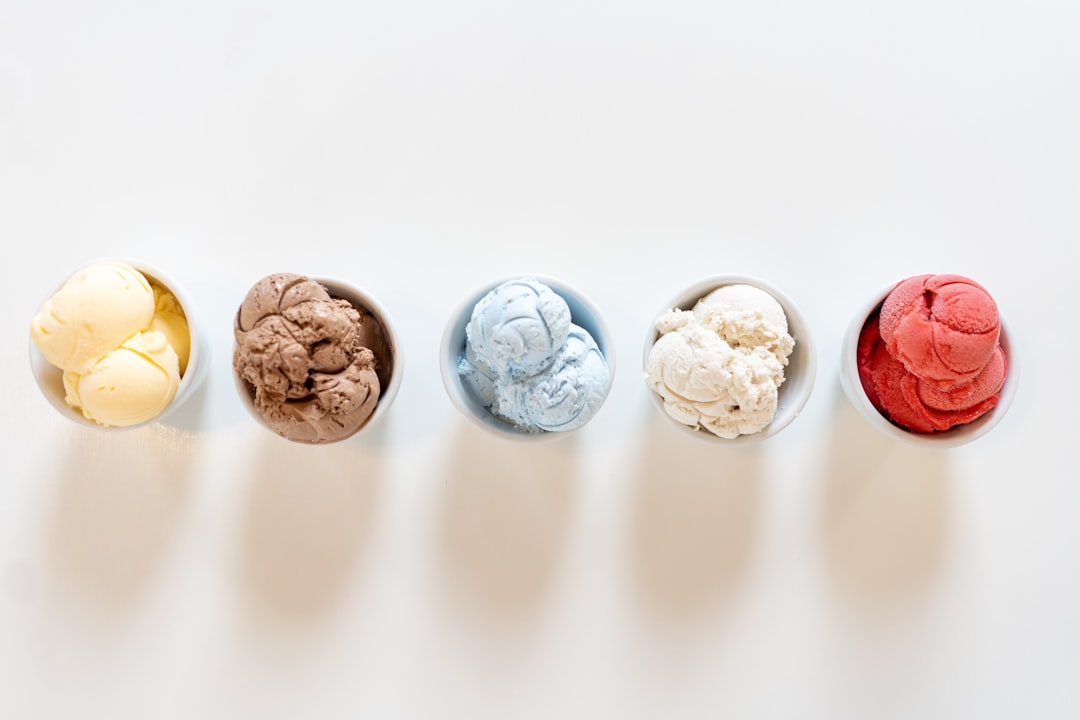
I review the ingredients on ice cream packaging in my local grocery store as others might analyze wine labels (i.e. With an opinionated eye and a bit of slowness) and one item I found very helpful when reviewing ingredients was that many products labeled “ice cream” are technically not “ice cream”, but rather “frozen dairy desserts”.
Once I learned how to identify these differences, I could no longer ignore them. So, below is my shopping list for brands who continue to produce “plain old-fashioned” ice cream; i.e. Using just cream, sugar and minimal other additives, because if I’m going to eat a bowl of something after dinner, I’d prefer it be a legitimate food product with a small amount of indulgence added, versus a science experiment masquerading as a treat.

The label trick that tells you everything
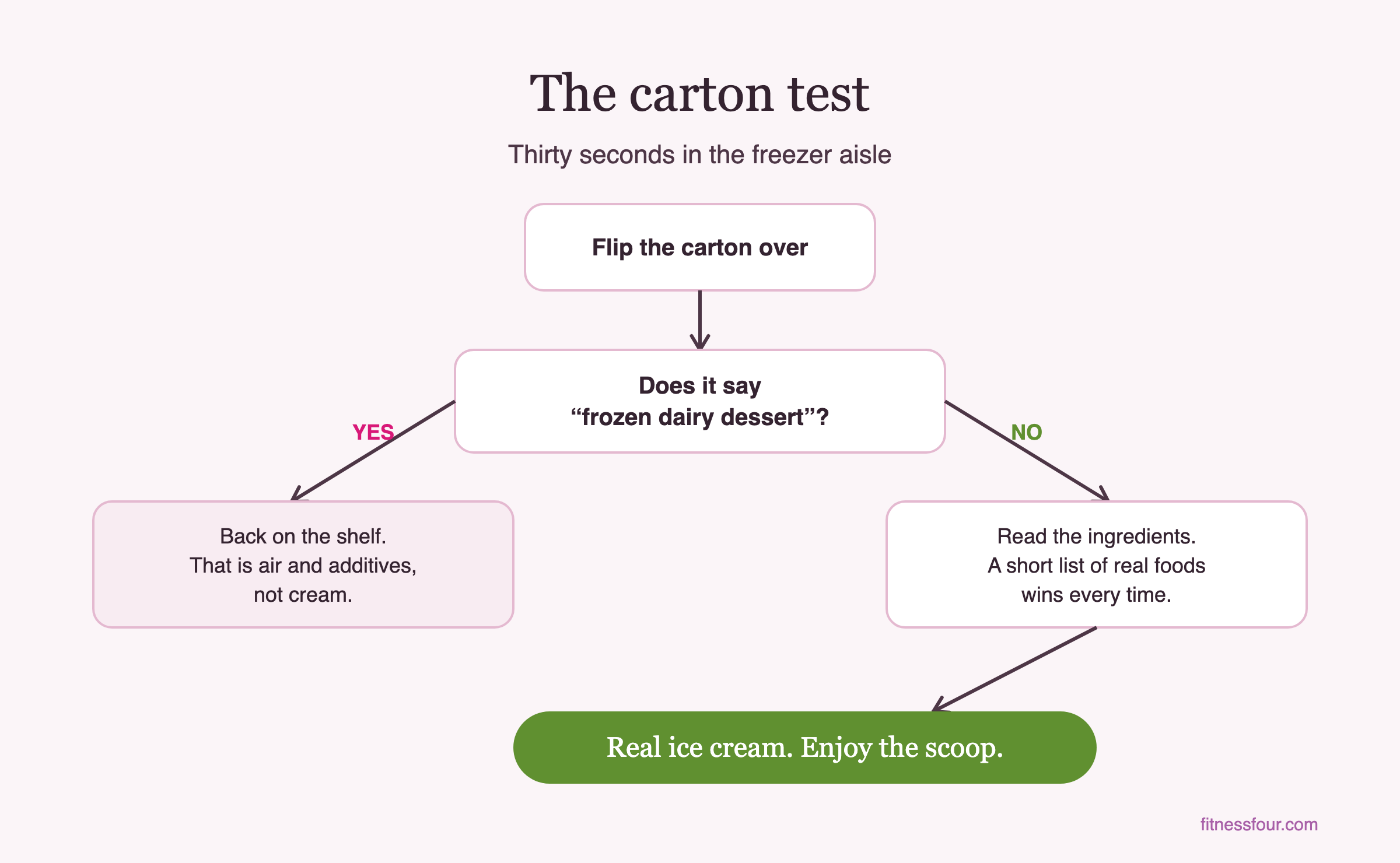
Check the flip side of the carton for two words, “frozen dairy dessert,” next to the name on your product. If those terms are present, then this product didn’t meet the legal definition of ice cream and it would be useful to know why. The FDA has specific rules defining what constitutes an “ice cream” product.
In order for a product to be defined as an “ice cream”, it must have at least 10% milkfat content and weigh a minimum per gallon amount (the actual weight of a gallon) with regards to how much air was added during whipping.
When companies reduce or remove cream, their most expensive ingredient, and increase their whipping process by adding additional air to allow the same size container but larger volume, they reduce their total fat percentage and so fall short of meeting that rule – making it a “frozen dairy dessert”.
Once they realize that removing cream will take away some of its creamy texture due to fat content they replace that lost function through using additives such as gums and stabilizers in creating similar mouth feel textures. This is essentially all there’s to it. Halo Top is a frozen dairy dessert.
So is a great deal of Breyers now too – I was sad when I found out many were too, along with many of the light and slow-churned products sold under brand names from Edy’s and Dreyer’s; none means they’re poisonous – but rather you’re paying money for air and additive ingredients where you believe you’re purchasing cream-based ingredients.
The brands that are cream, sugar, and not much else
If you want the shortest ingredient list in the case, three brands stand out because they use no gums or stabilizers at all. Häagen-Dazs is the one you can find anywhere, and its classic vanilla is five things: cream, skim milk, sugar, egg yolks, and vanilla. For a pint sold at every gas station in America, that is remarkable, and it is my answer whenever someone says eating well means you can never buy anything normal.
Straus Family Creamery is the organic version of the same idea, a short list of organic cream, milk, sugar, egg yolks, and real vanilla bean, from dairy cows that graze. And Van Leeuwen makes a French-style line with a pile of egg yolks and no gums, richer and a little more expensive, the one you buy when you want dessert to feel like an event.
Then there is McConnell’s, which I mention separately because it runs one of the highest butterfat levels you can buy, somewhere around 18 percent, which is well past the legal minimum and squarely into the territory of very rich, very real ice cream. A little goes a long way, which is sort of the point.
The ones with a gum or two, and why I don’t mind
Here’s where I want to help you down from that ledge, as the internet has determined all gums are villains and that just doesn’t seem to be in line with the evidence. Many good and real cream ice cream brands use one or two natural stabilizers like guar gum (from seed) locust bean gum (from seed) which have very little controversy attached to them.
Graeter’s makes its ice cream in old french pots and uses exactly two of those gums on an otherwise short list of nutrients for their product. Tillamook, at costco for a fair price, also uses real cream and a couple of gums. Alden’s is a solid organic option at a mainstream price point, cosmic bliss uses milk from fully grass-fed cows, clover sonoma is organic california dairy, jeni’s skips both eggs & synthetic stabilizers and leans on some tapioca instead.
All of these would be better than any “light” tub of ice cream I think we can agree on this point, but don’t let yourself get too distressed by seeing a natural gum in the ingredient list!
| Brand | Where to find it | Why it makes the list |
|---|---|---|
| No gums or stabilizers · the shortest lists | ||
| Häagen-Dazs | Any grocery store | Five-ingredient classic line, no gums or stabilizers |
| Straus Family Creamery | Whole Foods, Sprouts | Organic, grass-based dairy, short list |
| Van Leeuwen | Whole Foods, Target | The French line, loaded with egg yolks, no gums |
| McConnell’s | Whole Foods, scoop shops | Highest butterfat of the bunch, around 18 percent |
| Real cream, with a natural gum or two | ||
| Graeter’s | Kroger, Whole Foods | French-pot made, just two natural gums |
| Tillamook | Costco, Walmart | Real cream, and the best value here |
| Alden’s Organic | Whole Foods, Kroger | Organic at a mainstream price |
| Cosmic Bliss | Whole Foods, Sprouts | Milk from 100 percent grass-fed cows |
| Clover Sonoma | Whole Foods, Safeway | Organic California dairy |
| Jeni’s | Whole Foods, Target | No eggs and no synthetic stabilizers |
So what is the deal with the additives everyone fears
I think there are some artificial emulsifiers that have a bit more wiggle room in terms of the products they appear in, specifically carboxymethyl cellulose (also referred to as cellulose gum) and polysorbate 80. As stated earlier there’s a body of research on these compounds, but if you read it without spin, one study was conducted using human subjects and involved feeding them an enormous amount of cellulose gum per day for several days, resulting in slight changes within their gastrointestinal systems, with a slightly increased incidence of bloating; again at quantities far higher than those contained in a typical serving of ice cream.
The majority of the negative findings were based on animal models (mouse studies). So the best course of action would be to show no fear and look for foods whose ingredients are presented in fewer items, which is exactly what all three mentioned brands provide. Also, carrageenan receives much criticism due to its association with an older industrial form that has been identified by regulatory agencies as distinct from food-grade carrageenan and so deemed safe.
You don’t need to memorize this information, you just need to review each product’s ingredient list and opt for the shortest possible list(s).
But isn’t the full fat the actual problem
I was surprised by this, because my entire childhood I was encouraged to get all dairy in its lowest fat version possible. Since then research has evolved. Now large studies have found that people who have high levels of dairy fat in their blood aren’t at an increased risk for heart disease, and sometimes there may even be a decreased risk for heart disease.
Reviews specifically examining women’s diets concluded full-fat dairy isn’t as detrimental as the previous dietary recommendations indicated. That doesn’t mean ice cream is healthy food, and I’ll never pretend eating a bowl of ice cream can act as a supplement (I don’t need to). What matters isn’t how much fat is in your cream; it’s about how many sugars are added to the product and how big the serving size is.
A small portion of “real” ice cream contains about 20 grams of sugar, but I’ve yet to meet anyone (myself included) who limits themselves to what they read on the packaging (the serving size).
How I buy it
- Flip the carton over and look for the words “frozen dairy dessert” near the name.
- If they are there, it failed the legal bar for ice cream, usually on milkfat or too much whipped-in air.
- Real ice cream is at least 10 percent milkfat by law.
- Shortest ingredient list wins: cream, milk, sugar, eggs, vanilla beats a paragraph of gums.
My rules about eating ice cream are very simple, and they have worked well for me. I look at the ingredients first when reading labels, as a short list of recognizable foods is far better than any label or number on the front of an item. I’ll avoid buying anything labeled “frozen dairy dessert” because I’d rather spend my money on high-quality milk/cream instead of filling a product with nothing.
For the most part I choose to buy products that contain only real items; store them in the back of my freezer so it’s harder for me to access them (it takes a little bit more time); and eat from small bowls with actual spoons while sitting down, doing this consciously makes much more difference than what brand I’m purchasing.
No matter how many times people say that eating too much good quality ice cream causes women to be unhealthy, if I’m willing to wait long enough to enjoy each bite (and so appreciate it), there isn’t one single instance where enjoying a great serving of premium quality ice cream has ever stood between a woman and her health and that includes myself, I’d fight anyone who disagreed in the freezers aisle about this point!