Homemade Sage Breakfast Sausage With No Onion or Garlic

I can’t seem to find a sausage at the store that doesn’t have onion or garlic powder in it, so I make my own. Mine is made from pork loin chops and a little pork belly which I grind up in the food processor and season up with sage and a few other dried spices I already had in the cabinet. This recipe makes around two dozen sausage patties from three pounds of meat, all freezer ready!
This is the second time I’ve made these and while they turned out okay, they weren’t perfect. I ran into a few issues with the fat and noted a few things I’d do differently. The recipe with measurements is at the bottom.

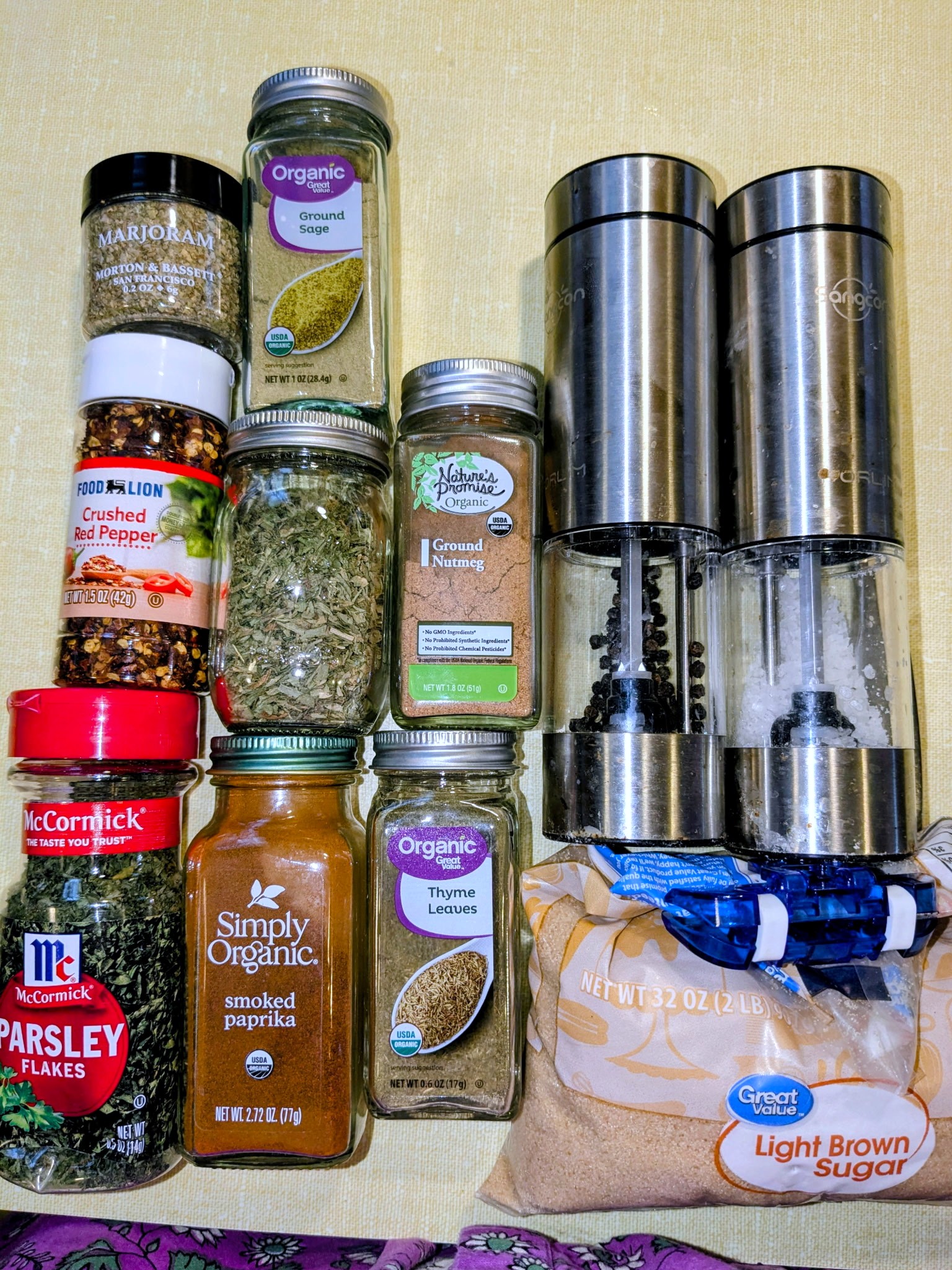
The seasoning blend, with tarragon in place of fennel
For seasoning I used a recipe for breakfast sausage seasonings (minus the onion powder and garlic powder, of course). It called for ground sage, marjoram, thyme, parsley flakes, smoked paprika, ground nutmeg, crushed red pepper, fennel seed (I used tarragon instead), light brown sugar and salt and pepper. All items except the fennel seed were in my pantry (I used dried tarragon instead and it was fine, as I don’t think the sausage missed the fennel).
I made up a batch of the seasonings, minus onion and garlic powder, and it amounted to about a pint, way more than what I needed for this batch. The recipe called for a teaspoon of the seasoning per pound of meat, which was not nearly enough, as I wanted it to taste like sausage and needed more sage.
So I’ve written up the recipe with ingredients to make about 3/4 cup plus 1 tablespoon of seasoning (with 1/4 cup of sage in it). It calls for 1/3 cup plus 1 tablespoon of that for 3 pounds of meat. The rest goes in a jar to use next time.
Seasoning: 1/4 cup rubbed sage, 3 tablespoons kosher salt, 1 tablespoon dried marjoram, 1 tablespoon dried thyme, 1 tablespoon dried parsley and 1 tablespoon light brown sugar. Then 2 teaspoons dried tarragon (or fennel seed), 2 teaspoons pepper, 1 teaspoon smoked paprika, 1/2 teaspoon of ground nutmeg plus 1/2 teaspoon crushed red pepper. Place all ingredients in a jar and whisk to combine.
Lean pork chops need added fat
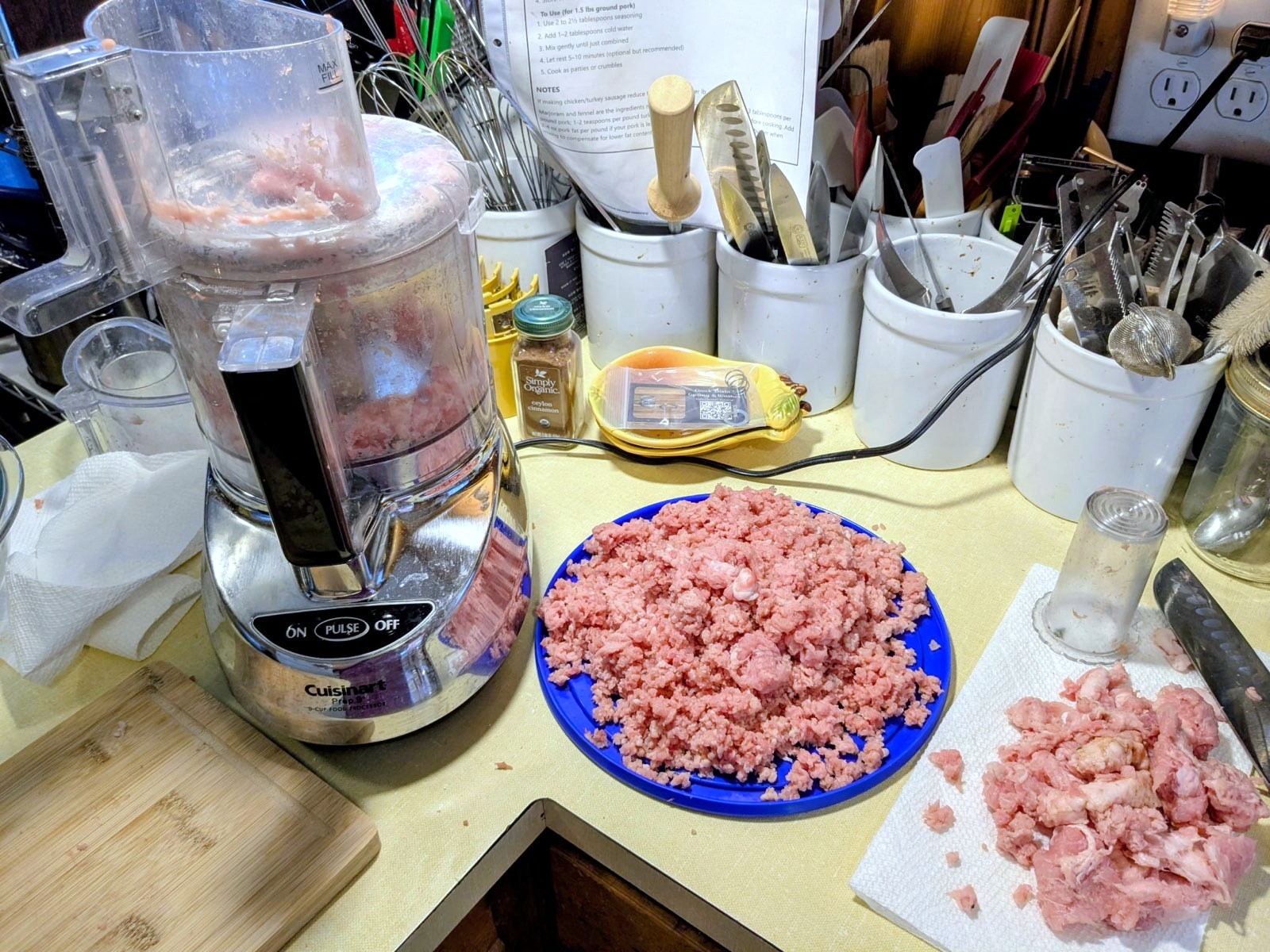
I used a large package of boneless pork loin chops (thick cut) that was on sale at Sam’s Club and added a package of pork belly (which I was going to pick up anyway). You can use fatback instead of pork belly if you can find it (resulting in a juicier sausage).
The recipe below calls for 2 pounds of pork loin chops plus 1 pound of pork belly or fatback. I diced up the extra pork belly into cubes and put into three, one-pound bags in my freezer for future recipes.
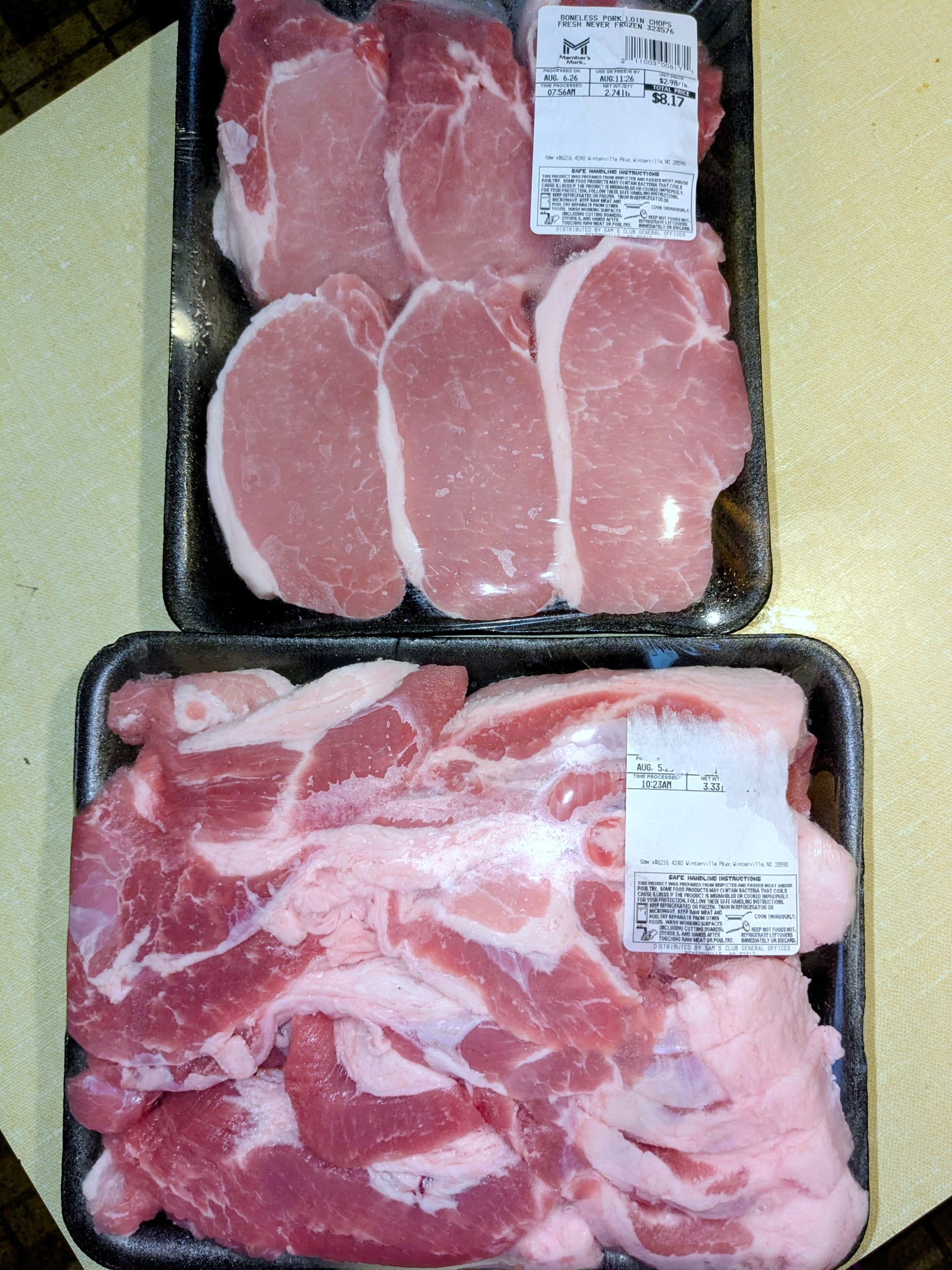
Cubing and seasoning the pork the night before
Dice up the pork chops into about 1-inch cubes. Dice up the pork belly and separate the fat from the lean. Put all of the meat and seasoning in a large glass bowl and toss to combine until all of the meat is coated with the seasoning. Cover and refrigerate overnight.
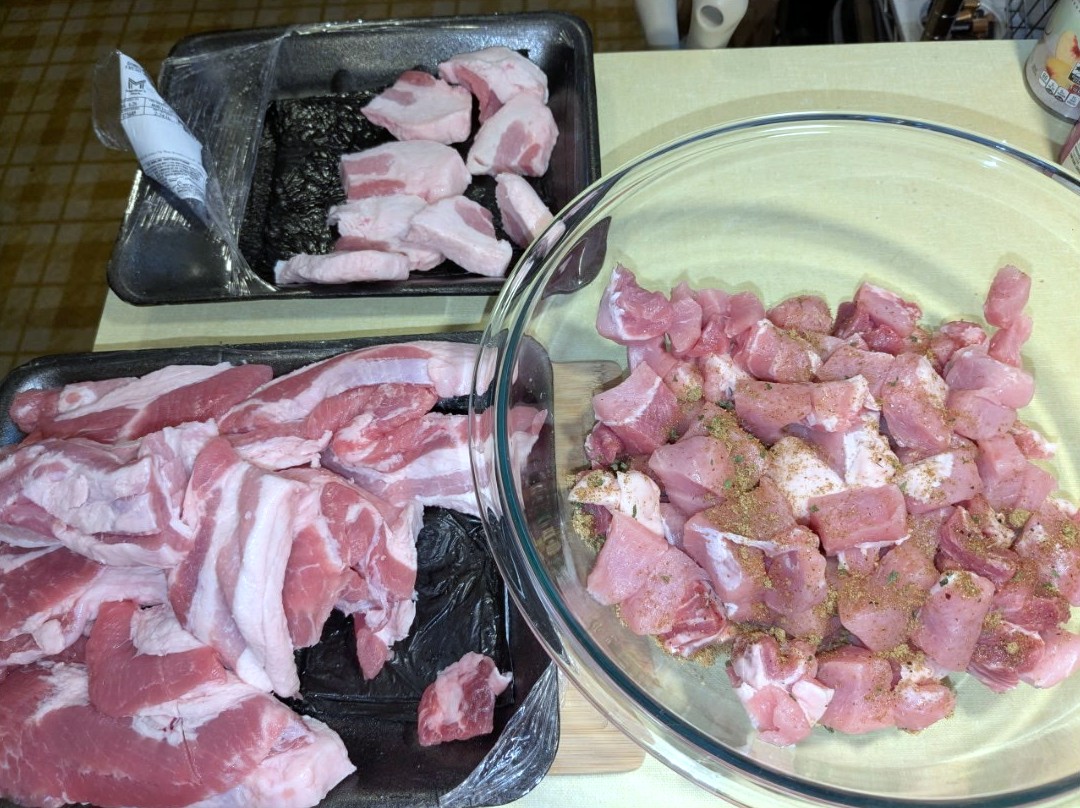
Grinding it in the food processor
Take two sheet pans and spread out the meat cubes on the pans. Place in the freezer about 45 minutes, because you want it to be firm on the outsides, but not frozen solid.
Set your food processor with the chopping blade (not the shredding disc). Add about 1 pound of meat at a time (making sure to include some of the diced up fat in each batch). Pulse 8-10 times until it resembles coarsely ground pork (you do not want it to be pasty). Add to a large bowl. Repeat with remaining meat.
Add 1/4 cup of ice water to the pork. Using your hands, gently incorporate the water into the pork until it’s combined and the pork sticks together. Refrigerate for 10 minutes.
Shaping and cooking the patties
Cook up a spoonful of the pork in a skillet to make sure it’s seasoned correctly (add more salt and/or sage if needed). Form into 2-ounce patties (about 3 inches across) and place on a baking sheet. Use your thumb to press down on the center of each patty so they don’t puff up while cooking. You should have about 2 dozen sausage patties. Refrigerate until ready to cook.
To cook, place the patties in a cold skillet over medium heat. Cook for about 4 minutes per side until nicely browned and cooked through (no pink in the center).
What went wrong in my second batch
The second time I made sausage I had the cubed and seasoned pork chops and pork belly in the fridge, ready to be ground. I popped it in the food processor (with the shredding disc, which was my mistake) and turned it on. It worked great! The lean ground pork came out looking just like sausage meat.
However, the fat that I had added (the pork belly) got spit right back out, along with most of the fat on the chops. In fact, so much fat came out that it clogged the feed tube and when I went to add more fat (which I had cut into even smaller cubes) it wouldn’t go in because it was too slippery.
Moral of the story: freeze your cubes before grinding and use the chopping blade, not the shredding disc.
I had enough ground pork to make three 12-ounce packets that I wrapped and put back in the fridge till morning. The next morning I took one out and fried it up (freezing the other two). The patties browned up nicely. They tasted like sage sausage too! They were a little leaner than I like my sausage to be (and I wish I would’ve added a little more sage), but overall they were a big improvement over my first attempt.
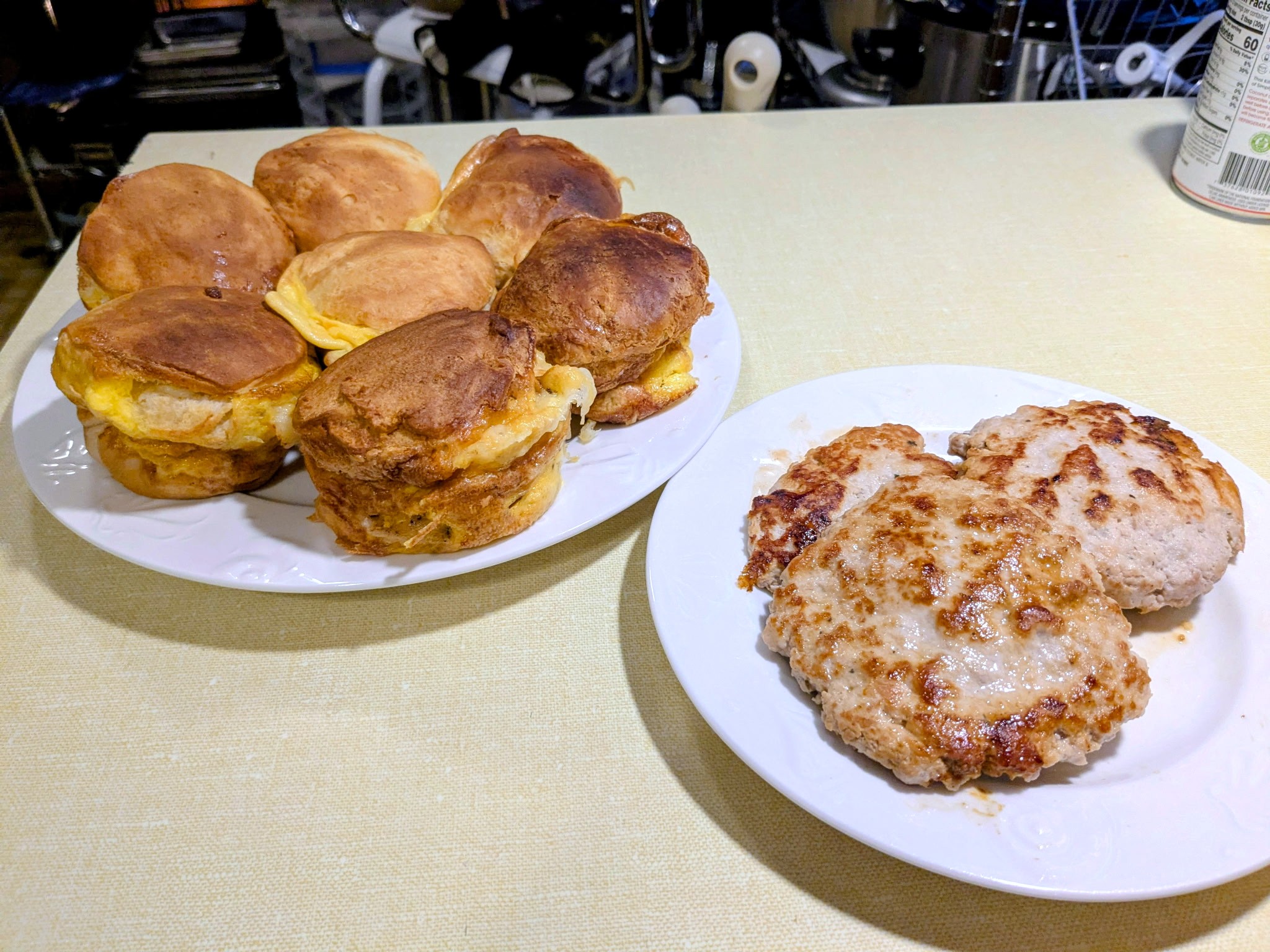
Those two packets in the freezer will keep me going for about six months at my rate of sausage consumption.
A better fat source for the next batch
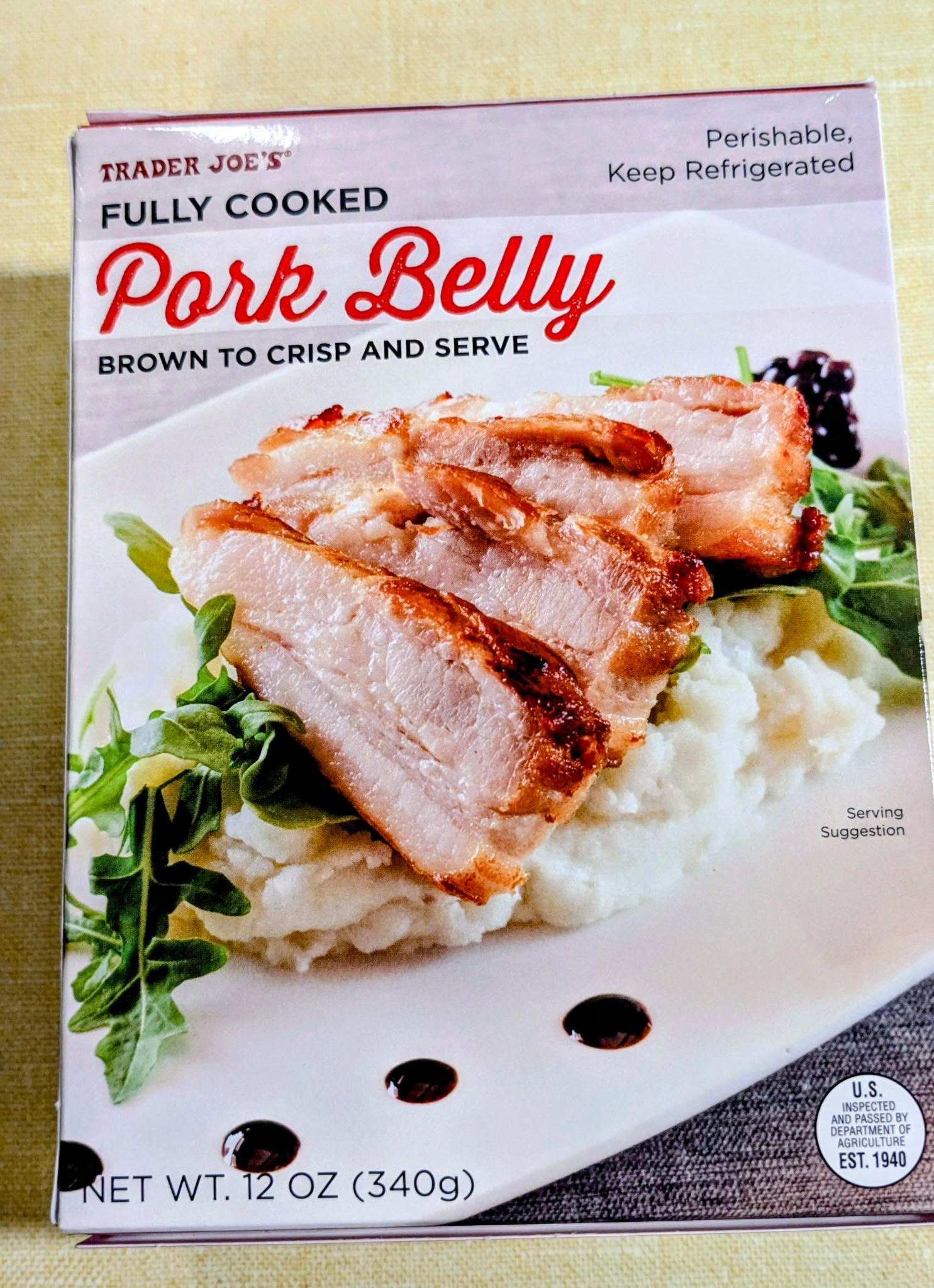
The pork belly I bought at Sam’s Club wasn’t great and was kind of stringy. I did find some fully cooked pork belly at Trader Joe’s a few weeks later though that looks like a better fat source for sausage. My plan is to dice it small and freeze it.
Then, when I’m ready to make sausage, I’ll thaw out 1 pound of my lean frozen sausage meat. A handful of frozen pork belly dice goes through the food processor fitted with the slicing disc this time, and I’ll work that into the sausage before forming patties.
Freezing the patties
After making sausage patties I cook just enough for the next day or two and freeze the rest (raw). I place the patties on a sheet pan lined with parchment and freeze until firm. I then remove from the sheet pan and stack in freezer bags (separating with parchment squares) about a dozen to a bag.
They should last three months or so in the freezer. When I’m ready to eat them I either thaw them out in the refrigerator the night before or cook them (from frozen) over medium-low heat adding a few extra minutes to the cooking time.
Sausage gravy by the pint
I like to leave some of the sausage loose, in 12-ounce packets, so I have crumbles on hand for gravy. In October I made some sausage gravy with some of my sausage and froze it in pint size jars (each jar has enough gravy for about three meals for me).
When I want gravy I take a jar out of the freezer, let it thaw, then pour some into a bowl, stir in a splash of milk and heat it up. Dinner (or breakfast or lunch) is served! (Bonus is that all I have to wash is a bowl!)
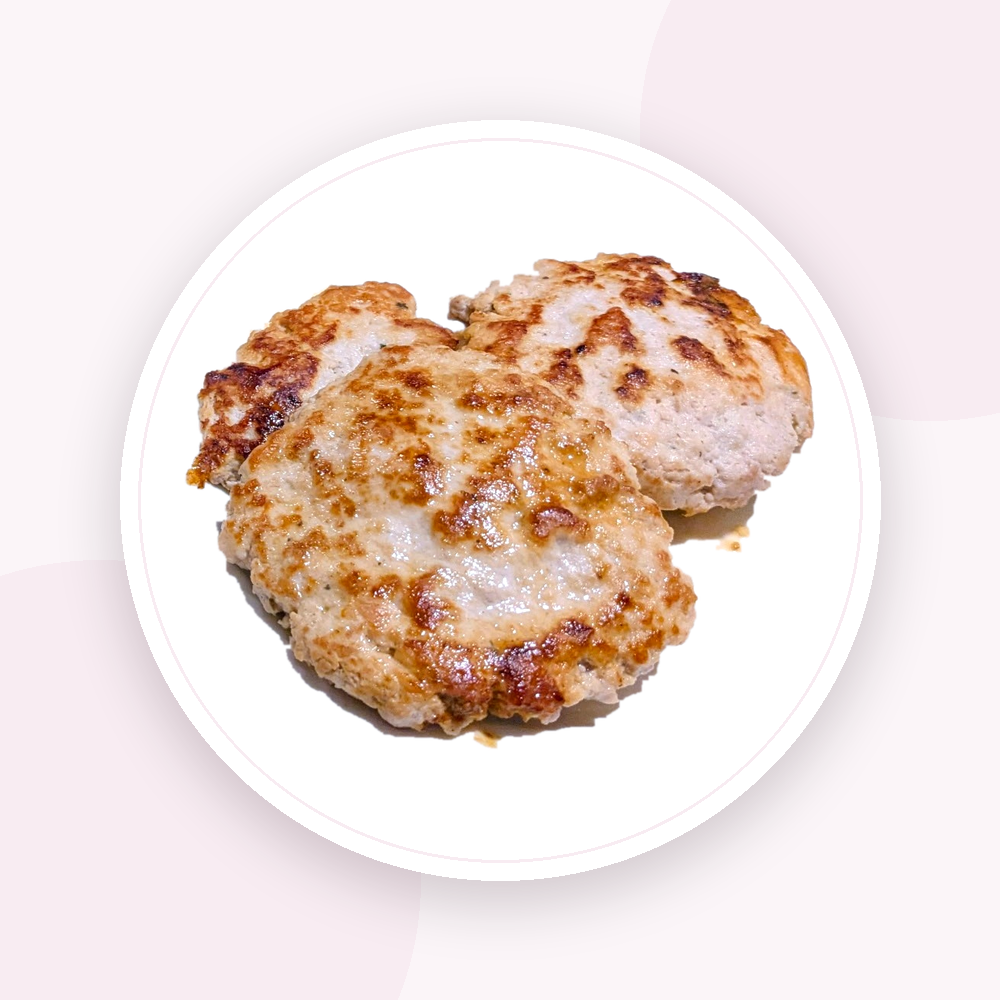

Homemade Sage Breakfast Sausage (No Onion or Garlic)
Ingredients
Method
- Stir the seasoning blend together in a jar. It keeps for months.
- Cut the chops and the pork belly into 1-inch cubes, keeping the fat cubes separate from the lean. Toss all of it with 1/3 cup plus 1 tablespoon of the blend, cover and refrigerate overnight.
- Spread the cubes on two sheet pans and freeze for 30 to 45 minutes, until firm at the edges but not frozen through. Cold fat grinds; soft fat smears and gets spit back out of the processor.
- Fit the food processor with the regular chopping blade (not the shredding disc). Working in batches of about a pound, with a few fat cubes in every batch, pulse 8 to 10 times until the meat looks like coarse ground pork. Stop before it turns to paste. Scrape each batch into a large bowl.
- Sprinkle the ice water over the ground meat and mix gently with your hands until it holds together. Rest it in the fridge for 10 minutes.
- Fry a spoonful and taste it. Add salt or more sage if it needs it. Shape the rest into 2-ounce patties about 3 inches across and press a shallow dimple into the center of each.
- To cook, lay the patties in a cold skillet over medium heat and fry about 4 minutes a side, until browned and no longer pink in the middle.
- To freeze, lay raw patties on a parchment-lined pan, freeze solid, then stack with parchment between and bag a dozen at a time. Thaw overnight, or cook from frozen over medium-low heat with a couple of extra minutes a side.
Notes
All photos by Marti Jones.